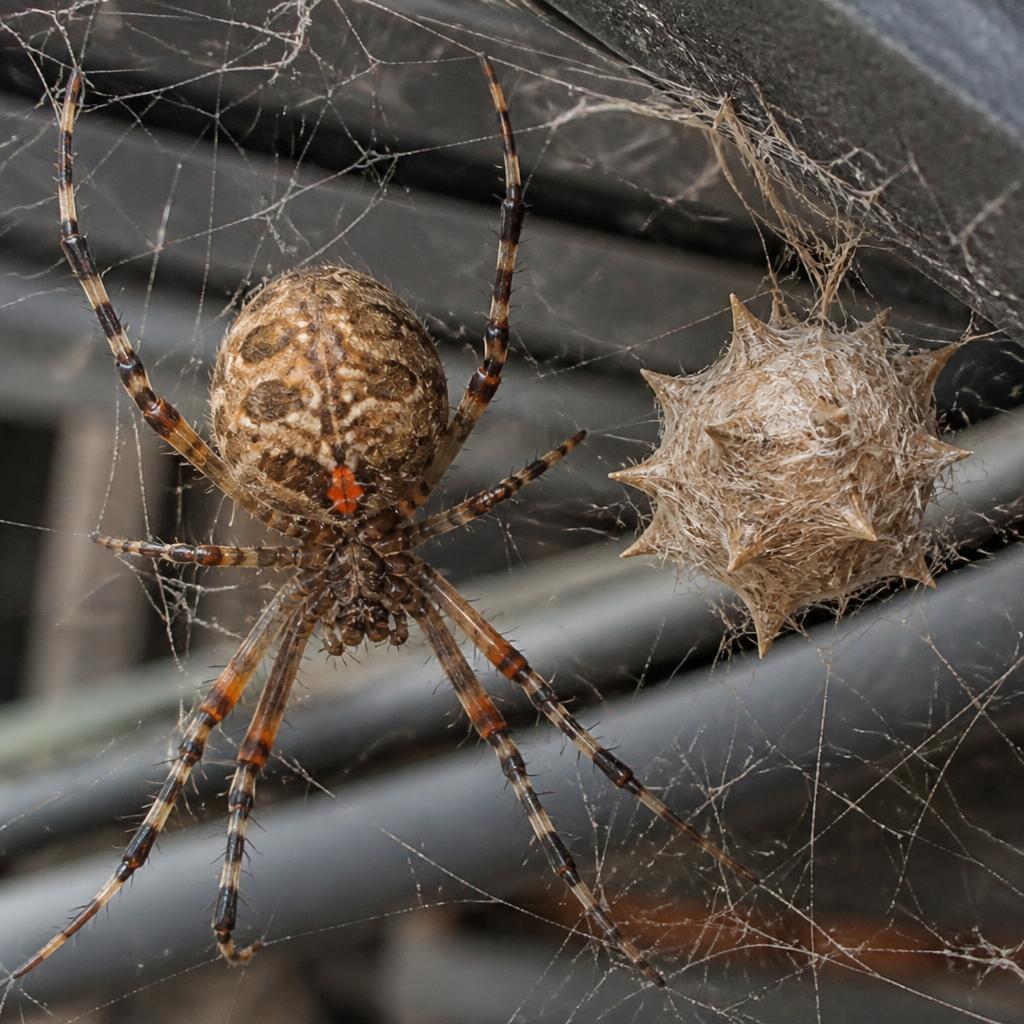
Spider
Brown Widow
Latrodectus geometricus
Biology
Latrodectus geometricus females are 7–10 mm with a mottled tan-to-dark-brown abdomen bearing a geometric pattern of white, black and orange marks and boldly banded legs; the ventral hourglass is orange to yellow-orange rather than red. The unmistakable diagnostic is the egg sac: a spiky, tufted, 'sputnik' sphere holding 100–200 eggs, with a female producing far more sacs than a black widow over her 6–12 month life. Development from egg to adult takes about 60–90 days at 25–30°C, allowing very rapid population growth in warm climates.
Behaviour
Brown widows are less reclusive than black widows and build shallower, more exposed tangle webs, often at eye level around structures. Venom is comparably potent drop for drop but the spider injects far less and is markedly more timid, so bites are usually mild and local — pain and redness at the site rather than full latrodectism. They are highly fecund and displace native black widows in urban landscapes. Activity is chiefly nocturnal, with the female retreating to a silk pocket by day and the presence of multiple spiky egg sacs signalling an established, growing colony.
Habits
Preferred harborage is the underside of patio furniture, mailboxes, playground equipment, handrails, potted plant rims, wheel wells, entry-door frames and the lips of gutters and downspouts — anywhere there is a small overhung ledge. They tolerate closer contact with people than black widows, which raises accidental-encounter risk around porches and yard equipment. Signs include several tufted egg sacs clustered in one recess, coarse silk under ledges and shed skins. Warm, humid coastal and southern climates with heavy hardscape are ideal, and numbers surge through summer and early autumn.
Control methods
- 1Sweep and remove webs plus all spiky egg sacs weekly
- 2Check undersides of patio furniture, mailboxes and rails
- 3Wear gloves when moving pots, toys and yard equipment
- 4Reduce exterior lighting that concentrates prey insects
- 5Residual band along ledges, rails and door frames
- 6Keep clutter and stored items off patios and porches
Tailored to Brown Widow
IPM Procedure Checklist
Inspection
- Inspect undisturbed corners, voids and stored items
- Identify webs, egg sacs and prey debris
- Note conducive insect prey populations
Identification
- Confirm Brown Widow (Latrodectus geometricus) — not a look-alike
- Note life stage and risk level: Moderate
- Capture clear photos and samples for the record
Action Thresholds
- Trigger action when monitor counts trend up
- Re-evaluate weekly during active season
- Document trigger criteria in the IPM plan
Prevention
- Reduce clutter and seal cracks around the structure
- Switch exterior lights to yellow / sodium to reduce prey
- Install door sweeps and screen vents
Control Methods
- Sweep and remove webs plus all spiky egg sacs weekly
- Check undersides of patio furniture, mailboxes and rails
- Wear gloves when moving pots, toys and yard equipment
- Reduce exterior lighting that concentrates prey insects
Monitoring & Evaluation
- Service monitors on schedule and trend captures
- Re-inspect for Brown Widow activity at follow-up
- Adjust tactics based on data; report findings to client