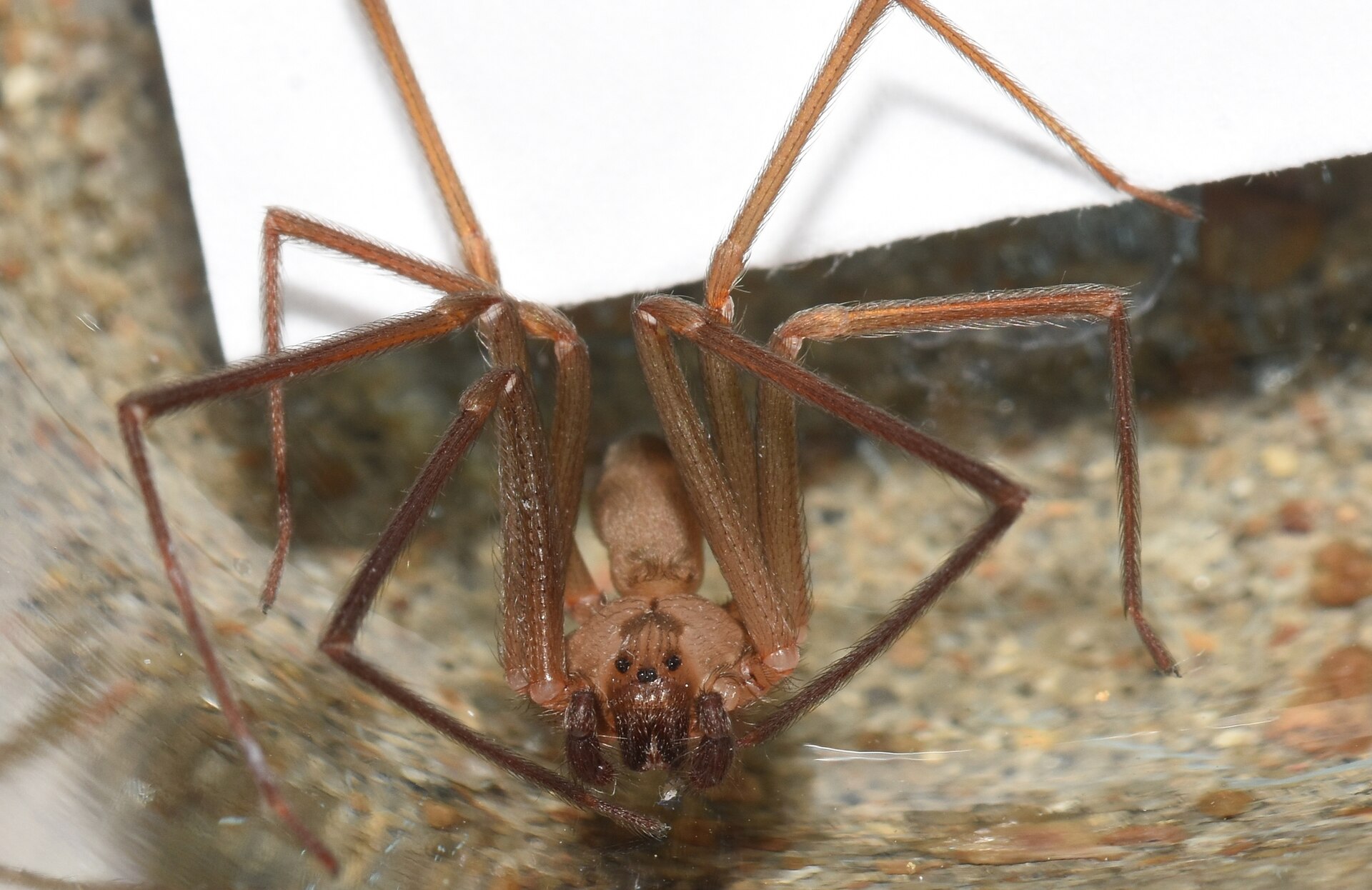
Spider
Brown Recluse
Loxosceles reclusa
Biology
Loxosceles reclusa, a member of the Sicariidae family, is a haplogyne spider exhibiting distinctive morphological features. Adults typically measure 6–11 mm in body length, with leg spans up to 30 mm, displaying a uniform light to dark brown coloration. The most reliable identifying characteristic is the arrangement of six eyes in three diads (anterior median, posterior lateral) in a semicircular pattern, differentiating it from most other spiders which possess eight eyes. Females oviposit 30–50 eggs within a silken sac, producing up to five sacs over a lifespan that can extend 1–2 years in favorable indoor environments, with sexual maturity reached in 10-12 months. Optimal development occurs between 25–35°C and moderate humidity (40-60% RH).
Behaviour
As a nocturnal and reclusive hunter, L. reclusa does not typically build webs for prey capture, instead constructing irregular retreats for resting and molting. Its dispersal pattern is primarily passive, often facilitated by human transport of infested items, rather than active ballooning or long-distance ambulation. Communication is minimal, lacking complex social structures or conspicuous courtship displays; individuals are typically solitary. Feeding is opportunistic, preying on small, soft-bodied arthropods such as crickets, cockroaches, and silverfish, relying on venom for subduing prey. Bites are defensive, occurring when the spider feels threatened or is inadvertently compressed against skin, and the necrotic potential of the sphingomyelinase D enzyme within its venom can lead to dermonecrotic lesions in susceptible individuals, posing a public health concern.
Habits
Brown recluses exhibit a strong thigmotactic response, preferring tight, confined spaces for harborage within human dwellings. Common aggregation sites include undisturbed boxes, stored clothing, linens, behind wall voids, under furniture, and in seldom-accessed areas like attics and crawlspaces. Foraging occurs primarily at night, with individuals often venturing several feet from their harborage to hunt. Seasonal movements are minimal indoors, but outdoor populations may seek indoor shelter during colder months. Conducive conditions for infestation include clutter, excessive stored items, and neglected areas providing abundant harborage and access to insect prey. Technicians should inspect dusty, undisturbed areas, paying close attention to shed exuviae (molted skins) and irregular, flimsy retreat webs as key indicators of activity.
Control methods
- 1Sticky glue boards along walls and under furniture
- 2Reduce clutter and seal storage in plastic bins
- 3Vacuum corners, closets and behind appliances
- 4Shake out shoes and clothing before wearing
- 5Seal exterior cracks, vents and door sweeps
- 6Targeted residual in voids — not broadcast spray
Tailored to Brown Recluse
IPM Procedure Checklist
Inspection
- Inspect undisturbed corners, voids and stored items
- Identify webs, egg sacs and prey debris
- Note conducive insect prey populations
Identification
- Confirm Brown Recluse (Loxosceles reclusa) — not a look-alike
- Note life stage and risk level: High
- Capture clear photos and samples for the record
Action Thresholds
- Zero-tolerance: act on first confirmed sighting
- Notify client and document the trigger event
- Prioritize health and regulatory risk in the plan
Prevention
- Reduce clutter and seal cracks around the structure
- Switch exterior lights to yellow / sodium to reduce prey
- Install door sweeps and screen vents
Control Methods
- Sticky glue boards along walls and under furniture
- Reduce clutter and seal storage in plastic bins
- Vacuum corners, closets and behind appliances
- Shake out shoes and clothing before wearing
Monitoring & Evaluation
- Service monitors on schedule and trend captures
- Re-inspect for Brown Recluse activity at follow-up
- Adjust tactics based on data; report findings to client