Occasional Invader
Brown Marmorated Stink Bug
Halyomorpha halys
Biology
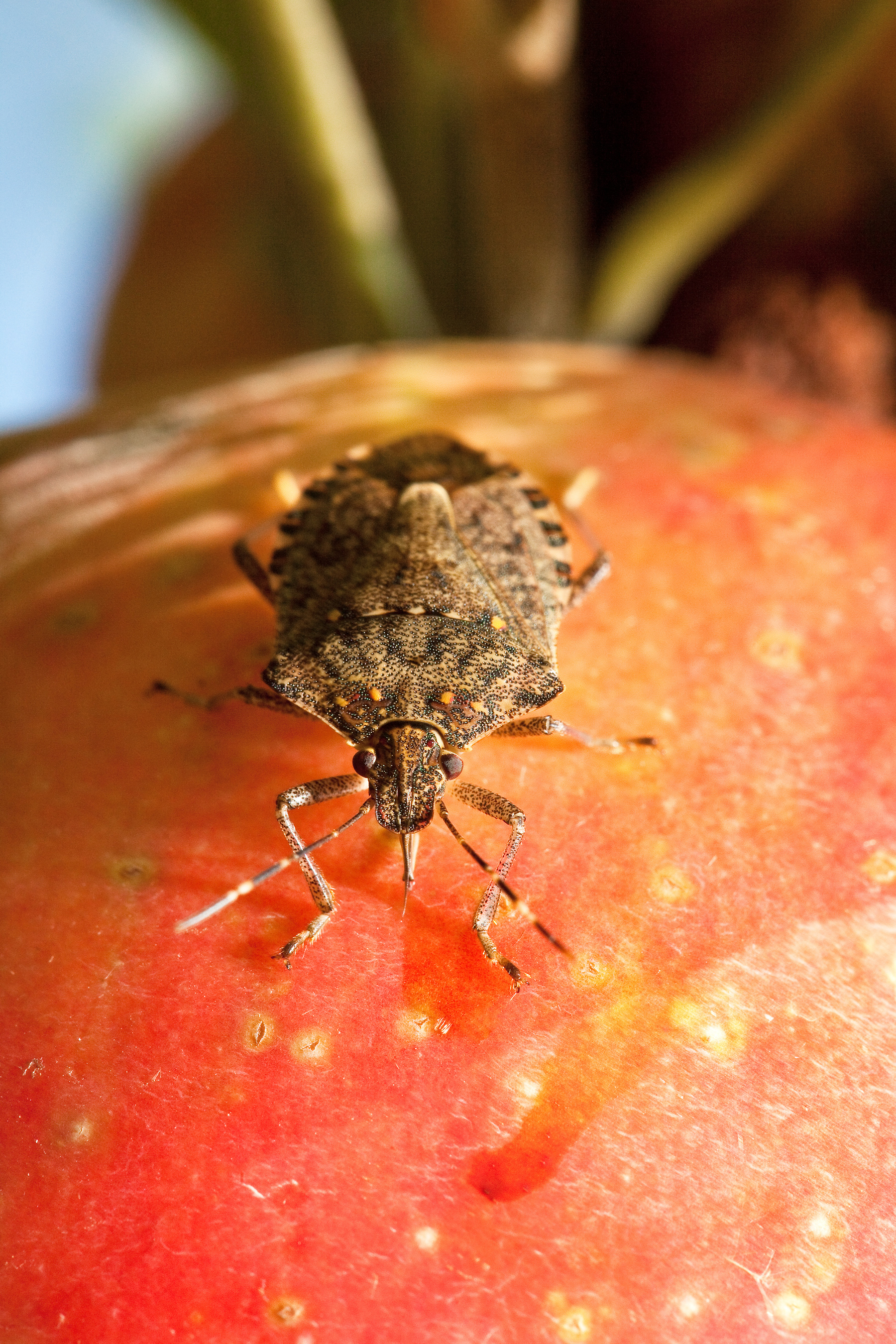
Halyomorpha halys, commonly known as the Brown Marmorated Stink Bug (BMSB), belongs to the family Pentatomidae within the order Hemiptera. Adults are approximately 12–17 mm (0.5–0.7 inches) long, shield-shaped, and mottled brown with lighter bands on the antennae and dark bands on the membranous part of the forewings. The lifecycle is hemimetabolous, involving incomplete metamorphosis with egg, nymphal (five instars), and adult stages. Females lay clusters of 20–30 light green or yellow eggs, typically on the underside of leaves, producing multiple clutches over their lifespan. Development from egg to adult is temperature-dependent, usually taking 35–45 days under optimal conditions, with adults typically living 6–8 months and producing one to two generations per year in temperate climates.
Behaviour
BMSB are primarily day-active insects, although their activity can extend into twilight hours, particularly during dispersal flights. They do not exhibit complex social structures but aggregate in large numbers, especially when seeking overwintering sites, a behavior known as aggregation pheromone-mediated clumping. Communication primarily involves chemical signals, including aggregation pheromones for congregating and alarm pheromones released when disturbed, which produce their characteristic foul odor. They are polyphagous feeders, using their piercing-sucking mouthparts to feed on a wide range of host plants, causing extensive damage to agricultural crops and ornamental plants. Their public health impact is negligible, though mass indoor aggregations can be a significant nuisance, and structural impact is limited to aesthetic concerns due to their presence and odor.
Habits
During warmer months, BMSB are primarily found outdoors in agricultural fields, orchards, gardens, and woodlands, where they feed and reproduce. As temperatures begin to cool in late summer and early autumn, adults seek sheltered locations for overwintering, often congregating on the sunny sides of buildings, trees, and rock faces. They then invade structures, including homes and businesses, through cracks, crevices, open windows, and utility entry points. Conducive conditions for indoor harborage include unsealed entry points, abundant outdoor vegetation providing food sources, and structures offering sunny, warm surfaces for aggregation. Signs of infestation primarily include the visual presence of live or dead bugs, their distinctive coriander-like odor, and fecal streaking (dark spots) left on surfaces where they rest, particularly on curtains and walls.
Control methods
- 1Seal exterior gaps, vents and utility entries by Sept
- 2Vacuum interior bugs and dispose outdoors
- 3Pheromone-baited light traps in attics
- 4Repair screens and add door sweeps
- 5Spot treat fall aggregations on siding
- 6Avoid crushing indoors due to staining and odor
Tailored to Brown Marmorated Stink Bug
IPM Procedure Checklist
Inspection
- Inspect exterior perimeter for entry pathways
- Note moisture, mulch and ground-cover near foundation
- Identify aggregation sites on warm walls
Identification
- Confirm Brown Marmorated Stink Bug (Halyomorpha halys) — not a look-alike
- Note life stage and risk level: Moderate
- Capture clear photos and samples for the record
Action Thresholds
- Trigger action when monitor counts trend up
- Re-evaluate weekly during active season
- Document trigger criteria in the IPM plan
Prevention
- Seal foundation cracks, weep holes and utility penetrations
- Pull mulch and vegetation back from the structure
- Improve drainage and reduce exterior moisture
Control Methods
- Seal exterior gaps, vents and utility entries by Sept
- Vacuum interior bugs and dispose outdoors
- Pheromone-baited light traps in attics
- Repair screens and add door sweeps
Monitoring & Evaluation
- Service monitors on schedule and trend captures
- Re-inspect for Brown Marmorated Stink Bug activity at follow-up
- Adjust tactics based on data; report findings to client