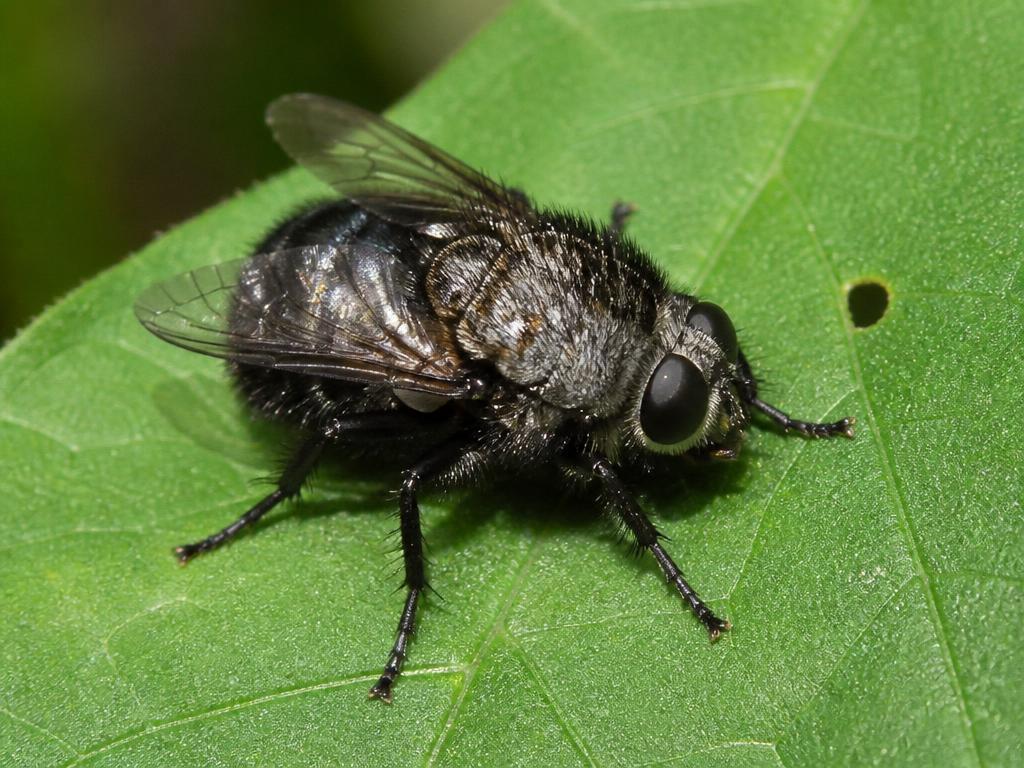
Fly
Rodent Bot Fly
Cuterebra fontinella
Biology
Cuterebra fontinella (family Oestridae) is a large, robust, bee-like fly 15-25 mm long, with a densely hairy dark body, small head, and vestigial mouthparts. Adults do not feed and live only 1-2 weeks, relying entirely on fat reserves accumulated as larvae. Females deposit sticky eggs near rodent burrow entrances, runways, and nest openings rather than on the host. Body heat from a passing host triggers hatching within seconds; the first-instar larva enters through the nose, mouth, eyes, or a wound, then migrates to a subdermal site where it forms a breathing warble. Larvae feed for 19-38 days, exit to pupate in soil, and overwinter as pupae.
Behaviour
Adults are non-biting, harmless, and rarely seen; males hilltop and defend sunlit perches while waiting for females. The pest significance lies with the larvae, which cause obligate subcutaneous myiasis (warbles) in mice, rats, chipmunks, squirrels, and rabbits. Domestic cats and dogs that hunt rodents can be accidental hosts, most often developing a swelling with a visible breathing pore on the neck or head; aberrant migration can rarely reach the eye or central nervous system. Human cases are very rare and typically follow contact with infested rodent habitat.
Habits
Distribution is tied to rodent and lagomorph populations — brushy field edges, woodpiles, overgrown fence lines, barns, and outbuildings with resident mice or chipmunks. Peak larval infestation appears in late summer and early autumn. Conducive conditions include heavy rodent pressure, dense ground cover near structures, and unrestricted outdoor access for pets that hunt. Reducing rodent harborage is the primary structural pest-management lever.
Control methods
- 1Reduce rodent harborage: clear brush, woodpiles, and dense ground cover.
- 2Exclude rodents from structures with sealing and hardware cloth.
- 3Maintain an integrated rodent control program around the property.
- 4Keep pets from hunting rodents during late-summer peak activity.
- 5Have a veterinarian remove warbles from pets — never rupture the larva.
- 6Monitor rodent runways and burrow entrances for oviposition sites.
Tailored to Rodent Bot Fly
IPM Procedure Checklist
Inspection
- Locate breeding sites: drains, decaying matter, moist organics
- Use tape-over-drain tests and UV/light traps to confirm
- Map dumpster, grease and floor-drain hot-spots
Identification
- Confirm Rodent Bot Fly (Cuterebra fontinella) — not a look-alike
- Note life stage and risk level: Moderate
- Capture clear photos and samples for the record
Action Thresholds
- Trigger action when monitor counts trend up
- Re-evaluate weekly during active season
- Document trigger criteria in the IPM plan
Prevention
- Clean drains with enzymatic foam to remove biofilm
- Manage trash, recycling and grease daily
- Screen windows, doors and air curtains at entries
Control Methods
- Reduce rodent harborage: clear brush, woodpiles, and dense ground cover.
- Exclude rodents from structures with sealing and hardware cloth.
- Maintain an integrated rodent control program around the property.
- Keep pets from hunting rodents during late-summer peak activity.
Monitoring & Evaluation
- Service monitors on schedule and trend captures
- Re-inspect for Rodent Bot Fly activity at follow-up
- Adjust tactics based on data; report findings to client