Insect
Booklice (Psocids)
Liposcelis
Biology
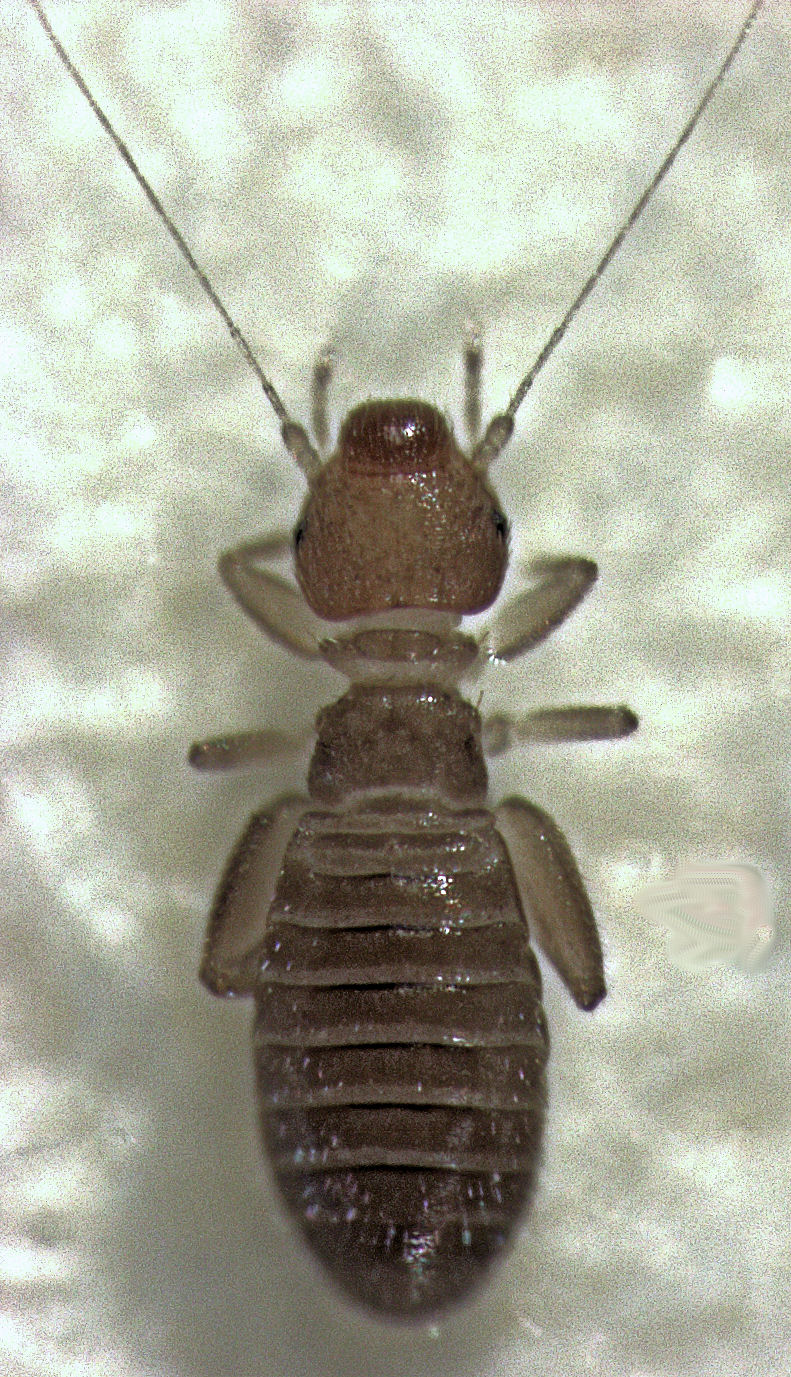
Booklice, taxonomically classified within the order Psocoptera, specifically the genus Liposcelis, are minute, soft-bodied insects, typically ranging from 0.8 to 1.5 mm in length. They are characterized by their pale, often translucent appearance, prominent Y-shaped suture on the head, and lack of wings, even in adult stages. Reproduction is predominantly parthenogenetic, meaning females can produce viable offspring without fertilization; a single female can lay 20 to 100 eggs over her lifetime. Under optimal conditions of 25–30°C and 70–90% relative humidity (RH), the entire lifecycle – egg, nymphal instars (typically 3–4), and adult – can be completed in as little as 2–3 weeks, leading to rapid population growth. Adults typically live for approximately 1 to 6 months depending on environmental conditions.
Behaviour
Booklice exhibit primarily nocturnal activity, though they can be observed during the day in undisturbed, humid environments. They are largely solitary insects, not forming complex social structures, and communicate primarily through tactile cues. Their feeding ecology is saprophytic, specifically mycophagous, meaning they graze on microscopic fungi and molds that colonize various substrates. This behavior makes them excellent indicators of elevated moisture and subsequent fungal growth, rather than direct structural pests. While not known to bite or carry diseases, massive infestations can contaminate food products due to their sheer numbers and associated fecal matter, leading to economic losses and aesthetic concerns. Dispersal typically occurs passively, often via infested materials or air currents within structures.
Habits
These psocids prefer harborage in environments exhibiting high relative humidity (above 60% RH) and moderate temperatures, as these conditions are conducive to microfungal growth, their primary food source. Common harborage sites include the bindings and pages of books, underneath wallpaper, within stored grains, flour, and cereals, in poorly ventilated basements, and behind new drywall where moisture content may be elevated for extended periods. Foraging patterns are localized to these damp, mold-rich areas, and their presence is a strong indicator of an underlying moisture problem. Technicians should look for 'dusty' or 'moving grain' appearance on surfaces, which indicates high population densities. Infestations often subside naturally as relative humidity levels drop below 50–60%, disrupting mold growth and their lifecycle.
Control methods
- 1Reduce indoor humidity below 50% (dehumidifier)
- 2Increase ventilation in crawlspaces and pantries
- 3Discard moldy books, food and cardboard
- 4Wipe surfaces with vinegar or mild detergent
- 5Fix plumbing leaks and condensation
- 6Chemical control rarely needed once dry
Tailored to Booklice (Psocids)
IPM Procedure Checklist
Inspection
- Inspect harborage near food, water and warmth
- Check cracks, voids and appliance interiors
- Place sticky monitors at suspected hot-spots
Identification
- Confirm Booklice (Psocids) (Liposcelis) — not a look-alike
- Note life stage and risk level: Low
- Capture clear photos and samples for the record
Action Thresholds
- Tolerate low-level activity outside sensitive zones
- Act if activity moves indoors or near food
- Review threshold seasonally with the client
Prevention
- Seal cracks, plumbing penetrations and wall voids
- Eliminate moisture sources and standing water
- Improve sanitation: sealed food storage, grease removal
Control Methods
- Reduce indoor humidity below 50% (dehumidifier)
- Increase ventilation in crawlspaces and pantries
- Discard moldy books, food and cardboard
- Wipe surfaces with vinegar or mild detergent
Monitoring & Evaluation
- Service monitors on schedule and trend captures
- Re-inspect for Booklice (Psocids) activity at follow-up
- Adjust tactics based on data; report findings to client