Spider
Bold Jumping Spider
Phidippus audax
Biology
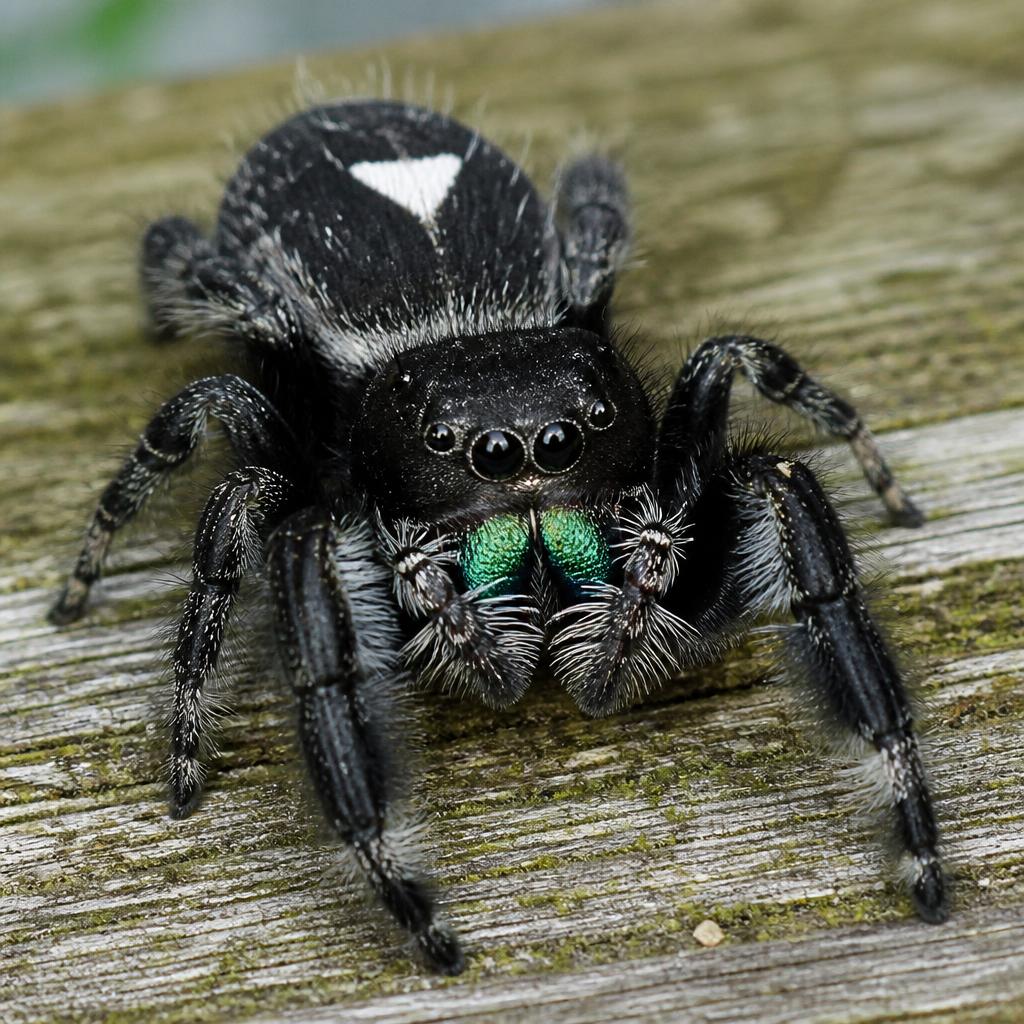
Phidippus audax is a robust salticid, 8–15 mm, densely furred and black with a white or orange triangular spot plus two smaller spots on the abdomen and brilliant iridescent green or blue chelicerae. The two enormous anterior median eyes give some of the sharpest vision of any arthropod. Females build silk nest sacs under bark, in leaf folds or in structural crevices and guard 60–200 eggs; juveniles overwinter in silken hibernacula and mature the following spring, producing one generation per year.
Behaviour
Bold jumpers are strictly diurnal visual hunters that stalk and pounce rather than build capture webs, using a dragline as a safety tether when leaping several body lengths. They are curious and will turn to track a moving hand or camera, which people often misread as aggression; in reality they retreat readily and bite only when squeezed, producing a brief local sting. They are valuable natural enemies of flies, caterpillars, leafhoppers and other spiders, so control should emphasise exclusion and removal over broadcast treatment.
Habits
They hunt on sunlit vertical surfaces — siding, fences, window frames, deck rails, greenhouse glazing and tree trunks — and enter structures through open windows and gaps while pursuing prey. Indoors they gravitate to sunny windowsills and lit walls. Small silken retreat sacs in window channels, under sills and behind shutters are the usual sign; there is no snare web to find. Conducive conditions are heavy fly and gnat activity on sunny walls and unscreened openings.
Control methods
- 1Capture and release indoor specimens — they are beneficial
- 2Repair window screens and install door sweeps
- 3Remove silken retreat sacs from window channels and shutters
- 4Reduce fly and gnat activity on sunny exterior walls
- 5Seal siding gaps, weep-hole covers and vent screens
- 6Spot-treat only where activity is persistent indoors
Tailored to Bold Jumping Spider
IPM Procedure Checklist
Inspection
- Inspect undisturbed corners, voids and stored items
- Identify webs, egg sacs and prey debris
- Note conducive insect prey populations
Identification
- Confirm Bold Jumping Spider (Phidippus audax) — not a look-alike
- Note life stage and risk level: Low
- Capture clear photos and samples for the record
Action Thresholds
- Tolerate low-level activity outside sensitive zones
- Act if activity moves indoors or near food
- Review threshold seasonally with the client
Prevention
- Reduce clutter and seal cracks around the structure
- Switch exterior lights to yellow / sodium to reduce prey
- Install door sweeps and screen vents
Control Methods
- Capture and release indoor specimens — they are beneficial
- Repair window screens and install door sweeps
- Remove silken retreat sacs from window channels and shutters
- Reduce fly and gnat activity on sunny exterior walls
Monitoring & Evaluation
- Service monitors on schedule and trend captures
- Re-inspect for Bold Jumping Spider activity at follow-up
- Adjust tactics based on data; report findings to client