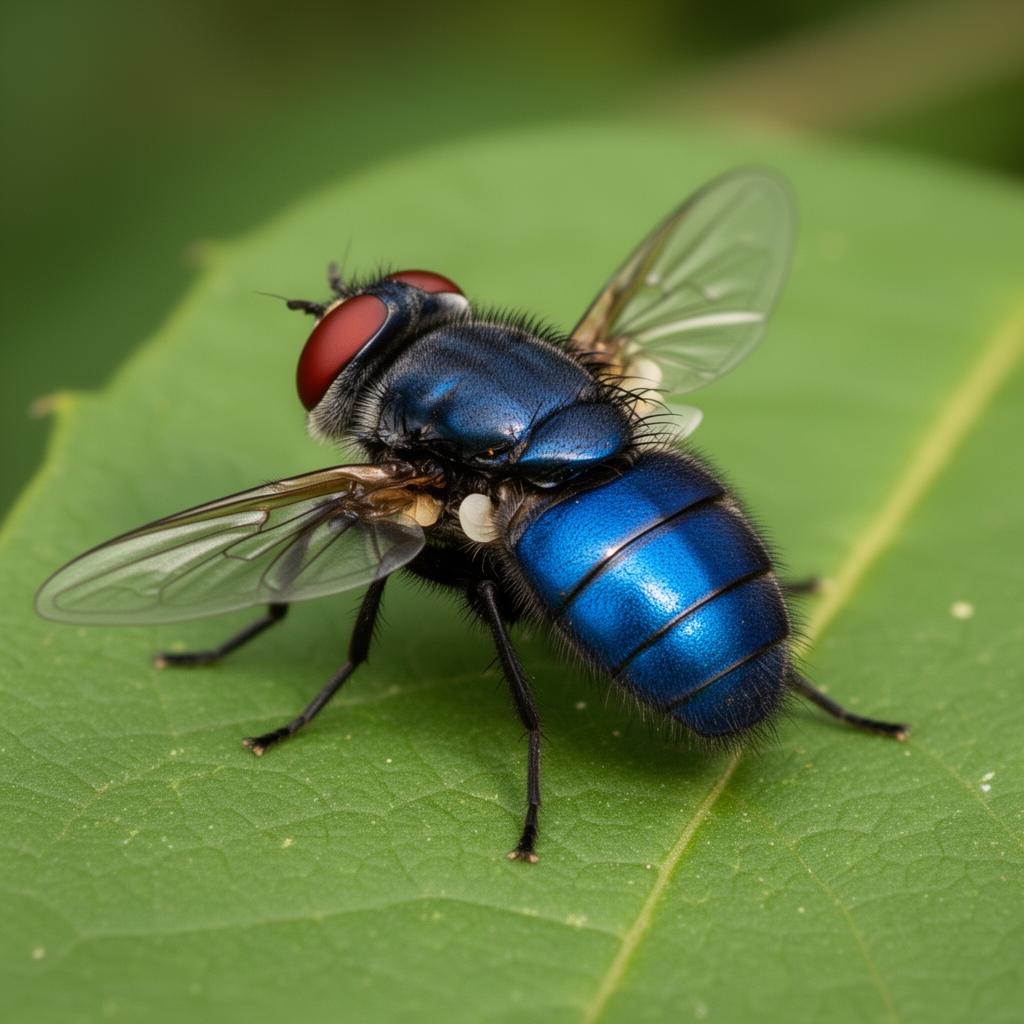
Fly
Blue Bottle Blow Fly
Calliphora vomitoria
Biology
Calliphora vomitoria, commonly known as the blue bottle fly, belongs to the family Calliphoridae within the order Diptera. Adults are characterized by their robust bodies, measuring 10–14 mm in length, and striking metallic blue to blue-black coloration with distinct black bristles. The life cycle, typically completed within 18–25 days under optimal conditions (around 25°C), progresses through egg, three larval instars, pupa, and adult stages; females can lay up to 2,000 eggs in multiple batches throughout their 15–30 day adult lifespan. Eggs are pearly white, about 1.5 mm long, and hatch within 12–48 hours, while larvae feed for 4–8 days before pupating for 7–14 days. This rapid development makes C. vomitoria a crucial species in forensic entomology for estimating post-mortem intervals, particularly in temperate climates, where they can tolerate temperatures as low as 0°C during larval development.
Behaviour
Adult C. vomitoria are primarily diurnal, exhibiting peak activity during daylight hours, particularly in sunny conditions, where they engage in feeding, mating, and oviposition. Their social structure is largely solitary, though they aggregate at food sources and oviposition sites due to strong olfactory cues, often arriving within minutes of a carcass becoming available. These flies are highly mobile dispersers, capable of traveling several kilometers in search of suitable breeding sites, primarily carrion, but also feces and decaying organic matter. They utilize highly sensitive chemoreceptors on their antennae and tarsi to detect volatile organic compounds released by decay, demonstrating strong positive chemotaxis towards putrescine and cadaverine. As mechanical vectors, they significantly contribute to public health risks by acquiring and transmitting pathogenic bacteria like Salmonella, Shigella, and E. coli from contaminated substrates to human food and surfaces, via their mouthparts, regurgitations, and fecal deposits.
Habits
Key harborage preferences for C. vomitoria larvae are moist, decomposing organic matter, particularly animal carcasses, where the consistent moisture and nutrient availability support rapid larval development. Adults forage widely, exhibiting strong attraction to decaying meat, garbage, pet waste, and sometimes overripe fruit, with foraging ranges extending several miles from suitable breeding sites. Seasonal movements involve increased outdoor activity in warmer months, with adults often found indoors during cooler periods, seeking shelter or having emerged from indoor breeding sources. Conducive conditions for heavy infestation include inadequate sanitation, accessible dead animals in wall voids, attics, or crawl spaces, and exposed garbage. Signs of infestation include the loud, characteristic buzzing of adults, presence of adult flies congregating on windows or lights, and the unmistakable sight or odor of a decomposing animal, often accompanied by active larval masses in advanced infestations.
Control methods
- 1Locate and remove the carcass — primary source
- 2Inspect wall voids, chimneys, attics and crawl spaces
- 3Vacuum emerging adults at windows and light fixtures
- 4Seal exterior gaps to prevent rodent and bird entry
- 5Install UV light traps in service areas, away from food
- 6Residual treatment to fly resting sites in service zones
Tailored to Blue Bottle Blow Fly
IPM Procedure Checklist
Inspection
- Locate breeding sites: drains, decaying matter, moist organics
- Use tape-over-drain tests and UV/light traps to confirm
- Map dumpster, grease and floor-drain hot-spots
Identification
- Confirm Blue Bottle Blow Fly (Calliphora vomitoria) — not a look-alike
- Note life stage and risk level: High
- Capture clear photos and samples for the record
Action Thresholds
- Zero-tolerance: act on first confirmed sighting
- Notify client and document the trigger event
- Prioritize health and regulatory risk in the plan
Prevention
- Clean drains with enzymatic foam to remove biofilm
- Manage trash, recycling and grease daily
- Screen windows, doors and air curtains at entries
Control Methods
- Locate and remove the carcass — primary source
- Inspect wall voids, chimneys, attics and crawl spaces
- Vacuum emerging adults at windows and light fixtures
- Seal exterior gaps to prevent rodent and bird entry
Monitoring & Evaluation
- Service monitors on schedule and trend captures
- Re-inspect for Blue Bottle Blow Fly activity at follow-up
- Adjust tactics based on data; report findings to client