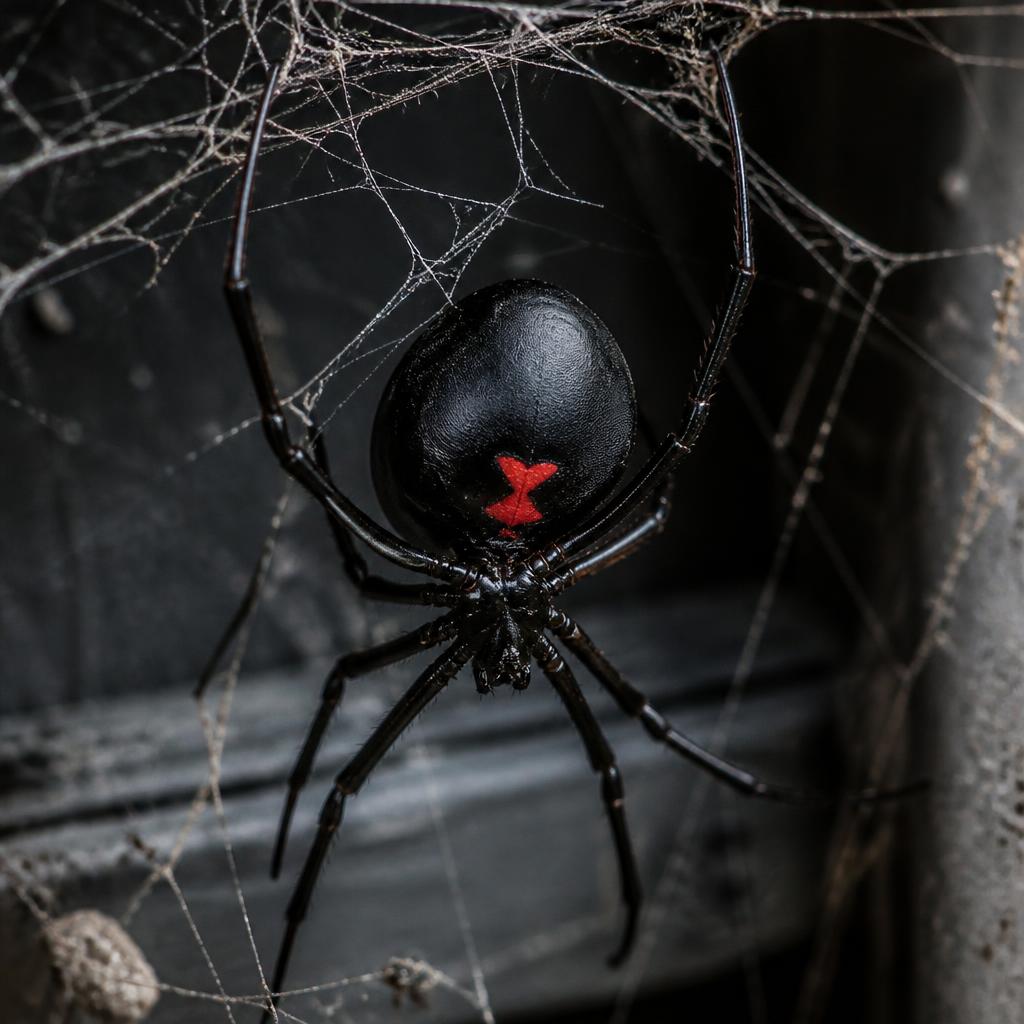
Spider
Western Black Widow
Latrodectus hesperus
Biology
Latrodectus hesperus, the Western black widow, is a theridiid spider characterized by the female's glossy, jet-black integument, typically measuring 8–13 mm in body length with slender legs. The most distinguishing feature is the bright red, often hourglass-shaped, marking situated ventrally on the globose opisthosoma; males are significantly smaller (3–5 mm), brown with red and white striping, and rarely encountered. Females mature in 2–4 months, and can produce between 4–9 spherical, papery egg sacs, each containing 200–400 eggs, over her 1–3 year lifespan; eggs hatch in 20–30 days depending on ambient temperature (optimal 25–35°C, 60–70% RH). Spiderlings are initially cannibalistic and disperse via ballooning on silk threads. Their venom system is proteroglyphous, meaning their fangs are relatively small but efficient in delivering potent neurotoxins.
Behaviour
Western black widows are primarily nocturnal, cryptically resting during daylight hours within their retreats and emerging at night to maintain their webs or consume prey. They are solitary and largely sedentary, exhibiting strong thigmotactic behavior, meaning they prefer enclosed spaces where their bodies can contact multiple surfaces. Web construction involves an irregular, three-dimensional tangle of sticky silk, typically featuring a funnel-like retreat where the spider hides; these webs are not designed for active hunting, but rather to intercept crawling or jumping insects. While not inherently aggressive, a female black widow will readily defend her eggs or herself if disturbed, with defensive bites being the primary mechanism for venom delivery. The alpha-latrotoxin in their venom causes the distinct neurotoxic syndrome known as latrodectism, characterized by muscle cramps, pain, and autonomic dysfunction.
Habits
These spiders exhibit strong synanthropic tendencies, frequently establishing harborage in human-modified environments that offer dark, secluded, and undisturbed conditions. Typical outdoor harborage includes woodpiles, rock crevices, under eaves, within irrigation boxes, hollow logs, and beneath outdoor furniture; indoors, they favor crawlspaces, cluttered garages, basements, and seldom-used sheds. Foraging is passive, relying on their strong, irregular webs to capture ground-dwelling arthropods and flying insects that blunder into the snare; they rarely leave the immediate vicinity of their web. Conducive conditions for heavy black widow populations include abundant insect prey, minimal disturbance, and environmental protection from harsh weather, often indicated by the presence of numerous silken egg sacs and irregular, tough, widely spaced strands of silk in corners and protected areas.
Control methods
- 1Wear gloves when handling stored items, woodpiles and crates
- 2Knock down webs and egg sacs; crush sacs to prevent hatching
- 3Declutter garages, sheds and crawlspaces
- 4Seal cracks and vents; install tight door sweeps
- 5Apply residual insecticide to harborage zones (eaves, voids)
- 6Refer suspected bites to medical care immediately
Tailored to Western Black Widow
IPM Procedure Checklist
Inspection
- Inspect undisturbed corners, voids and stored items
- Identify webs, egg sacs and prey debris
- Note conducive insect prey populations
Identification
- Confirm Western Black Widow (Latrodectus hesperus) — not a look-alike
- Note life stage and risk level: High
- Capture clear photos and samples for the record
Action Thresholds
- Zero-tolerance: act on first confirmed sighting
- Notify client and document the trigger event
- Prioritize health and regulatory risk in the plan
Prevention
- Reduce clutter and seal cracks around the structure
- Switch exterior lights to yellow / sodium to reduce prey
- Install door sweeps and screen vents
Control Methods
- Wear gloves when handling stored items, woodpiles and crates
- Knock down webs and egg sacs; crush sacs to prevent hatching
- Declutter garages, sheds and crawlspaces
- Seal cracks and vents; install tight door sweeps
Monitoring & Evaluation
- Service monitors on schedule and trend captures
- Re-inspect for Western Black Widow activity at follow-up
- Adjust tactics based on data; report findings to client