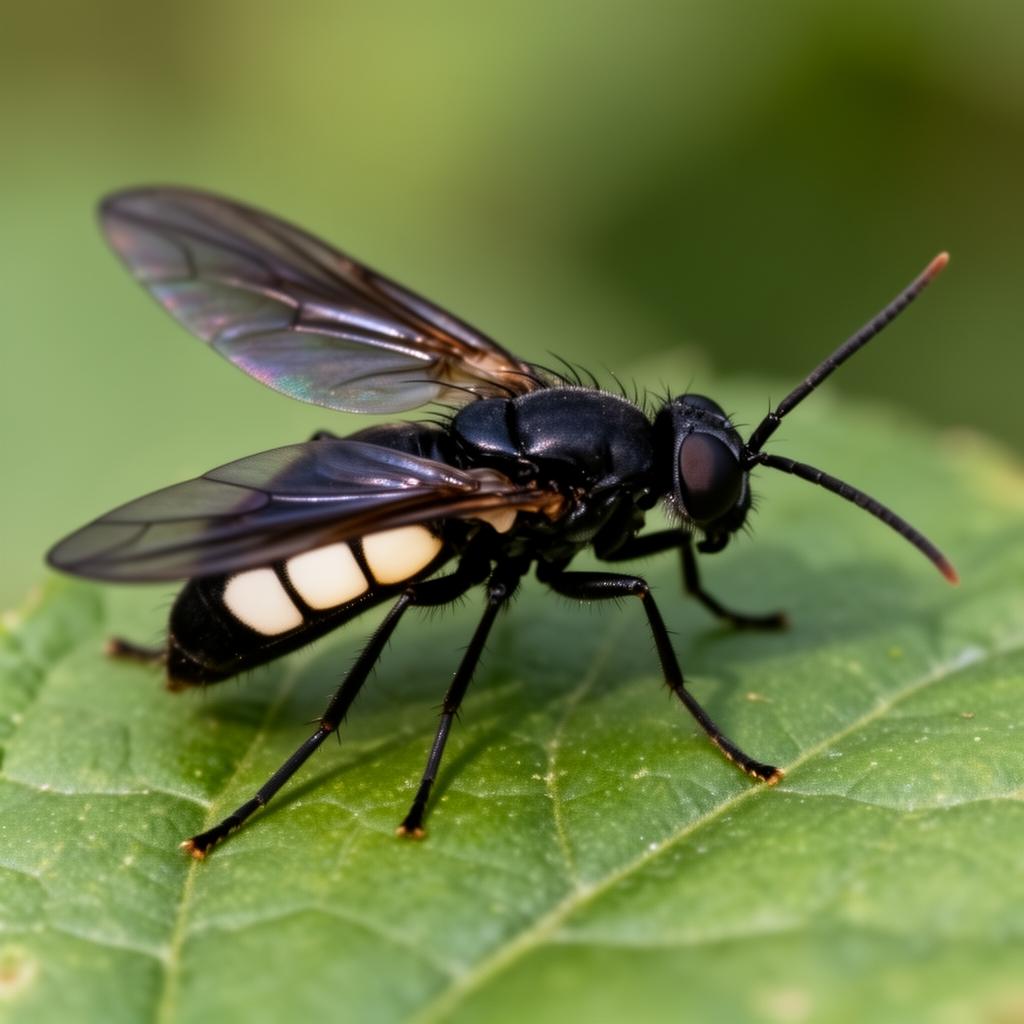
Fly
Black Soldier Fly
Hermetia illucens
Biology
Hermetia illucens, the black soldier fly, is a fascinating member of the Stratiomyidae family. Adults are robust, wasp-mimicking flies, approximately 12-20 mm in length, characterized by a dark, metallic blue or black body, translucent "windows" in the abdomen, and short antennae. Their lifecycle is notable for its efficiency in converting organic waste. Females lay clutches of 500-800 eggs in crevices near suitable decaying organic matter. Larvae are distinctive, greyish-brown, segmented, and flatten Ventrally, developing through five instars over 14-21 days in nutrient-rich environments. The prepupal stage is dark and non-feeding, migrating to drier areas before pupation.
Behaviour
Adult black soldier flies are non-feeding, their sole purpose being reproduction. They are strong fliers but not considered pests in the traditional sense, as they do not bite and are not associated with disease transmission to humans. Their attraction to decaying organic matter is for oviposition, not foraging. Larvae are saprophagous, acting as highly efficient decomposers of a wide range of organic waste, including manure, food scraps, and carrion. Adults are often found near larval breeding sites in warm, humid conditions, exhibiting slow, deliberate flight patterns. They are naturally occurring in tropical and subtropical regions.
Habits
Black soldier flies are often domiciled in environments rich in decaying organic material, such as compost piles, manure lagoons, and waste disposal sites. Larval development requires moist, decomposing organic substrates, with optimal temperatures for growth ranging from 27-32°C. Adults are frequently observed resting on vegetation near these larval habitats. Conducive conditions for their presence include the availability of large quantities of fermenting organic waste, which they effectively process. They are increasingly utilized in waste management for composting and as a feed source.
Control methods
- 1Manage organic waste actively.
- 2Contain compost in sealed bins.
- 3Remove potential breeding substrates.
- 4Ensure proper sanitation around waste.
- 5Educate on their beneficial role.
- 6No traditional pest control needed.
Tailored to Black Soldier Fly
IPM Procedure Checklist
Inspection
- Locate breeding sites: drains, decaying matter, moist organics
- Use tape-over-drain tests and UV/light traps to confirm
- Map dumpster, grease and floor-drain hot-spots
Identification
- Confirm Black Soldier Fly (Hermetia illucens) — not a look-alike
- Note life stage and risk level: Low
- Capture clear photos and samples for the record
Action Thresholds
- Tolerate low-level activity outside sensitive zones
- Act if activity moves indoors or near food
- Review threshold seasonally with the client
Prevention
- Clean drains with enzymatic foam to remove biofilm
- Manage trash, recycling and grease daily
- Screen windows, doors and air curtains at entries
Control Methods
- Manage organic waste actively.
- Contain compost in sealed bins.
- Remove potential breeding substrates.
- Ensure proper sanitation around waste.
Monitoring & Evaluation
- Service monitors on schedule and trend captures
- Re-inspect for Black Soldier Fly activity at follow-up
- Adjust tactics based on data; report findings to client