Insect
Black Carpet Beetle
Attagenus unicolor
Biology
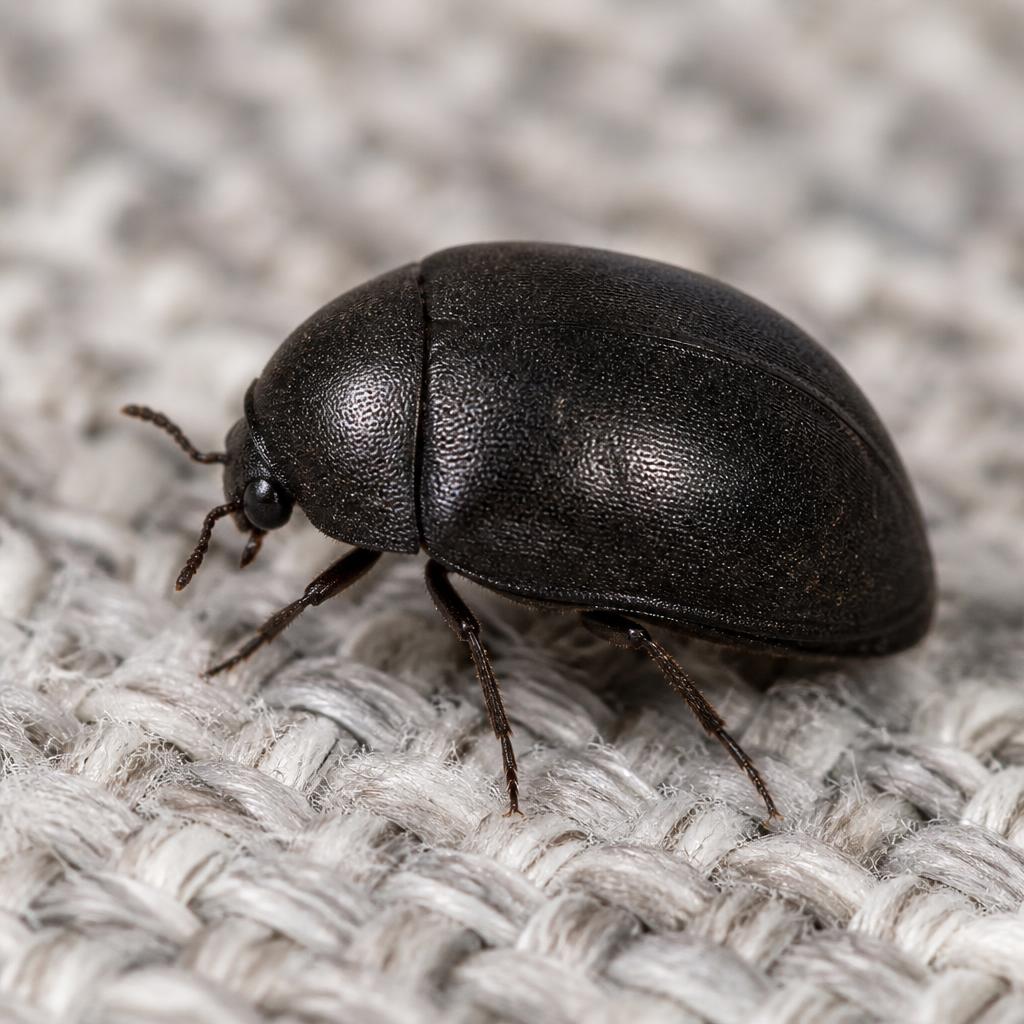
Attagenus unicolor, the black carpet beetle, is a significant pest of stored products and natural fibers, belonging to the family Dermestidae, order Coleoptera. Adults are uniformly shiny black or dark brown, oval-shaped, and measure 3-5 mm in length, lacking distinct patterns on their elytra. Larvae are elongated, carrot-shaped, tapering posteriorly, and covered with short, stiff, golden-brown hairs. They possess a characteristic long tuft of caudal hairs (caudal brush) and can reach 8-10 mm in length. Eggs are minute and white. The entire life cycle usually takes 6-12 months, but can extend to three years under adverse conditions, with 5-11 larval instars. The larval stage is the primary damaging stage.
Behaviour
Black carpet beetle larvae are highly destructive detritivores, feeding on a wide range of animal-based products, including wool, silk, leather, fur, feathers, hair, dried meats, museum specimens, and stored grains. Adults are short-lived and non-feeding, often found near windows as they are attracted to light after emergence. Females lay eggs individually on or near larval food sources. Larvae are negatively phototactic, inhabiting dark, undisturbed crevices and feeding cryptically. They undergo molts, leaving behind visible cast skins. Dispersal typically involves movement of infested goods or active adult flight.
Habits
Attagenus unicolor commonly infests residential homes, commercial buildings, museums, and food storage facilities. Larvae feed on carpets, clothing, upholstered furniture, stored foods, and pet food, often causing extensive, irregular damage or small holes. Harborage sites include floor cracks, under baseboards, in air ducts, behind wall voids, in lint accumulations, and within furniture upholstery. They are frequently associated with bird nests, rodent nests, and insect carcasses, which provide initial food sources. Conducive conditions include accumulations of dust, lint, pet hair, and other organic debris, particularly in seldom-cleaned and undisturbed areas.
Control methods
- 1Regularly vacuum and thoroughly clean.
- 2Launder or dry clean all textiles.
- 3Apply residual insecticides to harborage sites.
- 4Seal cracks and crevices in structures.
- 5Remove animal nests or dead insects.
- 6Store susceptible items in sealed containers.
Tailored to Black Carpet Beetle
IPM Procedure Checklist
Inspection
- Inspect harborage near food, water and warmth
- Check cracks, voids and appliance interiors
- Place sticky monitors at suspected hot-spots
Identification
- Confirm Black Carpet Beetle (Attagenus unicolor) — not a look-alike
- Note life stage and risk level: Moderate
- Capture clear photos and samples for the record
Action Thresholds
- Trigger action when monitor counts trend up
- Re-evaluate weekly during active season
- Document trigger criteria in the IPM plan
Prevention
- Seal cracks, plumbing penetrations and wall voids
- Eliminate moisture sources and standing water
- Improve sanitation: sealed food storage, grease removal
Control Methods
- Regularly vacuum and thoroughly clean.
- Launder or dry clean all textiles.
- Apply residual insecticides to harborage sites.
- Seal cracks and crevices in structures.
Monitoring & Evaluation
- Service monitors on schedule and trend captures
- Re-inspect for Black Carpet Beetle activity at follow-up
- Adjust tactics based on data; report findings to client