All pests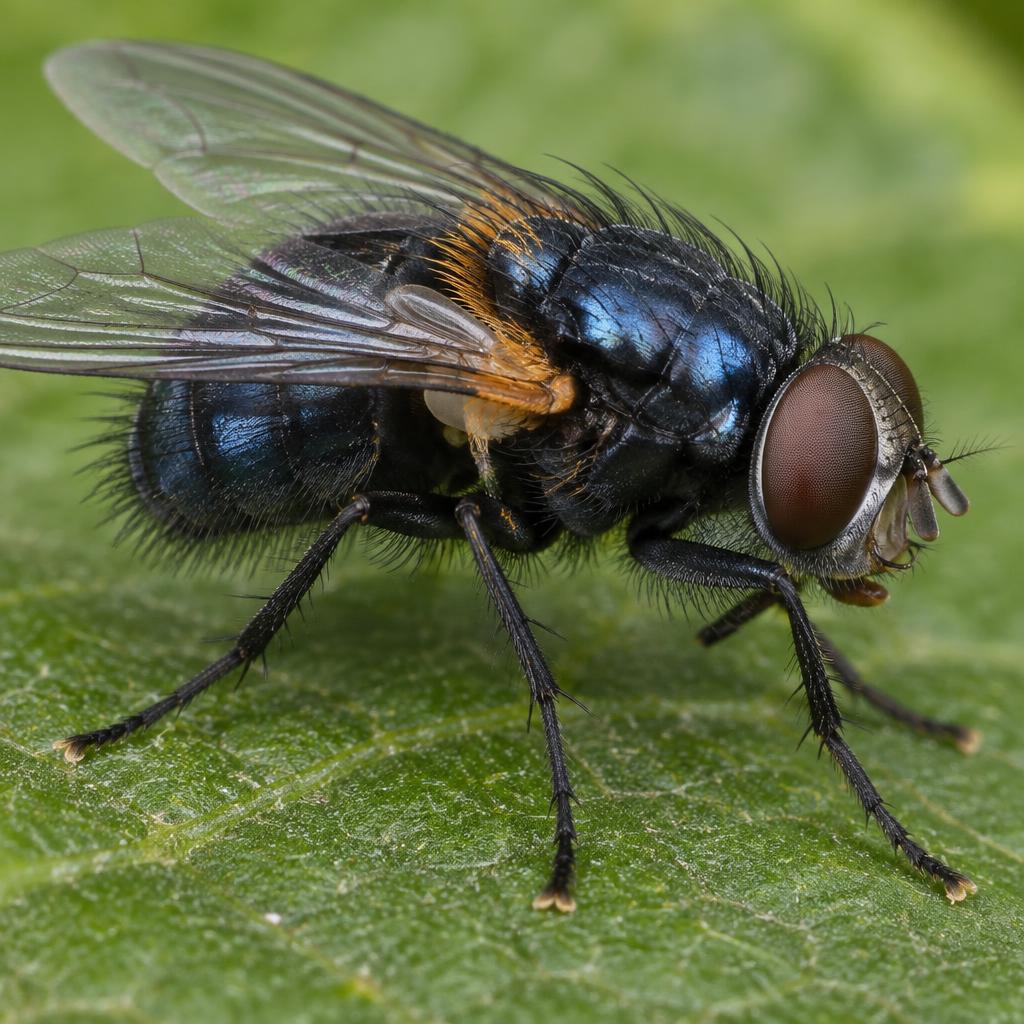 View full procedure
Fly
Black Blow Fly
Phormia regina
Moderate Risk
Biology
Phormia regina is a robust 8–11 mm fly with a dark metallic blue-black body and orange setae at the base of the wings. It develops on carrion and completes a generation in one to three weeks in cool weather.
Behaviour
Adults are strong fliers drawn to carrion, garbage, and wound tissue, and are active earlier and later in the season than other blow flies. Larvae feed in dense masses in decaying animal matter.
Habits
Sudden indoor swarms of sluggish shiny flies at windows usually mean a dead rodent or bird in a wall void, attic, or chimney. Adults mechanically carry bacteria onto food surfaces.
Control methods
- 1Locate and remove the carcass causing the breeding source
- 2Disinfect and deodorize the affected void after removal
- 3Screen chimneys, vents, and soffits to prevent animal entry
- 4Clean and seal refuse bins and dumpster pads
- 5Use a vacuum and light traps to clear remaining adults
- 6Seal wall and attic gaps used by rodents and birds
Tailored to Black Blow Fly
IPM Procedure Checklist
Step 1
Inspection
- Locate breeding sites: drains, decaying matter, moist organics
- Use tape-over-drain tests and UV/light traps to confirm
- Map dumpster, grease and floor-drain hot-spots
Step 2
Identification
- Confirm Black Blow Fly (Phormia regina) — not a look-alike
- Note life stage and risk level: Moderate
- Capture clear photos and samples for the record
Step 3
Action Thresholds
- Trigger action when monitor counts trend up
- Re-evaluate weekly during active season
- Document trigger criteria in the IPM plan
Step 4
Prevention
- Clean drains with enzymatic foam to remove biofilm
- Manage trash, recycling and grease daily
- Screen windows, doors and air curtains at entries
Step 5
Control Methods
- Locate and remove the carcass causing the breeding source
- Disinfect and deodorize the affected void after removal
- Screen chimneys, vents, and soffits to prevent animal entry
- Clean and seal refuse bins and dumpster pads
Step 6
Monitoring & Evaluation
- Service monitors on schedule and trend captures
- Re-inspect for Black Blow Fly activity at follow-up
- Adjust tactics based on data; report findings to client