Bat
Big Brown Bat
Eptesicus fuscus
Biology
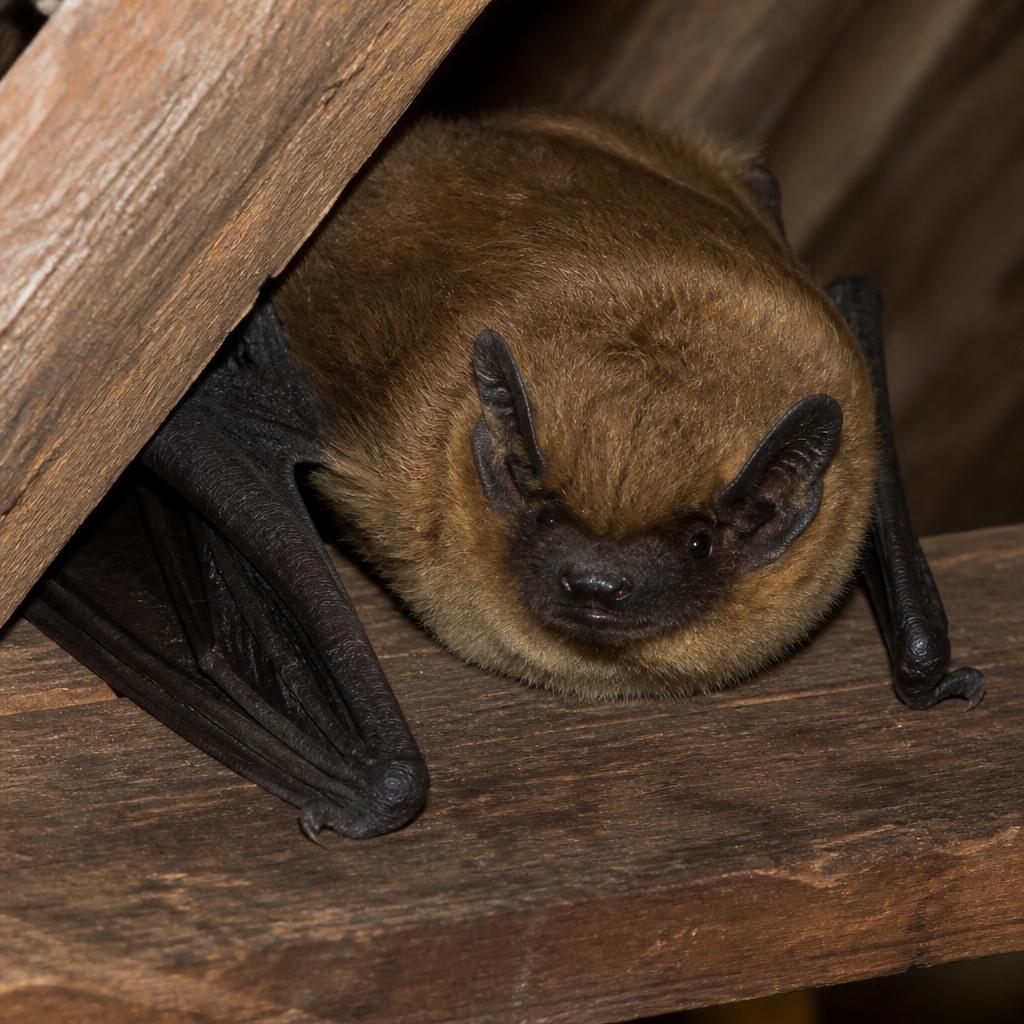
Eptesicus fuscus (Vespertilionidae) is the bat most often found living inside North American buildings. Adults are 10–13 cm long with a 32–40 cm wingspan and weigh 15–26 g, with glossy copper to chocolate-brown fur, a broad black muzzle, short rounded ears and black membranes. Females bear one pup in the east and commonly twins in the west, born late May to early July after 60 days of gestation; pups fly at about four weeks. The species is unusually cold-hardy, hibernating at 2–10°C and tolerating brief sub-freezing exposure, which lets it overwinter inside attics, wall voids and unheated buildings rather than migrating to caves.
Behaviour
Emergence is at dusk, with a strong, straight, relatively slow flight and echolocation calls sweeping from roughly 50 to 25 kHz. Diet is dominated by hard-shelled beetles, which its powerful jaws crush easily, along with moths, true bugs and flying ants. Maternity colonies typically hold 20–300 females and are highly site-faithful, returning to the same structure for decades. It is the species most frequently submitted for rabies testing in the United States simply because it lives with people, though the actual infection rate in wild populations remains under 1%. Accumulated guano in a long-occupied attic supports Histoplasma capsulatum growth and produces staining, odour and ceiling damage.
Habits
Roosts are in attics, soffits, ridge vents, chimney chases, behind shutters and fascia, in wall voids, barns and church steeples, entering through gaps as small as 1.5 x 2 cm. Look for brown-black oily rub marks at entry points, glossy guano pellets that crumble to shiny insect fragments, urine staining on siding and insulation, and squeaking or scrabbling in voids at dusk. Conducive conditions are open ridge and gable vents, deteriorated flashing, unscreened chimneys, gaps at fascia-to-roof junctions and warm attics. Because this species can winter indoors, occupancy may be year-round rather than seasonal.
Control methods
- 1Watch a full dusk emergence to map every active exit
- 2Exclude only outside the maternity period — typically after mid-August
- 3Fit one-way excluders on active exits for 5–7 nights
- 4Seal all gaps ≥ 6 mm with sealant, hardware cloth and flashing
- 5Remove guano and contaminated insulation with respirator and HEPA
- 6Never handle a bat; report any human or pet contact for rabies assessment
- 7Mount bat houses nearby before exclusion to retain the colony locally
Tailored to Big Brown Bat
IPM Procedure Checklist
Inspection
- Inspect at dusk to locate active entry/exit points
- Check attics, soffits and chimneys for guano
- Identify maternity colonies before any action
Identification
- Confirm Big Brown Bat (Eptesicus fuscus) — not a look-alike
- Note life stage and risk level: High
- Capture clear photos and samples for the record
Action Thresholds
- Zero-tolerance: act on first confirmed sighting
- Notify client and document the trigger event
- Prioritize health and regulatory risk in the plan
Prevention
- Seal gaps ≥6 mm with caulk, mesh and flashing
- Cap chimneys and screen attic vents
- Provide alternative bat houses on the property
Control Methods
- Watch a full dusk emergence to map every active exit
- Exclude only outside the maternity period — typically after mid-August
- Fit one-way excluders on active exits for 5–7 nights
- Seal all gaps ≥ 6 mm with sealant, hardware cloth and flashing
Monitoring & Evaluation
- Service monitors on schedule and trend captures
- Re-inspect for Big Brown Bat activity at follow-up
- Adjust tactics based on data; report findings to client