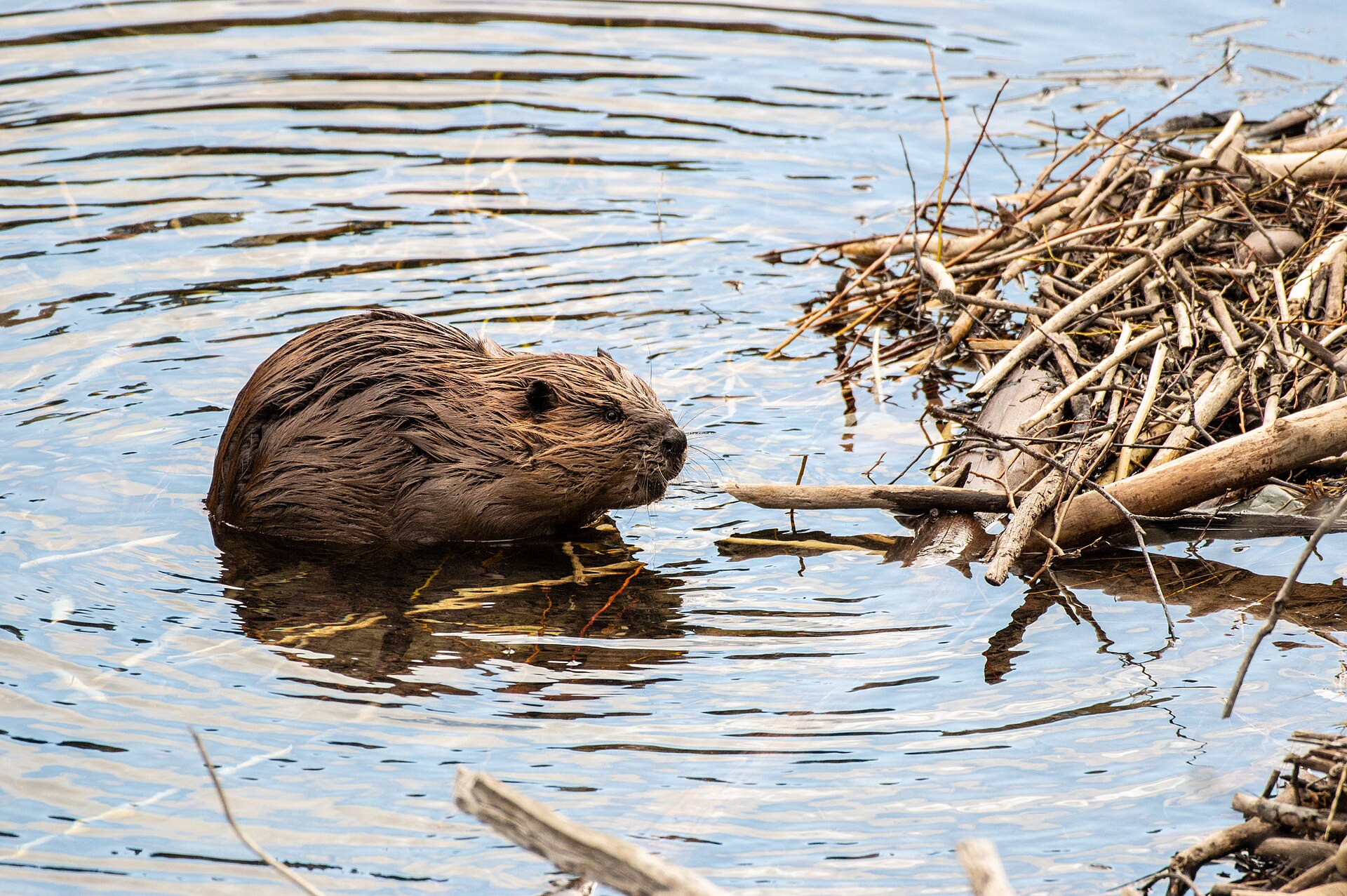
Rodent
American Beaver
Castor canadensis
Biology
Castor canadensis, the American beaver, is the largest rodent in North America, weighing 11-32 kg and measuring 75-120 cm in total length, including its distinctive flat, scaly tail. Beavers possess dense, waterproof fur, webbed hind feet, and nictitating membranes, all adaptations for their semi-aquatic lifestyle. They are primarily nocturnal or crepuscular. Beavers are monogamous and breed in late winter, producing a litter of 1-8 kits (typically 3-4) after a gestation period of about 107 days. Kits are precocial and remain with their parents for up to two years. Lifespan in the wild can be 10-15 years. Their incisors grow continuously, requiring constant gnawing.
Behaviour
Beavers are renowned for their engineering prowess, constructing dams and lodges using trees, branches, rocks, and mud. These structures modify aquatic environments, creating ponds and wetlands that benefit various wildlife. Their primary diet consists of tree bark (especially aspen, willow, birch), cambium, and aquatic vegetation. Beavers are territorial and communicate through scent mounds, tail slaps on the water (as an alarm signal), and vocalizations. Their gnawing to fell trees and maintain teeth can lead to significant deforestation along waterways. When their activity impacts human infrastructure, such as culverts, bridges, or agricultural fields, they become significant pests.
Habits
Beavers inhabit freshwater environments including rivers, streams, lakes, and ponds, preferring areas with abundant woody vegetation. They construct lodges, often within the impoundments created by their dams, with underwater entrances to deter predators. Burrows may also be dug into stream banks. Conducive conditions for beaver activity include reliable water sources, an ample supply of preferred woody vegetation (e.g., willows, aspen), and areas where their dam-building activities can effectively create stable ponds. Flooding caused by dam construction can inundate agricultural lands, undermine roads, and damage timber resources. Their gnawing weakens trees, leading to falls that can damage property.
Control methods
- 1Implement flow devices in dams to manage water levels.
- 2Wrap trees with wire mesh or paint with repellent.
- 3Remove dams carefully to prevent re-establishment.
- 4Install exclusion fencing around vulnerable areas.
- 5Trap and relocate beavers (local regulations apply).
- 6Consult with wildlife management professionals.
Tailored to American Beaver
IPM Procedure Checklist
Inspection
- Locate runways, droppings, rub marks and gnaw damage
- Identify entry points (gaps ≥6 mm) and harborage
- Place tracking patches or non-toxic monitors
Identification
- Confirm American Beaver (Castor canadensis) — not a look-alike
- Note life stage and risk level: Moderate
- Capture clear photos and samples for the record
Action Thresholds
- Trigger action when monitor counts trend up
- Re-evaluate weekly during active season
- Document trigger criteria in the IPM plan
Prevention
- Exclude with steel wool, hardware cloth and door sweeps
- Trim vegetation 0.5 m from structure; clear debris
- Secure trash, pet food and stored grain
Control Methods
- Implement flow devices in dams to manage water levels.
- Wrap trees with wire mesh or paint with repellent.
- Remove dams carefully to prevent re-establishment.
- Install exclusion fencing around vulnerable areas.
Monitoring & Evaluation
- Service monitors on schedule and trend captures
- Re-inspect for American Beaver activity at follow-up
- Adjust tactics based on data; report findings to client