Stored Product Pest
Bean Weevil
Acanthoscelides obtectus
Biology
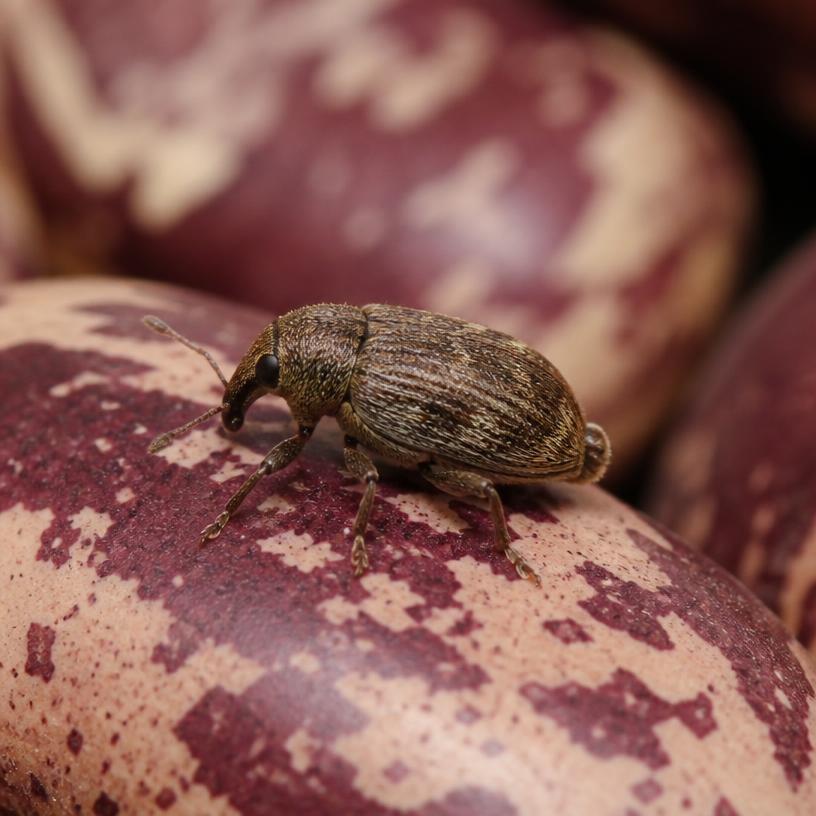
A stout 3–4 mm olive-brown seed beetle clothed in mottled greyish hairs, with a short broad snout and short elytra that leave the tip of the abdomen exposed. Females lay eggs loosely among dry beans and a generation completes in about a month indoors.
Behaviour
Larvae bore into dry beans and develop entirely inside the seed, cutting a thin circular window before the adult pushes out through a neat round exit hole. Unlike field-only seed beetles it breeds continuously in storage, so a single infested bag can build for months.
Habits
Attacks kidney, navy, pinto and other Phaseolus beans in pantries, seed stores and warehouses. Infestations usually enter with beans already carrying eggs from the field. Warm rooms and long-held bags of dried beans are the conducive conditions.
Control methods
- 1Discard beans with round exit holes or powdery residue
- 2Freeze dried beans at -18°C for one week before storing
- 3Store beans in airtight glass or rigid plastic containers
- 4Buy in quantities that will be used within a few months
- 5Clean shelf cracks and vacuum spilled beans
- 6Keep seed stock separate from food stock
- 7Inspect new deliveries before shelving
Tailored to Bean Weevil
IPM Procedure Checklist
Inspection
- Inspect grain, spices, pet food and dry goods for larvae and webbing
- Deploy pheromone monitors near storage and shelving
- Check spillage in seams, cracks and shelf liners
Identification
- Confirm Bean Weevil (Acanthoscelides obtectus) — not a look-alike
- Note life stage and risk level: Moderate
- Capture clear photos and samples for the record
Action Thresholds
- Trigger action when monitor counts trend up
- Re-evaluate weekly during active season
- Document trigger criteria in the IPM plan
Prevention
- Rotate stock FIFO; reject damaged packaging at receiving
- Store products in airtight containers
- Maintain low humidity and clean storage surfaces
Control Methods
- Discard beans with round exit holes or powdery residue
- Freeze dried beans at -18°C for one week before storing
- Store beans in airtight glass or rigid plastic containers
- Buy in quantities that will be used within a few months
Monitoring & Evaluation
- Service monitors on schedule and trend captures
- Re-inspect for Bean Weevil activity at follow-up
- Adjust tactics based on data; report findings to client