Blood Feeder
Bat Bug
Cimex pilosellus
Biology
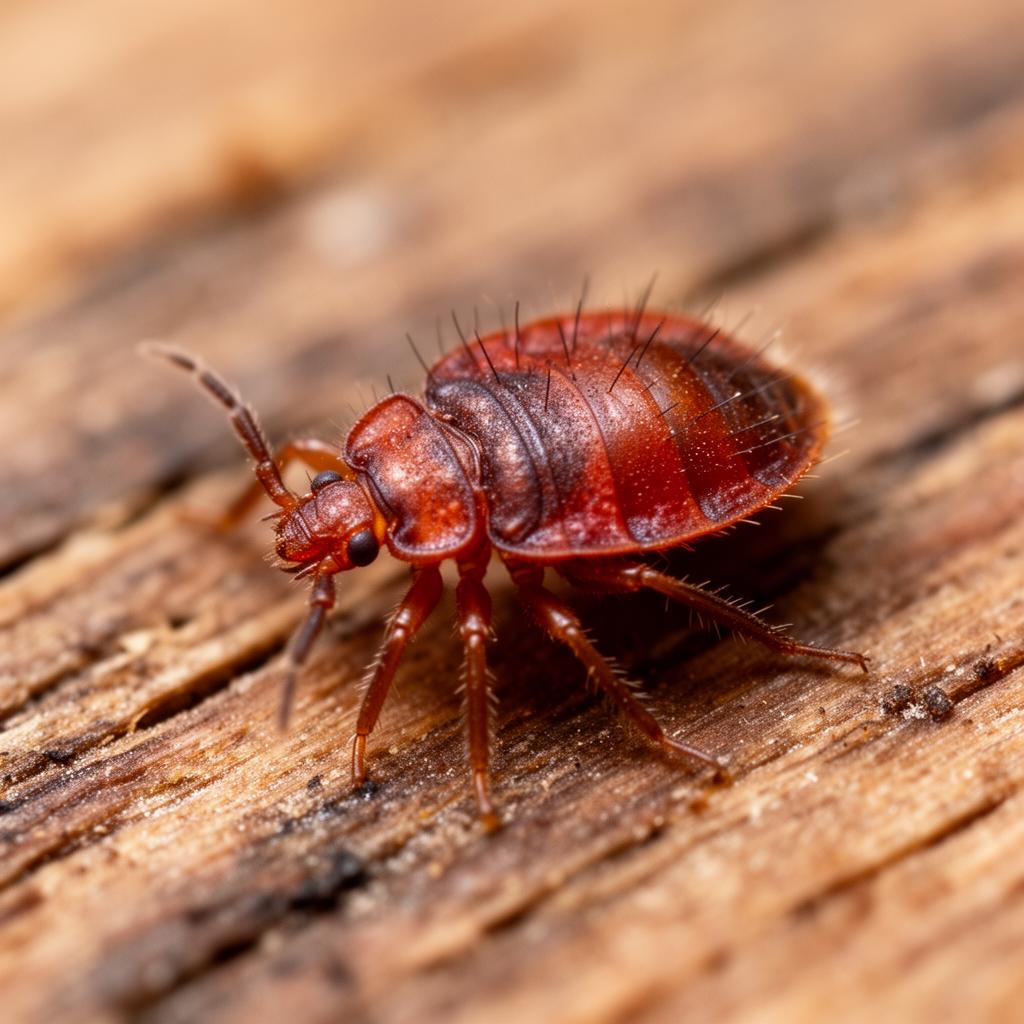
The bat bug, Cimex pilosellus, is an obligate hematophagous ectoparasite belonging to the family Cimicidae. Adults are ovoid, dorsoventrally flattened, and reddish-brown, measuring 4–5 mm when unfed, expanding significantly after a blood meal. Distinguishing morphological features include longer, more numerous pronotal hairs, often exceeding the width of the eye, a characteristic differentiating it from Cimex lectularius (bed bug) which has shorter, sparser hairs. Females lay 1–12 eggs daily, cemented in crevices, and total egg production can reach 200–500 over a lifespan of 6–12 months under optimal conditions (20–28°C, 70–80% RH). Development through five nymphal instars, each requiring a blood meal, takes 2–10 weeks depending on temperature and host availability, with adults capable of surviving several months without feeding.
Behaviour
Cimex pilosellus exhibits primarily nocturnal activity, emerging from harborage to seek blood meals from roosting bats, its primary host. Dispersal typically occurs passively within a bat colony or actively by crawling once host availability diminishes, such as after bat exclusion or colony collapse. While lacking complex social structures, aggregations are common, likely mediated by aggregation pheromones reducing exposure to predators and optimizing mate location. Their feeding ecology is strictly hematophagous, and although they can bite humans, C. pilosellus cannot complete its lifecycle on human blood alone over successive generations. Public health impact is typically limited to transient, irritating bites, with no known disease transmission; structural impact occurs when bugs exit voids and infest living spaces.
Habits
Bat bugs predominantly harbor in close proximity to their bat hosts, favoring crevices, cracks, and interstitial spaces within bat roosts in attics, wall voids, belfries, and behind siding. Foraging patterns involve emerging from these concealed harborages, often within a range of several meters, to locate quiescent bats for blood meals. Seasonal movements are largely dictated by bat occupancy; however, when bats migrate or are excluded, bat bugs disperse from these roosting sites, frequently moving along wires, pipes, and through wall voids into occupied human spaces, particularly in upper floors. Conducive conditions for infestation include active bat populations in structural voids and the subsequent removal of these hosts, leading to host-seeking dispersal; signs of infestation include live or dead bugs, fecal spotting (digested blood), and shed exoskeletons found near former bat entry/exit points or within living areas.
Control methods
- 1Identify under magnification to distinguish from bed bugs
- 2Exclude bats first — bat bugs migrate without their host
- 3Vacuum and remove guano and debris from roost areas
- 4Apply residual insecticide to voids and crack-and-crevice
- 5Seal entry points between attic and living spaces
- 6Re-inspect after 2–4 weeks to confirm elimination
Tailored to Bat Bug
IPM Procedure Checklist
Inspection
- Survey interior and exterior for evidence and conducive conditions
- Document findings with photos and a site map
- Place monitors to confirm activity
Identification
- Confirm Bat Bug (Cimex pilosellus) — not a look-alike
- Note life stage and risk level: Moderate
- Capture clear photos and samples for the record
Action Thresholds
- Trigger action when monitor counts trend up
- Re-evaluate weekly during active season
- Document trigger criteria in the IPM plan
Prevention
- Exclude entry points and harborage
- Improve sanitation and moisture control
- Modify habitat around the structure
Control Methods
- Identify under magnification to distinguish from bed bugs
- Exclude bats first — bat bugs migrate without their host
- Vacuum and remove guano and debris from roost areas
- Apply residual insecticide to voids and crack-and-crevice
Monitoring & Evaluation
- Service monitors on schedule and trend captures
- Re-inspect for Bat Bug activity at follow-up
- Adjust tactics based on data; report findings to client