Arachnid
Arizona Bark Scorpion
Centruroides sculpturatus
Biology
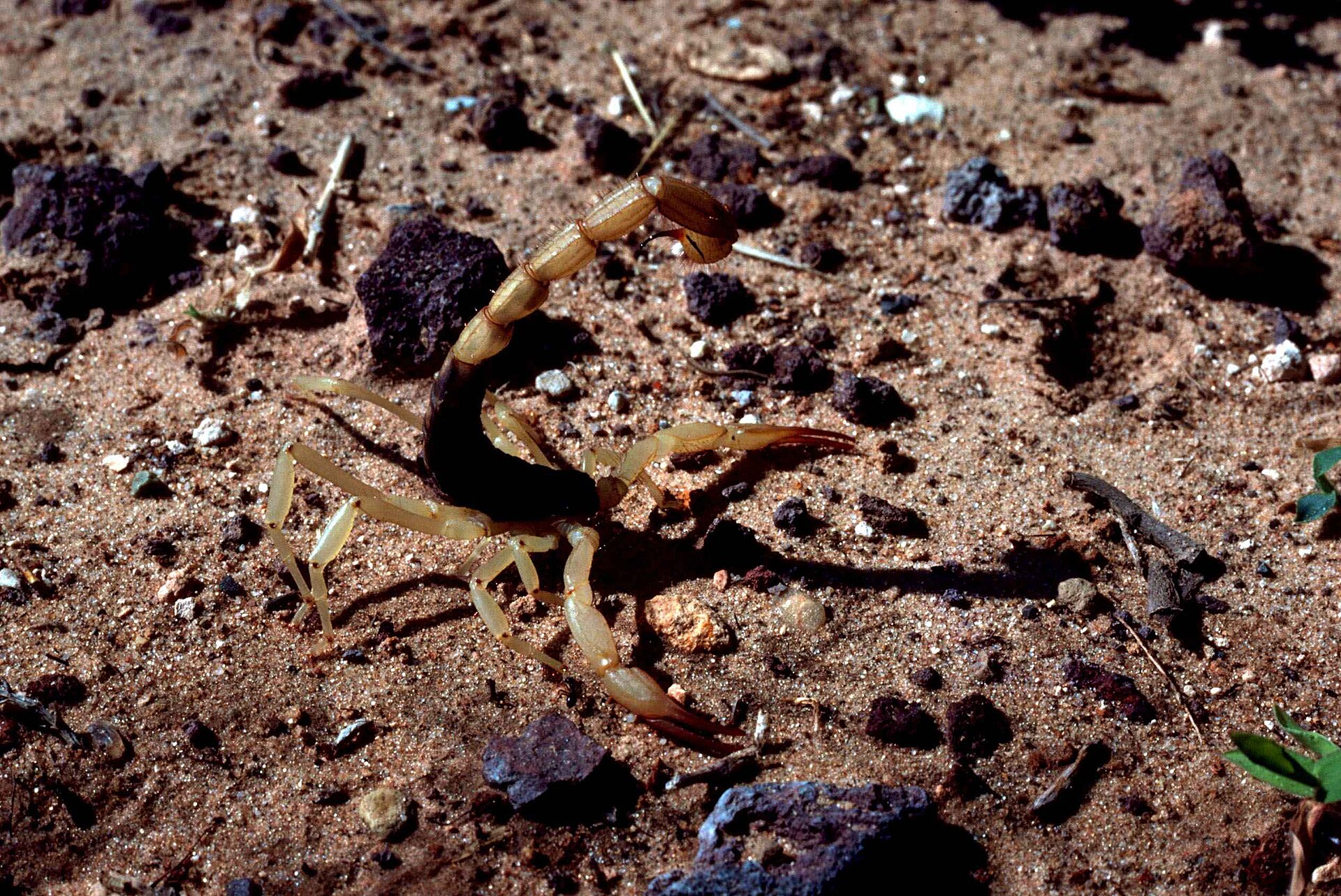
Centruroides sculpturatus, commonly known as the Arizona bark scorpion, belongs to the family Buthidae, renowned for housing many medically significant scorpion species. Adults typically measure 60-80 mm in length, displaying a pale yellow to tan coloration, often with two faint longitudinal stripes on the carapace and tergites. Distinguishing features include notably slender pedipalps (pincers) and a thin metasoma (tail) with a subaculear tooth (a small tubercle) beneath the stinger, differentiating it from less venomous species. Viviparous reproduction yields 25-35 live young per brood, which remain on the mother's back through their first molt, reaching maturity in several months to over a year depending on environmental conditions like temperature and food availability. Their lifespan can extend for several years, with optimal temperatures for activity ranging from 24-38°C and moderate humidity.
Behaviour
The Arizona bark scorpion is primarily nocturnal, exhibiting peak activity during warmer night hours when searching for prey and mates, and retreats to shaded, cooler microhabitats during daylight. This species is highly arboreal and fossorial, demonstrating exceptional climbing abilities on various surfaces, including textured walls, stucco, and even upside down on ceilings, which facilitates access into structures via small crevices. Their neurotoxic venom, a complex cocktail of peptides and enzymes, is delivered via a telson-mediated sting, causing intense pain, paresthesia, and localized swelling, with systemic effects like respiratory distress and seizures being particularly concerning for infants, the elderly, and immunocompromised individuals. Communication during courtship involves chemosensory cues and vibrations, while threat displays may involve metasoma arching and stinger presentation.
Habits
Arizona bark scorpions primarily seek harborage in tight cracks and crevices, favoring architectural voids such as block walls, weep holes, decorative rockwork, and attic spaces where temperature and humidity are moderated. Outdoors, they commonly reside under rocks, logs, tree bark (especially mesquite and palo verde), landscape timbers, and construction debris. Foraging patterns involve crepuscular and nocturnal excursions, typically covering a range of several meters from their harborage, often climbing walls and trees to intercept arboreal insects. Infestation signs include direct observation of scorpions, particularly at night with UV light revealing their characteristic blue-green fluorescence, and exoskeletons (exuviae) left behind after molting. Conducive conditions for heavy infestations include accumulations of yard debris, poor exterior sealing, and the presence of abundant insect prey populations around and within structures.
Control methods
- 1UV-light inspections at night to find harborage
- 2Seal block-wall voids, weep holes and door sweeps
- 3Remove woodpiles, rocks and debris near house
- 4Shake out shoes and bedding before use
- 5Glue boards along baseboards and garage edges
- 6Professional pyrethroid treatment of attics and voids
Tailored to Arizona Bark Scorpion
IPM Procedure Checklist
Inspection
- Survey interior and exterior for evidence and conducive conditions
- Document findings with photos and a site map
- Place monitors to confirm activity
Identification
- Confirm Arizona Bark Scorpion (Centruroides sculpturatus) — not a look-alike
- Note life stage and risk level: Severe
- Capture clear photos and samples for the record
Action Thresholds
- Zero-tolerance: act on first confirmed sighting
- Notify client and document the trigger event
- Prioritize health and regulatory risk in the plan
Prevention
- Exclude entry points and harborage
- Improve sanitation and moisture control
- Modify habitat around the structure
Control Methods
- UV-light inspections at night to find harborage
- Seal block-wall voids, weep holes and door sweeps
- Remove woodpiles, rocks and debris near house
- Shake out shoes and bedding before use
Monitoring & Evaluation
- Service monitors on schedule and trend captures
- Re-inspect for Arizona Bark Scorpion activity at follow-up
- Adjust tactics based on data; report findings to client