Stinging Insect
Bald-faced Hornet
Dolichovespula maculata
Biology
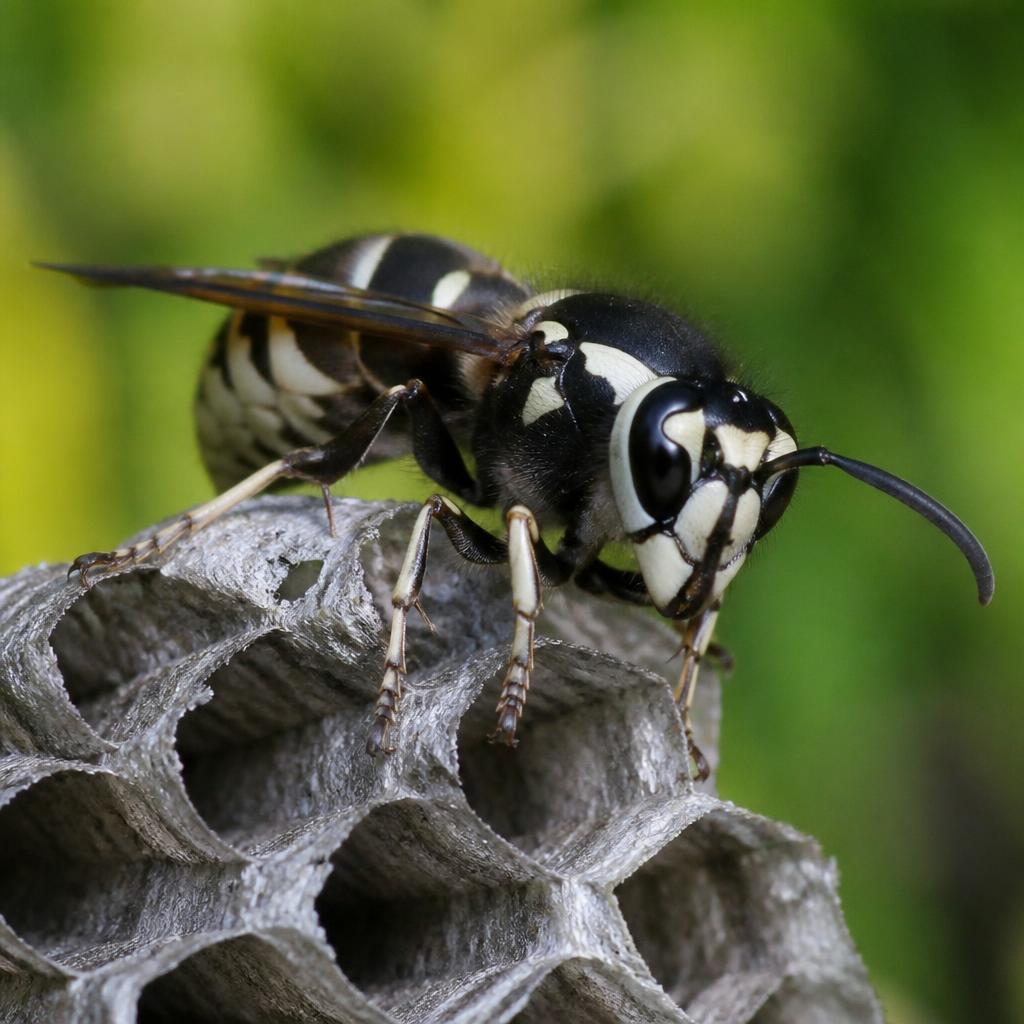
The bald-faced hornet, *Dolichovespula maculata*, is a vespine wasp, a true hornet despite its 'yellowjacket' affiliation; it is distinguishable by its large size (queens 18-20 mm, workers 15-18 mm) and characteristic black integument with extensive ivory-white markings on the face, thorax, and abdominal segments. The lifecycle is annual, initiated by an overwintered queen in spring, who lays eggs that develop through larval and pupal stages within approximately 2-3 weeks in optimal temperatures (25-30°C). Colonies can rapidly expand to house 100 to over 700 workers by late summer, with a single queen capable of producing thousands of offspring over her lifespan. Reproductive males (drones) and new queens are produced toward the end of the season, representing the only individuals that survive the onset of colder weather.
Behaviour
Bald-faced hornets exhibit complex social behaviour within their annual colony structure, with specialized roles for the queen, workers, and later, reproductives. Workers communicate foraging success and nest defense needs through chemical cues and aggressive posturing; their highly territorial nature leads to mass attacks on perceived threats within a 3-5 meter radius of the nest. They are voracious predators, actively hunting a wide range of soft-bodied insects, including flies, caterpillars, and other pest insects, thereby exhibiting a beneficial role in natural pest control. Their defensive sting can be repeatedly delivered due to a smooth stinger, and they are also known to forcibly eject venom, which can cause significant eye irritation if contact is made.
Habits
These hornets construct large, enclosed, multi-layered paper nests, typically spherical to football-shaped, using masticated wood fibers mixed with saliva, which are grayish in color and can measure up to 60 cm in diameter and 90 cm in length. Nests are predominantly built in aerial locations such as tree branches, dense shrubbery, under eaves, or on structural overhangs, usually 1.5 to 6 meters above ground. Foraging workers range several hundred meters from the nest to collect protein (insects), carbohydrates (nectar, sap), and wood pulp. Infestation cues for technicians include direct observation of active nest building or foraging flights, especially during morning and late afternoon hours, and the presence of worker wasps congregating around potential food sources or water.
Control methods
- 1Treat nest entrance after dark with knockdown aerosol or dust
- 2Maintain 5+ m distance until activity ceases
- 3Remove nest only after 24–48 h of no activity
- 4Hire a professional for nests above 3 m or near entries
- 5Keep bystanders and pets clear during treatment
- 6Never seal an active nest opening — workers will chew out
Tailored to Bald-faced Hornet
IPM Procedure Checklist
Inspection
- Survey interior and exterior for evidence and conducive conditions
- Document findings with photos and a site map
- Place monitors to confirm activity
Identification
- Confirm Bald-faced Hornet (Dolichovespula maculata) — not a look-alike
- Note life stage and risk level: High
- Capture clear photos and samples for the record
Action Thresholds
- Zero-tolerance: act on first confirmed sighting
- Notify client and document the trigger event
- Prioritize health and regulatory risk in the plan
Prevention
- Exclude entry points and harborage
- Improve sanitation and moisture control
- Modify habitat around the structure
Control Methods
- Treat nest entrance after dark with knockdown aerosol or dust
- Maintain 5+ m distance until activity ceases
- Remove nest only after 24–48 h of no activity
- Hire a professional for nests above 3 m or near entries
Monitoring & Evaluation
- Service monitors on schedule and trend captures
- Re-inspect for Bald-faced Hornet activity at follow-up
- Adjust tactics based on data; report findings to client