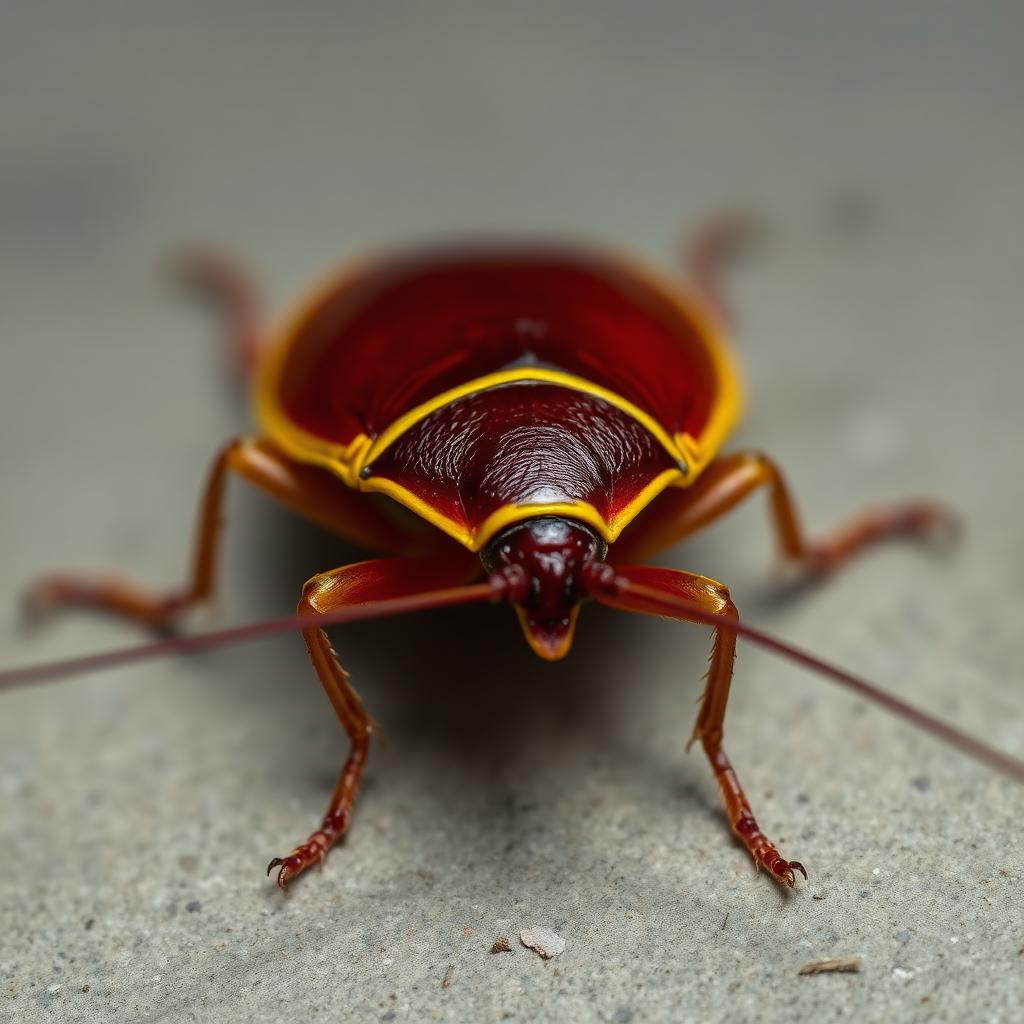
Cockroach
Australian Cockroach
Periplaneta australasiae
Biology
The Australian cockroach, <em>Periplaneta australasiae</em> (Blattodea: Blattidae), is a large peridomestic species measuring 27–35 mm as an adult, closely resembling the American cockroach but distinguished by a pronounced pale-yellow margin around the pronotum and yellow streaks along the lateral base of each forewing. Both sexes are fully winged and capable of gliding flight in warm conditions. Under optimal conditions (29°C, 65–80% RH) the lifecycle spans roughly 6–12 months, with females producing 20–30 oothecae over their lifetime, each containing 22–24 eggs that hatch after 30–40 days. Nymphs pass through 9–12 instars over about 6–12 months before reaching adulthood, with adults living an additional 4–8 months.
Behaviour
Primarily nocturnal and strongly thermophilic, <em>P. australasiae</em> thrives in warm, humid subtropical and tropical climates and readily invades structures when outdoor temperatures drop or moisture becomes limiting. It is a partial phytophage — more inclined than other <em>Periplaneta</em> species to feed on plant material, soft fruit, seedlings, and greenhouse crops — but is also fully omnivorous, consuming starches, decaying organic matter, and food residues. Adults are attracted to lights at night and disperse readily by flight, which facilitates rapid indoor invasion. Populations mechanically transmit bacteria (including <em>Salmonella</em> and <em>E. coli</em>) and fungal spores, and their shed cuticles and frass are recognized indoor allergens implicated in asthma.
Habits
Preferred outdoor harborage includes greenhouses, tree holes, palm frond bases, leaf litter, wood piles, subfloor voids, and around water meters or irrigation boxes where humidity remains high. Indoors, harborage is concentrated in warm, damp areas such as bathrooms, laundry rooms, kitchens, wall voids near hot-water lines, attics, and behind loose bark on structural timbers. Foraging typically occurs within 6–15 m of harborage but adults will fly considerable distances toward lit windows and doorways. Conducive conditions include heavy mulch or vegetation against the foundation, unscreened weep holes and vents, plumbing leaks, and cluttered greenhouses. Signs include reddish-brown fecal spotting, discarded oothecae glued to sheltered surfaces, feeding damage to seedlings and stored produce, and a musty odor near active harborages.
Control methods
- 1Exclude via screened vents, weep holes and door sweeps
- 2Reduce mulch depth and clear vegetation from foundation
- 3Switch exterior lights to yellow LED and shield fixtures
- 4Perimeter residual and granular baits in landscape harborage
- 5Gel bait and dust in wall voids, attics and greenhouse cracks
- 6Correct plumbing leaks and improve ventilation
Tailored to Australian Cockroach
IPM Procedure Checklist
Inspection
- Survey interior and exterior for evidence and conducive conditions
- Document findings with photos and a site map
- Place monitors to confirm activity
Identification
- Confirm Australian Cockroach (Periplaneta australasiae) — not a look-alike
- Note life stage and risk level: Moderate
- Capture clear photos and samples for the record
Action Thresholds
- Trigger action when monitor counts trend up
- Re-evaluate weekly during active season
- Document trigger criteria in the IPM plan
Prevention
- Exclude entry points and harborage
- Improve sanitation and moisture control
- Modify habitat around the structure
Control Methods
- Exclude via screened vents, weep holes and door sweeps
- Reduce mulch depth and clear vegetation from foundation
- Switch exterior lights to yellow LED and shield fixtures
- Perimeter residual and granular baits in landscape harborage
Monitoring & Evaluation
- Service monitors on schedule and trend captures
- Re-inspect for Australian Cockroach activity at follow-up
- Adjust tactics based on data; report findings to client