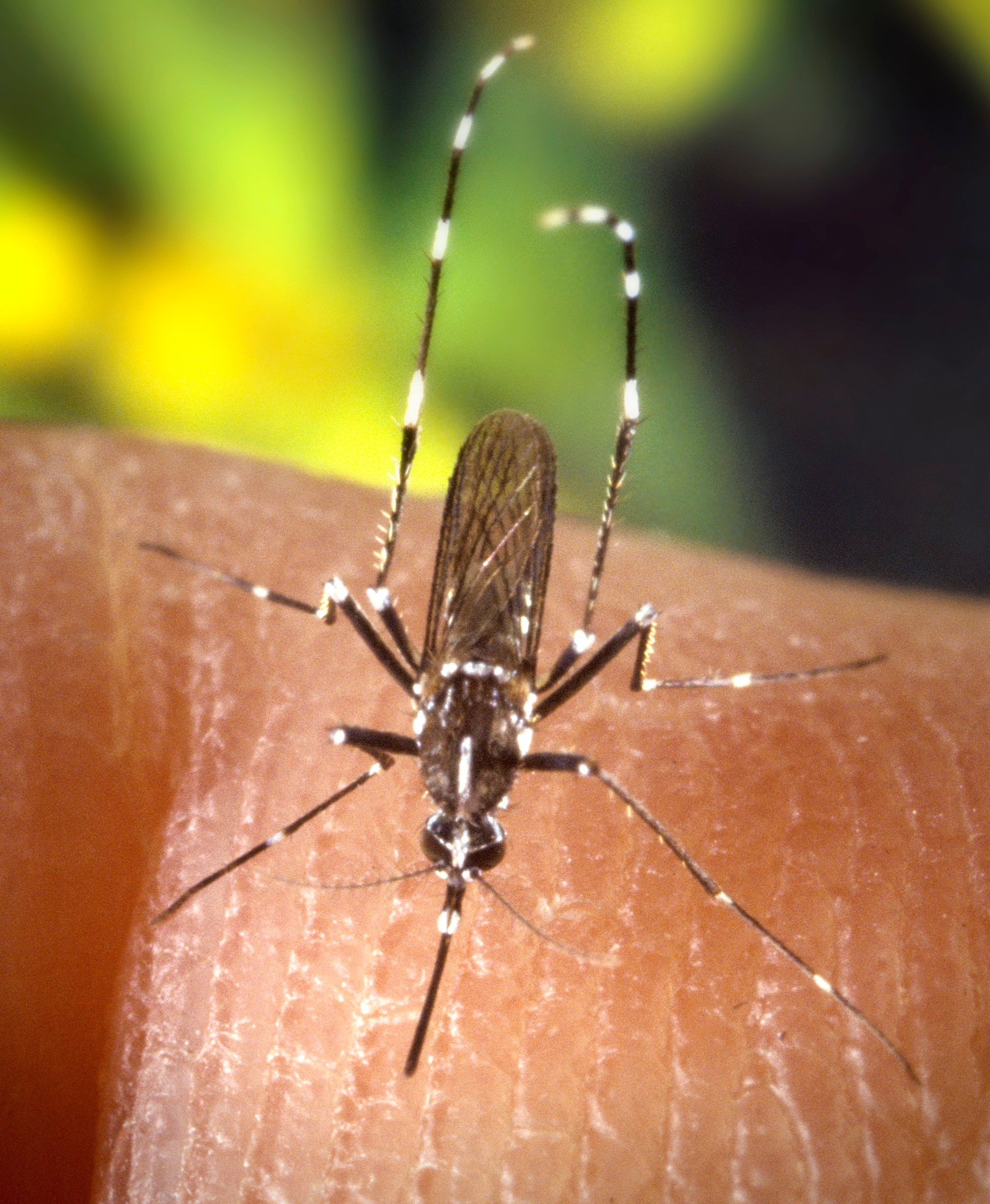
Blood Feeder
Asian Tiger Mosquito
Aedes albopictus
Biology
Aedes albopictus, the Asian tiger mosquito, belongs to the family Culicidae. This mosquito is distinctive with its striking black and white striped body and legs, and a prominent white stripe running down its back. It is a small to medium-sized mosquito, typically 2-10 mm in length. Its lifecycle is rapid, often completed within 7-14 days at optimal temperatures (25-30°C). Females lay individual, desiccation-resistant eggs just above the waterline in small, artificial containers, rather than in large bodies of water. Larvae and pupae develop exclusively in these container habitats, feeding on organic matter. Adults typically live for a few weeks.
Behaviour
Unlike many mosquito species, Aedes albopictus is an aggressive diurnal biter, active throughout the day, particularly during early morning and late afternoon hours, in both shady outdoor and indoor environments. Females are opportunistic feeders, taking blood meals from a wide range of hosts, including humans, mammals, and birds. Their flight range is relatively limited, typically within 200-500 meters of their breeding sites. They are highly attuned to hosts via chemical and visual cues. Aggressive biting behavior is a key characteristic explaining their role as a nuisance and disease vector.
Habits
The Asian tiger mosquito is highly adapted to urban and suburban environments due to its reliance on artificial containers for larval development. Harborage sites for adults include dense shrubbery, tall grasses, and other shaded vegetation near human dwellings. Larvae develop in virtually any water-holding container, such as discarded tires, bird baths, clogged gutters, and flower pot saucers. Conducive conditions include accumulation of rainwater in artificial containers, unmanaged vegetation, and lack of community-wide mosquito control efforts. Its expansion is largely due to its ability to utilize human-modified habitats.
Control methods
- 1Eliminate all standing water sources.
- 2Empty and clean containers weekly.
- 3Keep gutters clear of debris.
- 4Maintain lawns and trim vegetation.
- 5Use EPA-approved larvicides.
- 6Apply adulticides for severe infestations.
Tailored to Asian Tiger Mosquito
IPM Procedure Checklist
Inspection
- Survey interior and exterior for evidence and conducive conditions
- Document findings with photos and a site map
- Place monitors to confirm activity
Identification
- Confirm Asian Tiger Mosquito (Aedes albopictus) — not a look-alike
- Note life stage and risk level: High
- Capture clear photos and samples for the record
Action Thresholds
- Zero-tolerance: act on first confirmed sighting
- Notify client and document the trigger event
- Prioritize health and regulatory risk in the plan
Prevention
- Exclude entry points and harborage
- Improve sanitation and moisture control
- Modify habitat around the structure
Control Methods
- Eliminate all standing water sources.
- Empty and clean containers weekly.
- Keep gutters clear of debris.
- Maintain lawns and trim vegetation.
Monitoring & Evaluation
- Service monitors on schedule and trend captures
- Re-inspect for Asian Tiger Mosquito activity at follow-up
- Adjust tactics based on data; report findings to client