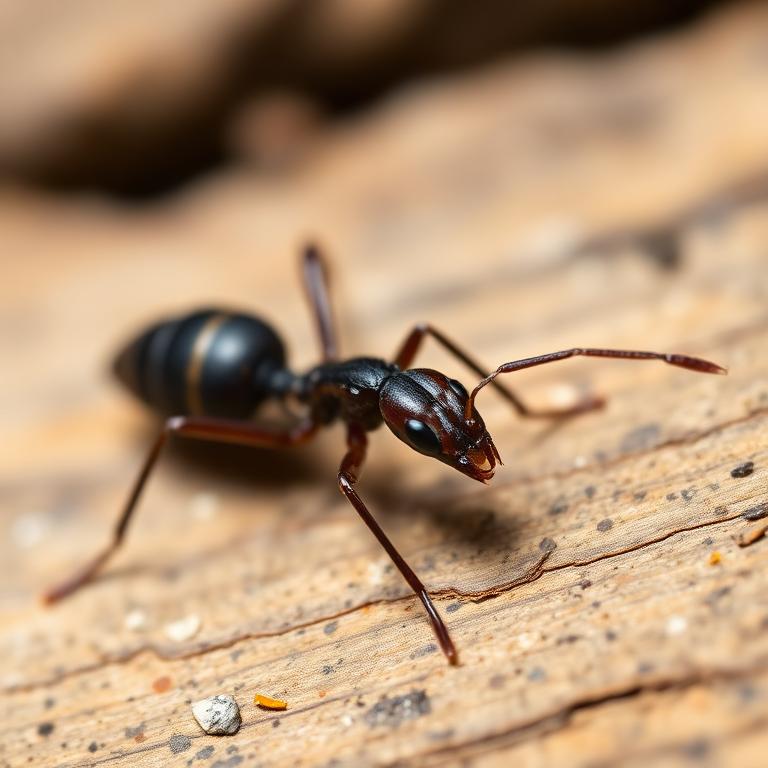
Ant
Asian Needle Ant
Brachyponera chinensis
Biology
The Asian needle ant is a slender dark brown to black ponerine ant about 5 mm long with lighter orange-brown mandibles and legs, a single-node waist, and a functional sting. Colonies are small by invasive-ant standards — hundreds to a few thousand workers — but are polygynous and spread by budding. Unusually for a tropical-origin invader, this species is cold-tolerant and forages at temperatures well below those preferred by Argentine or fire ants, becoming active in early spring before competing species emerge.
Behaviour
Workers are slow-moving, poorly coordinated, and do not form conspicuous trails, so infestations are often overlooked until someone is stung. The sting is medically significant: it causes intense, long-lasting pain and welts, and this species is a documented cause of anaphylaxis in sensitised people, which is why it is treated as a public-health pest rather than a nuisance ant. Diet is heavily predatory, with termites a favoured prey, and workers commonly carry nestmates during relocation. Their spread displaces native ants and disrupts seed-dispersing ant communities.
Habits
Nests are in damp, shaded harborage — under logs, landscape timbers, mulch, stones, pavers, potted plants, and leaf litter, and in rotting wood against foundations. Workers wander indoors along ground-level gaps but do not establish long-term indoor colonies. Conducive conditions include heavy mulch and firewood against the structure, dense shade, and irrigation keeping ground cover permanently moist. Inspect by turning objects in shaded damp areas in spring; because there are no trails to follow, treatment must target the harborage itself.
Control methods
- 1Treat identified nest harborage directly rather than trailing workers
- 2Remove mulch, logs, stones and firewood contact against the foundation
- 3Reduce irrigation and correct drainage in shaded landscape beds
- 4Use protein-based baits — this species responds poorly to sweet baits
- 5Warn occupants of sting risk; advise medical care for allergic reactions
- 6Apply a perimeter residual band at ground level and around entry gaps
Tailored to Asian Needle Ant
IPM Procedure Checklist
Inspection
- Follow trails to nests, food and moisture sources
- Inspect wall voids, slab edges and exterior soil
- Place non-repellent monitors at trail crossings
Identification
- Confirm Asian Needle Ant (Brachyponera chinensis) — not a look-alike
- Note life stage and risk level: High
- Capture clear photos and samples for the record
Action Thresholds
- Zero-tolerance: act on first confirmed sighting
- Notify client and document the trigger event
- Prioritize health and regulatory risk in the plan
Prevention
- Seal entry cracks, utility penetrations and weep holes
- Eliminate honeydew-producing pests on landscape plants
- Store food in sealed containers and clean spills promptly
Control Methods
- Treat identified nest harborage directly rather than trailing workers
- Remove mulch, logs, stones and firewood contact against the foundation
- Reduce irrigation and correct drainage in shaded landscape beds
- Use protein-based baits — this species responds poorly to sweet baits
Monitoring & Evaluation
- Service monitors on schedule and trend captures
- Re-inspect for Asian Needle Ant activity at follow-up
- Adjust tactics based on data; report findings to client