Stinging Insect
Asian Giant Hornet
Vespa mandarinia
Biology
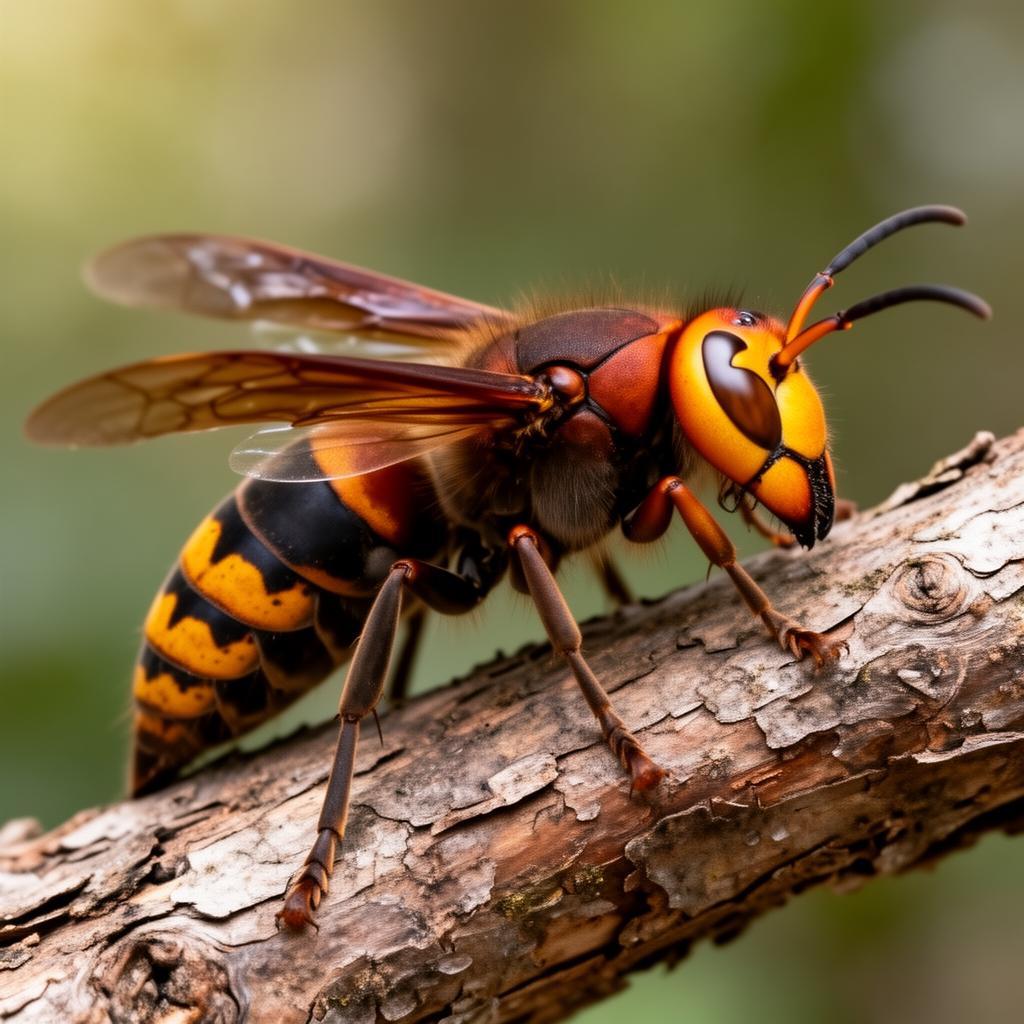
Vespa mandarinia Smith, within the family Vespidae, is the largest hornet species globally, with queens reaching up to 50 mm in length and workers around 35-40 mm. They are characterized by a large, orange-yellow head, prominent eyes, a blackish-brown thorax, and an abdomen with alternating yellow-orange and black bands. Their stinger is long and capable of delivering a potent venom. Nests are primarily subterranean or constructed in tree cavities, made from chewed wood fibers. The lifecycle involves an overwintering queen emerging in spring to establish a new colony.
Behaviour
V. mandarinia are formidable predators, with a diet primarily consisting of large insects, including other social wasps, mantises, and particularly honey bees. They engage in a distinctive "slaughter phase" where they decapitate honey bees to harvest their thoraxes for protein. While generally not aggressive towards humans unless their nest is disturbed, their sting is exceptionally painful and medically significant. Foraging workers can travel several kilometers from the nest in search of prey.
Habits
Asian giant hornets prefer forested and mountainous regions, where they can find suitable subterranean nesting sites or tree cavities. They are typically found in East Asia. Optimal conditions include temperate to subtropical climates with abundant insect populations to sustain the colony. Conducive nesting sites include undisturbed underground burrows, old rodent nests, or hollow spaces at the base of trees, providing insulation and protection. Proximity to honey bee apiaries can lead to significant economic damage due to their predatory nature.
Control methods
- 1Locate and destroy nests using professional methods.
- 2Trap foraging hornets to reduce colony size.
- 3Wear thick protective gear during control operations.
- 4Report suspected sightings to authorities.
- 5Educate beekeepers on apiary protection.
- 6Monitor for hornet activity, especially near apiaries.
Tailored to Asian Giant Hornet
IPM Procedure Checklist
Inspection
- Survey interior and exterior for evidence and conducive conditions
- Document findings with photos and a site map
- Place monitors to confirm activity
Identification
- Confirm Asian Giant Hornet (Vespa mandarinia) — not a look-alike
- Note life stage and risk level: Severe
- Capture clear photos and samples for the record
Action Thresholds
- Zero-tolerance: act on first confirmed sighting
- Notify client and document the trigger event
- Prioritize health and regulatory risk in the plan
Prevention
- Exclude entry points and harborage
- Improve sanitation and moisture control
- Modify habitat around the structure
Control Methods
- Locate and destroy nests using professional methods.
- Trap foraging hornets to reduce colony size.
- Wear thick protective gear during control operations.
- Report suspected sightings to authorities.
Monitoring & Evaluation
- Service monitors on schedule and trend captures
- Re-inspect for Asian Giant Hornet activity at follow-up
- Adjust tactics based on data; report findings to client