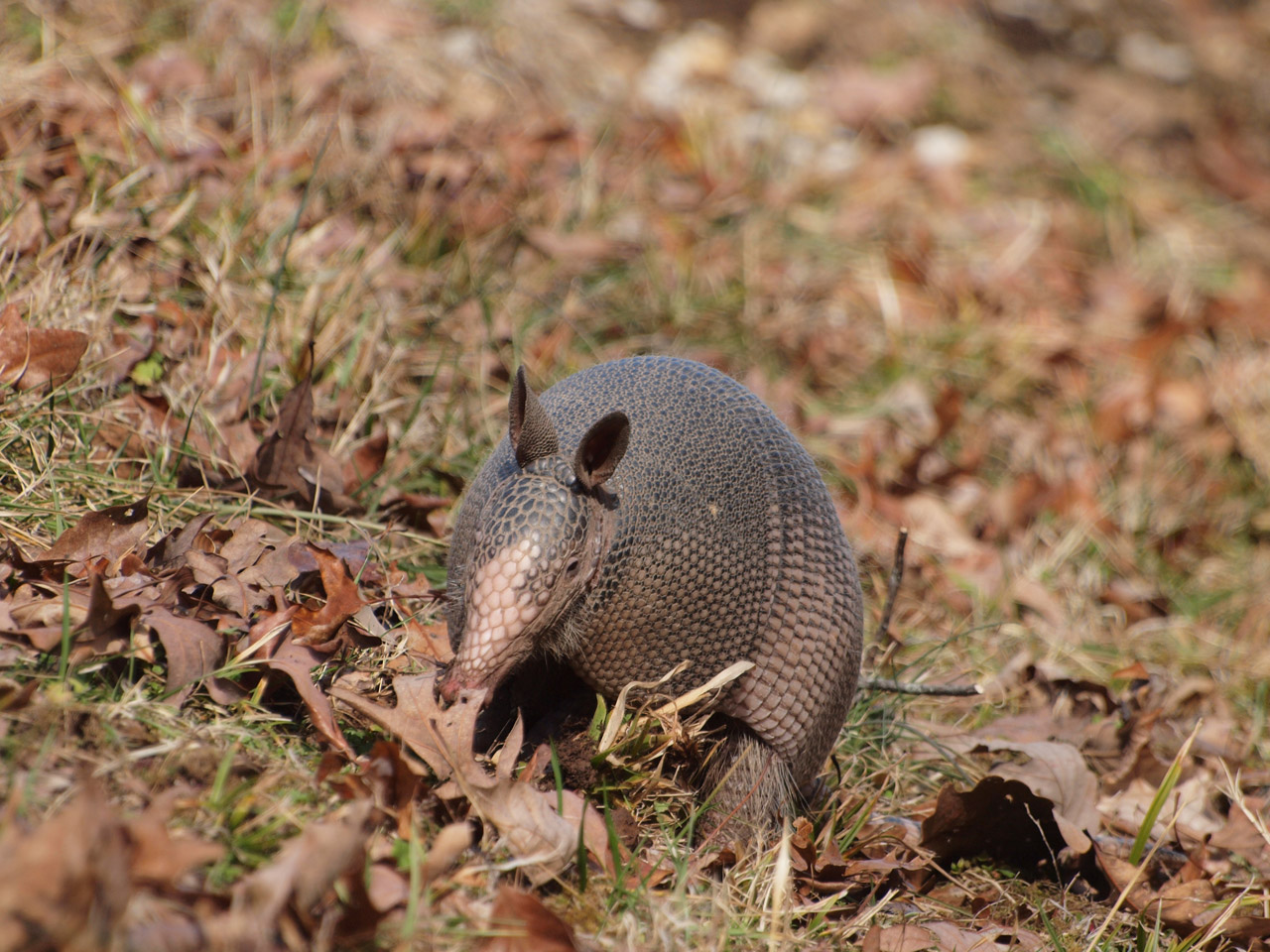
Mammal
Nine-banded Armadillo
Dasypus novemcinctus
Biology
The nine-banded armadillo, Dasypus novemcinctus (Order Cingulata, Family Dasypodidae), is a medium-sized mammal characterized by its bony, leathery carapace with nine movable bands across its midsection. Adults typically weigh 2.5-6.5 kg and measure 60-80 cm in total length, including the tail. Their armor is typically grayish-brown. D. novemcinctus is unique among mammals for its obligate polyembryony, consistently producing genetically identical quadruplets from a single zygote. Breeding occurs from July-August, but implantation is delayed until November-December, resulting in a gestation period of approximately four months. Pups are born in March-May and are weaned by 2-3 months.
Behaviour
Armadillos are primarily nocturnal and crepuscular, though they may be active during the day in cooler weather. They are solitary creatures, except for mothers with dependent young. Despite their armor, they are surprisingly agile and can run quickly or jump vertically when startled. Their primary defense mechanism is to curl into a ball or wedge themselves into burrows. They possess a keen sense of smell, which they use to locate food, but their eyesight is poor.
Habits
D. novemcinctus is an insectivore, with a diet consisting primarily of invertebrates, including beetles, grubs, ants, and termites, which they detect by olfaction and excavate from the soil with their strong claws. They also consume fungi, fruits, and carrion incidentally. Harbors are typically extensive burrow systems, often located in sandy or loamy soils, under dense vegetation, or near structures. Conducive conditions include areas with loose soil for burrowing, abundant invertebrate prey, and moderate temperatures and humidity. They are not tolerant of prolonged freezing temperatures.
Control methods
- 1Install exclusion fencing.
- 2Remove brush piles and dense vegetation.
- 3Fill in existing burrows.
- 4Reduce insect populations in yard.
- 5Install motion-activated sprinklers.
- 6Set live traps with appropriate bait.
Tailored to Nine-banded Armadillo
IPM Procedure Checklist
Inspection
- Survey interior and exterior for evidence and conducive conditions
- Document findings with photos and a site map
- Place monitors to confirm activity
Identification
- Confirm Nine-banded Armadillo (Dasypus novemcinctus) — not a look-alike
- Note life stage and risk level: Moderate
- Capture clear photos and samples for the record
Action Thresholds
- Trigger action when monitor counts trend up
- Re-evaluate weekly during active season
- Document trigger criteria in the IPM plan
Prevention
- Exclude entry points and harborage
- Improve sanitation and moisture control
- Modify habitat around the structure
Control Methods
- Install exclusion fencing.
- Remove brush piles and dense vegetation.
- Fill in existing burrows.
- Reduce insect populations in yard.
Monitoring & Evaluation
- Service monitors on schedule and trend captures
- Re-inspect for Nine-banded Armadillo activity at follow-up
- Adjust tactics based on data; report findings to client