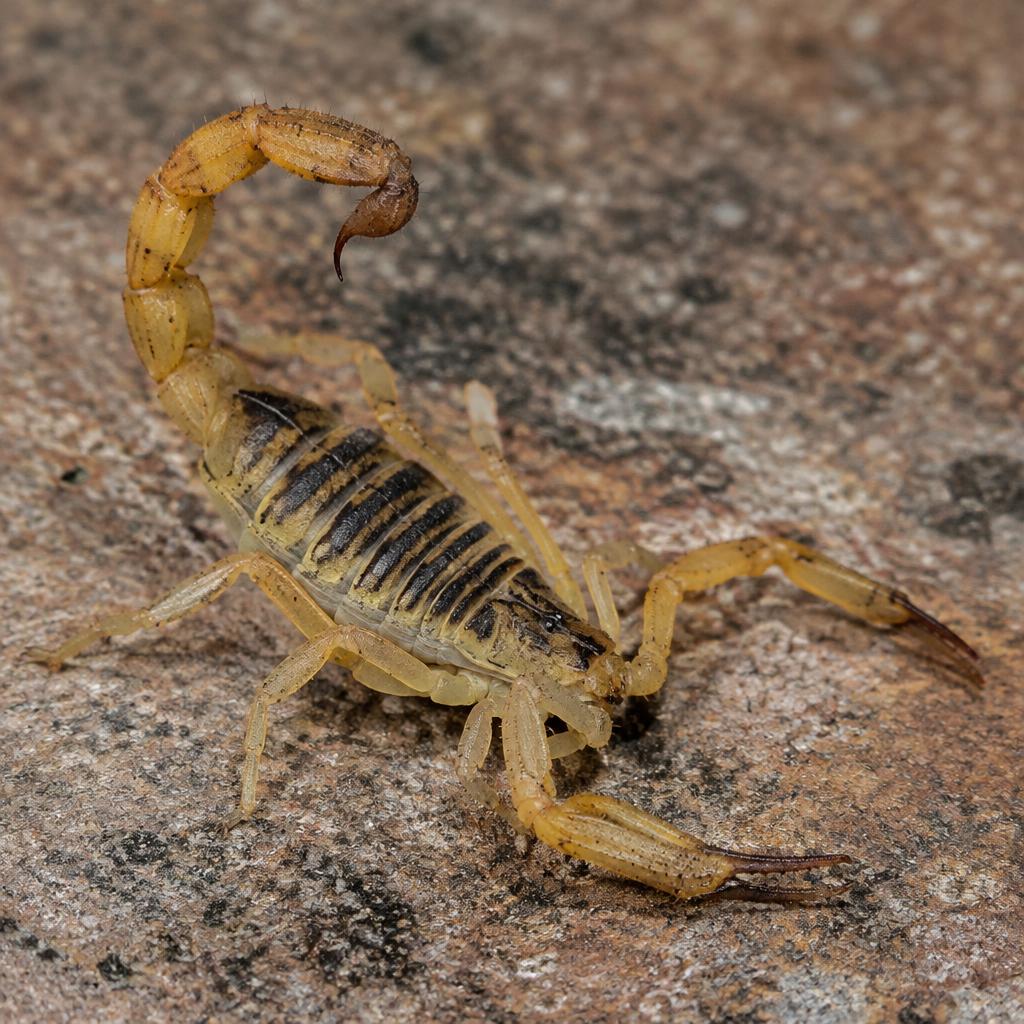
Arachnid
Arizona Bark Scorpion
Centruroides sculpturatus
Biology
Centruroides sculpturatus is a slender, light tan-yellow scorpion, 6–8 cm, with slender pincers and a long, thin metasoma. It is the most venomous scorpion in North America and can climb vertical surfaces, including walls and furniture.
Behaviour
Nocturnal bark scorpions hide in cracks and crevices by day and forage for small insects and spiders at night. They are social and may be found in aggregations. Unlike many scorpions, they can scale walls and hang from ceilings.
Habits
They enter homes through gaps around doors, windows, utility lines, and weep holes. Indoor encounters on walls, in sinks, and in bedding are common in desert regions. Stings can cause severe pain, numbness, and systemic symptoms requiring medical care.
Control methods
- 1Seal all cracks >1/16 inch, including weep holes, with fine mesh or caulk
- 2Install tight door sweeps and weatherstripping
- 3Remove landscape rocks, pavers, and woodpiles near the foundation
- 4Use UV flashlight inspections and physically remove scorpions
- 5Apply labelled residual insecticides to harborage zones and perimeter
- 6Seek emergency care for severe stings, especially in young children
Tailored to Arizona Bark Scorpion
IPM Procedure Checklist
Inspection
- Survey interior and exterior for evidence and conducive conditions
- Document findings with photos and a site map
- Place monitors to confirm activity
Identification
- Confirm Arizona Bark Scorpion (Centruroides sculpturatus) — not a look-alike
- Note life stage and risk level: High
- Capture clear photos and samples for the record
Action Thresholds
- Zero-tolerance: act on first confirmed sighting
- Notify client and document the trigger event
- Prioritize health and regulatory risk in the plan
Prevention
- Exclude entry points and harborage
- Improve sanitation and moisture control
- Modify habitat around the structure
Control Methods
- Seal all cracks >1/16 inch, including weep holes, with fine mesh or caulk
- Install tight door sweeps and weatherstripping
- Remove landscape rocks, pavers, and woodpiles near the foundation
- Use UV flashlight inspections and physically remove scorpions
Monitoring & Evaluation
- Service monitors on schedule and trend captures
- Re-inspect for Arizona Bark Scorpion activity at follow-up
- Adjust tactics based on data; report findings to client