All pests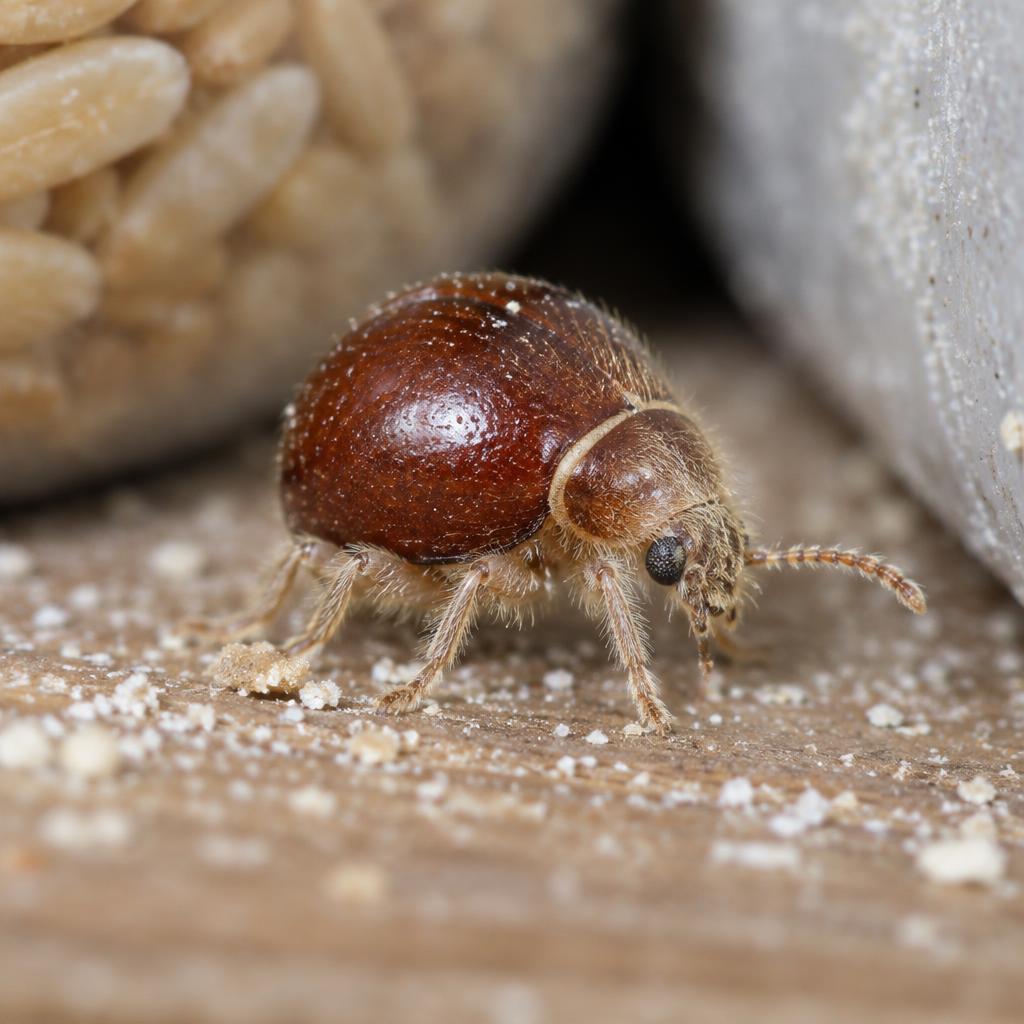 View full procedure
Stored Product Pest
American Spider Beetle
Mezium americanum
Low Risk
Biology
Mezium americanum is a 1.5–3.5 mm beetle with a glossy globular reddish-brown abdomen and pale golden hairs on the head, legs, and thorax, giving it a spider-like look. Larvae are C-shaped and grub-like.
Behaviour
It is nocturnal and feeds on a wide range of dried materials including grain, spices, dried fruit, wool, rodent droppings, and dead insects. It hides in cracks and old debris by day.
Habits
Infestations persist in neglected voids, old bird or rodent nests, attic debris, and long-stored pantry goods, with beetles wandering into living spaces at night.
Control methods
- 1Discard infested stored food and old bulk packages
- 2Remove bird and rodent nests from attics and voids
- 3Vacuum cracks, shelving, and spilled product thoroughly
- 4Store dry goods in sealed glass or hard plastic containers
- 5Install pheromone or sticky monitors in storage rooms
- 6Apply labelled crack-and-crevice treatment after cleanout
Tailored to American Spider Beetle
IPM Procedure Checklist
Step 1
Inspection
- Inspect grain, spices, pet food and dry goods for larvae and webbing
- Deploy pheromone monitors near storage and shelving
- Check spillage in seams, cracks and shelf liners
Step 2
Identification
- Confirm American Spider Beetle (Mezium americanum) — not a look-alike
- Note life stage and risk level: Low
- Capture clear photos and samples for the record
Step 3
Action Thresholds
- Tolerate low-level activity outside sensitive zones
- Act if activity moves indoors or near food
- Review threshold seasonally with the client
Step 4
Prevention
- Rotate stock FIFO; reject damaged packaging at receiving
- Store products in airtight containers
- Maintain low humidity and clean storage surfaces
Step 5
Control Methods
- Discard infested stored food and old bulk packages
- Remove bird and rodent nests from attics and voids
- Vacuum cracks, shelving, and spilled product thoroughly
- Store dry goods in sealed glass or hard plastic containers
Step 6
Monitoring & Evaluation
- Service monitors on schedule and trend captures
- Re-inspect for American Spider Beetle activity at follow-up
- Adjust tactics based on data; report findings to client