Mammal
American Mink
Neogale vison
Biology
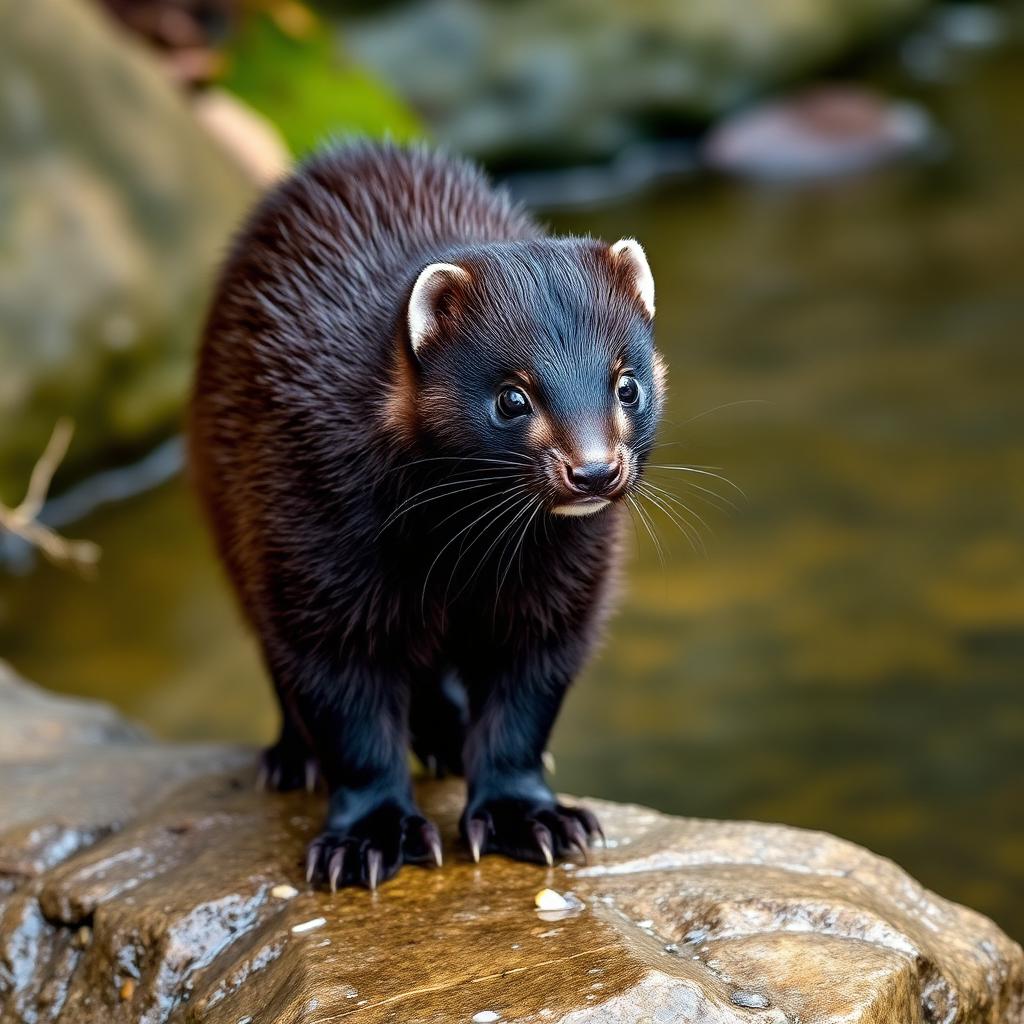
The American mink, *Neogale vison*, is a semi-aquatic mustelid 46–70 cm long including a bushy tail, weighing 0.7–1.6 kg with males roughly twice the mass of females. The coat is dense, glossy, and dark chocolate to near-black with a distinctive white chin patch and irregular white throat or chest spots that are unique to each individual; oily guard hairs make the pelt effectively waterproof. Partially webbed feet and the ability to dive to 5 m and swim 30 m underwater support an aquatic hunting style. Mating runs February–April with delayed implantation, and a single litter of 3–6 kits is born in late April or May. Kits swim at 8 weeks, disperse by autumn, and wild lifespan averages 3 years.
Behaviour
Mink are solitary, mainly nocturnal and crepuscular, and forage along linear water corridors — streams, ditches, ponds, and shorelines — taking fish, crayfish, frogs, muskrats, waterfowl, eggs, and rodents. Like other weasels they surplus-kill when prey is concentrated, which makes ornamental koi ponds, backyard duck flocks, and small hatcheries frequent targets; a single mink can empty a pond in one night. Males range over 2–5 km of shoreline, females 1–2 km, marking with a pungent anal-gland musk. They are strong climbers and swimmers, readily crossing fences and gaining entry through drains and culverts. Escaped and feral farmed mink can persist locally and are considered invasive in many regions outside their native range.
Habits
Dens are placed within 30 m of water — in muskrat and bank-vole burrows, hollow logs, rock riprap, root cavities, and beneath docks, boathouses, and shed floors. Mink use several dens across a territory and often cache uneaten prey inside them. Signs of activity include 5-toed tracks about 3–4 cm wide in mud with a bounding 40–60 cm stride, dark tapered scat full of fish scales, crayfish shell, and fur deposited on rocks or logs, chewed netting, and waterfowl or fish killed by bites to the head or neck with little consumed. Conflict peaks in late summer and autumn when juveniles disperse along waterways into developed property.
Control methods
- 1Fully net or grid ponds and cover with 1-in. mesh at the waterline
- 2Fence poultry with buried 1/2-in. hardware cloth, including a top
- 3Screen culverts, drains, and boathouse gaps with heavy mesh
- 4Provide deep-water refuge and pond caves for ornamental fish
- 5Clear bankside brush and riprap voids that offer denning cover
- 6Use a licensed wildlife operator — mink are regulated furbearers
Tailored to American Mink
IPM Procedure Checklist
Inspection
- Survey interior and exterior for evidence and conducive conditions
- Document findings with photos and a site map
- Place monitors to confirm activity
Identification
- Confirm American Mink (Neogale vison) — not a look-alike
- Note life stage and risk level: Moderate
- Capture clear photos and samples for the record
Action Thresholds
- Trigger action when monitor counts trend up
- Re-evaluate weekly during active season
- Document trigger criteria in the IPM plan
Prevention
- Exclude entry points and harborage
- Improve sanitation and moisture control
- Modify habitat around the structure
Control Methods
- Fully net or grid ponds and cover with 1-in. mesh at the waterline
- Fence poultry with buried 1/2-in. hardware cloth, including a top
- Screen culverts, drains, and boathouse gaps with heavy mesh
- Provide deep-water refuge and pond caves for ornamental fish
Monitoring & Evaluation
- Service monitors on schedule and trend captures
- Re-inspect for American Mink activity at follow-up
- Adjust tactics based on data; report findings to client