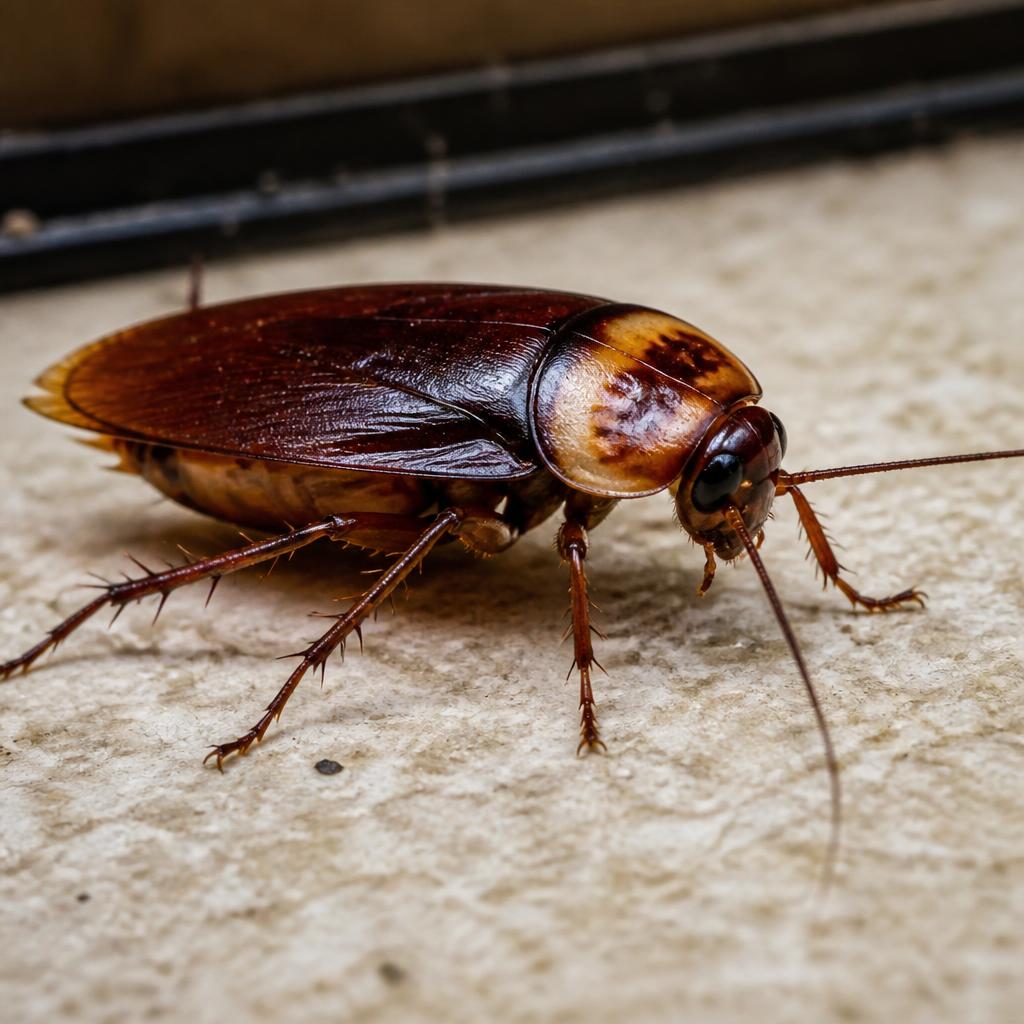
Cockroach
American Cockroach
Periplaneta americana
Biology
The American cockroach, Periplaneta americana (Linnaeus), belongs to the family Blattidae, order Blattodea. Adults are robust, measuring 35–53 mm in length, with a distinct reddish-brown coloration and a yellowish figure-8 pattern on the pronotum. Oothecae, dark brown and purse-shaped (8 mm long), are typically deposited in sheltered locations after 3–7 days of gestation, with each containing an average of 14–16 eggs. Nymphs undergo 6–14 molts over 6–12 months, influenced by temperature and food availability, before reaching maturity. Under optimal conditions (25–35°C, high humidity), adults can live for upa to two years, demonstrating a significant reproductive capacity over their lifespan.
Behaviour
P. americana exhibits pronounced negativo phototaxis, making them primarily nocturnal scavengers. While not truly social, they aggregate in harborage areas, communicating through cuticular hydrocarbons and aggregation pheromones. Their rapid, jerky movements and ability to glide-fly from elevated positions when disturbed are defensive mechanisms, though sustained flight is uncommon. They are omnivorous detritivores, consuming a wide range of organic matter, with a preference for decaying substances, starches, and sweets. Their movement between unsanitary environments (sewers, septic systems) and human structures poses a significant public health risk due to the mechanical transmission of pathogenic bacteria (e.g., Salmonella, Shigella), protozoa, and helminth eggs.
Habits
American cockroaches preferentially harbor in warm, humid, and secluded environments that offer access to food and water. Common outdoor harborage sites include sewers, storm drains, steam tunnels, utility conduits, and mulch beds, particularly those adjacent to buildings. Indoors, they infest basements, crawl spaces, boiler rooms, pipe chases, and floor drains, often congregating around motors in equipment that generate heat. Foraging patterns can extend up to a 6-meter radius from harborage sites; however, dispersal patterns are frequently mediated by plumbing and utility lines, facilitating their movement throughout a structure. Signs of infestation include fecal spotting (dark, granular droppings), shed exuviae, oothecae, and a characteristic musty odor, particularly pronounced in heavy infestations.
Control methods
- 1Gel and granular baits at drains and floor sinks
- 2Seal sewer access points and floor drain covers
- 3Reduce moisture: fix leaks, vent crawlspaces
- 4Residual sprays in basements and utility rooms
- 5Sticky monitors along baseboards and pipes
- 6Maintain cleanout caps and sewer line integrity
Tailored to American Cockroach
IPM Procedure Checklist
Inspection
- Survey interior and exterior for evidence and conducive conditions
- Document findings with photos and a site map
- Place monitors to confirm activity
Identification
- Confirm American Cockroach (Periplaneta americana) — not a look-alike
- Note life stage and risk level: High
- Capture clear photos and samples for the record
Action Thresholds
- Zero-tolerance: act on first confirmed sighting
- Notify client and document the trigger event
- Prioritize health and regulatory risk in the plan
Prevention
- Exclude entry points and harborage
- Improve sanitation and moisture control
- Modify habitat around the structure
Control Methods
- Gel and granular baits at drains and floor sinks
- Seal sewer access points and floor drain covers
- Reduce moisture: fix leaks, vent crawlspaces
- Residual sprays in basements and utility rooms
Monitoring & Evaluation
- Service monitors on schedule and trend captures
- Re-inspect for American Cockroach activity at follow-up
- Adjust tactics based on data; report findings to client