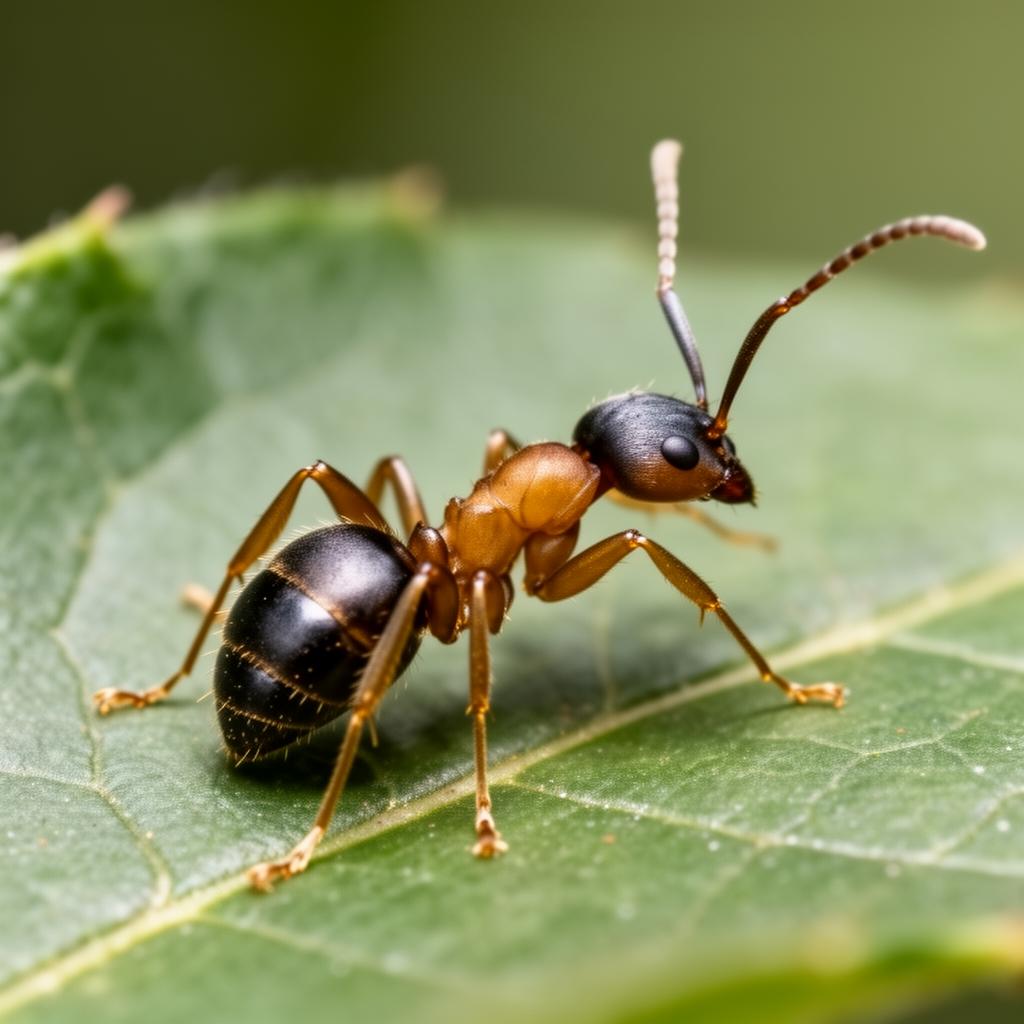
Ant
Acrobat Ant
Crematogaster
Biology
Acrobat ants (genus Crematogaster) are characterized by the distinctive heart - or club-shaped gaster that is often elevated over their mesosoma, a key identifying feature. These small ants typically range from 2.5 to 4 mm in length, with workers exhibiting monomorphism or slight polymorphism, and can vary in color from light reddish-brown to dark brown or black. The lifecycle, under optimal conditions (25-30°C, 70-80% RH), spans approximately 6-10 weeks from egg to adult, with queens living for several years and laying hundreds of eggs annually, contributing to colony sizes that can reach several thousand individuals. Their antennae are 11-segmented, with a distinct 2-segmented club, and the petiole is attached high on the dorsal surface of the gaster. These ants possess a sting, though its venom is generally non-threatening to humans.
Behaviour
Acrobat ants are primarily nocturnal foragers, though some activity may be observed during the day, especially in shaded or indoor environments. They are facultative scavengers, feeding on a wide range of food sources including honeydew from aphids and scale insects, dead insects, and various household food items, showing a preference for sweets but also consuming proteins. When threatened, they exhibit a characteristic defensive posture where they raise their gaster over their head and mesosoma, often releasing a mild, pungent defensive odor from their gaster - a chemical deterrent composed of formic acid and other compounds. Dispersal typically occurs via winged reproductives (alates) during mating flights in warmer months, or through budding, where a satellite colony forms nearby. Their communication relies heavily on trail pheromones to recruit nestmates to food sources or new nesting sites.
Habits
Acrobat ants are opportunists, establishing nests in a variety of protected voids, showing a strong preference for damp or damaged wood but also utilizing insulation, wall voids, and even existing galleries created by other pests like carpenter ants or termites. Outdoors, common harborages include tree holes, under rocks, logs, firewood piles, and inside hollow plant stems, often entering structures via utility lines, tree branches, or cracks in the foundation. Their foraging trails are often visible along structural elements, wires, or plumbing, and they tend to follow established paths, sometimes clearing debris to create clear runways. Technicians should look for sawdust-like frass (often containing insect parts) near nesting sites, evidence of active foraging trails, and the presence of winged alates, particularly in late summer or fall, indicating a mature colony. Conditions conducive to infestation include moisture intrusion, decaying wood, and direct contact between exterior vegetation and the structure.
Control methods
- 1Locate and treat the parent nest in damp wood
- 2Replace water-damaged wood and trim
- 3Seal utility lines and roof penetrations
- 4Remove dead branches over the structure
- 5Bait stations along foraging trails
- 6Address moisture source that softened the wood
Tailored to Acrobat Ant
IPM Procedure Checklist
Inspection
- Follow trails to nests, food and moisture sources
- Inspect wall voids, slab edges and exterior soil
- Place non-repellent monitors at trail crossings
Identification
- Confirm Acrobat Ant (Crematogaster) — not a look-alike
- Note life stage and risk level: Low
- Capture clear photos and samples for the record
Action Thresholds
- Tolerate low-level activity outside sensitive zones
- Act if activity moves indoors or near food
- Review threshold seasonally with the client
Prevention
- Seal entry cracks, utility penetrations and weep holes
- Eliminate honeydew-producing pests on landscape plants
- Store food in sealed containers and clean spills promptly
Control Methods
- Locate and treat the parent nest in damp wood
- Replace water-damaged wood and trim
- Seal utility lines and roof penetrations
- Remove dead branches over the structure
Monitoring & Evaluation
- Service monitors on schedule and trend captures
- Re-inspect for Acrobat Ant activity at follow-up
- Adjust tactics based on data; report findings to client