Insect
Western Drywood Termite
Incisitermes minor
Biology
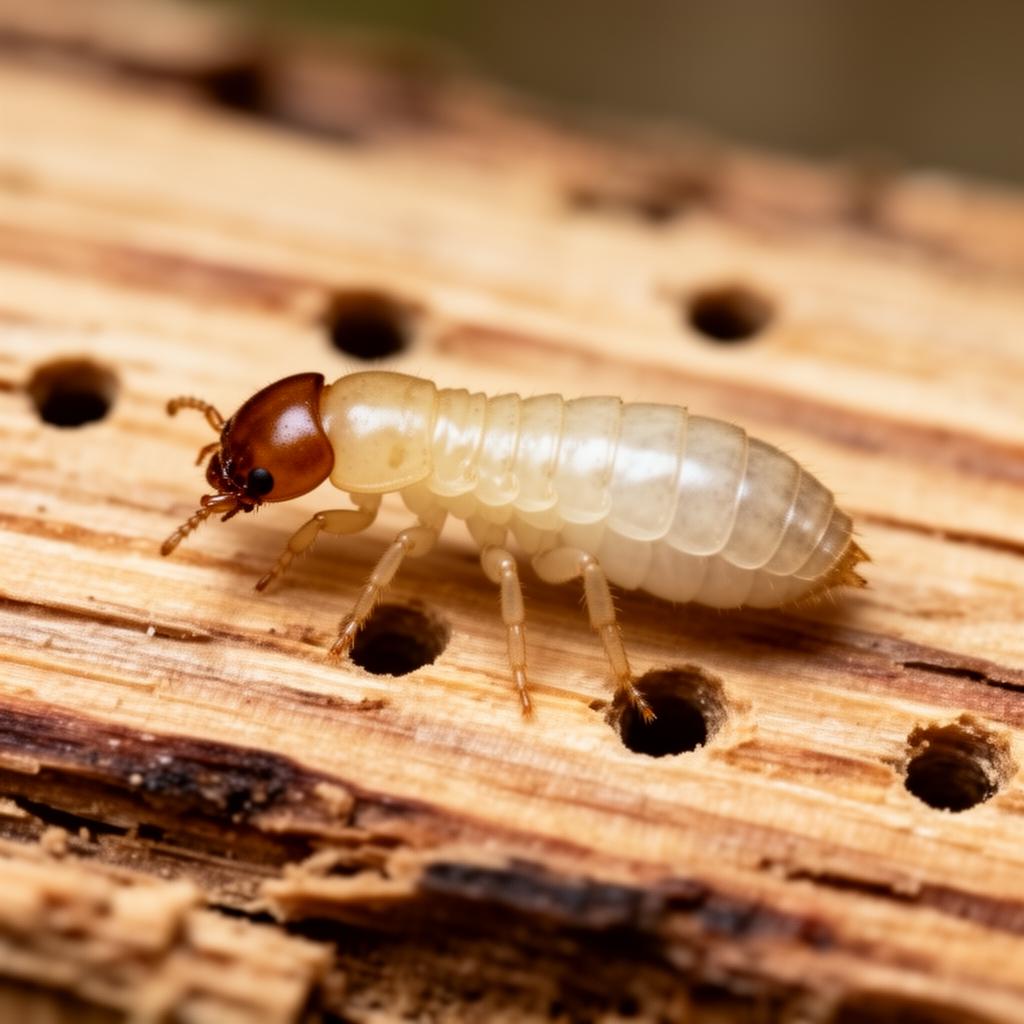
Incisitermes minor Hagen, a member of the Kalotermitidae family, is a significant pest of seasoned wood. Alates are dark brown with smoky wings and measure 11-15 mm in length. Soldiers possess large, dark, reddish-brown heads and prominent mandibles, often with a rugose (wrinkled) texture. Nymphs are cream-colored and soft-bodied, gradually developing wing pads. Unlike subterranean termites, drywood termites do not require contact with soil and live entirely within the wood they infest. Colonies are relatively small, containing several thousand individuals, and develop slowly.
Behaviour
Western drywood termites create colonies within wood, excavating galleries that run with and across the grain. They are characterized by their fecal pellets, or frass, which are dry, hexagonal, and expelled from kick-out holes. Swarming typically occurs in late summer and fall, particularly on warm, sunny days. Alates are attracted to light and often found near windows. Infestations are primarily spread through the dispersal of alates or by the movement of infested wood.
Habits
I. minor thrives in dry, warm environments, typically found in coastal and interior regions of the southwestern United States. They infest timbers, furniture, and other wooden articles, with no requirement for soil contact. The moisture content of infested wood usually ranges from 6-12%. Conducive conditions include unprotected exterior wood, cracks or openings in wood surfaces that allow alate entry, and the presence of susceptible wood products within structures.
Control methods
- 1Fumigate entire structures for widespread infestations.
- 2Apply localized treatments to accessible galleries.
- 3Remove and replace infested wooden items.
- 4Seal all cracks and crevices in wooden structures.
- 5Paint or varnish exposed wood surfaces.
- 6Inspect used furniture before bringing indoors.
Tailored to Western Drywood Termite
IPM Procedure Checklist
Inspection
- Inspect harborage near food, water and warmth
- Check cracks, voids and appliance interiors
- Place sticky monitors at suspected hot-spots
Identification
- Confirm Western Drywood Termite (Incisitermes minor) — not a look-alike
- Note life stage and risk level: High
- Capture clear photos and samples for the record
Action Thresholds
- Zero-tolerance: act on first confirmed sighting
- Notify client and document the trigger event
- Prioritize health and regulatory risk in the plan
Prevention
- Seal cracks, plumbing penetrations and wall voids
- Eliminate moisture sources and standing water
- Improve sanitation: sealed food storage, grease removal
Control Methods
- Fumigate entire structures for widespread infestations.
- Apply localized treatments to accessible galleries.
- Remove and replace infested wooden items.
- Seal all cracks and crevices in wooden structures.
Monitoring & Evaluation
- Service monitors on schedule and trend captures
- Re-inspect for Western Drywood Termite activity at follow-up
- Adjust tactics based on data; report findings to client