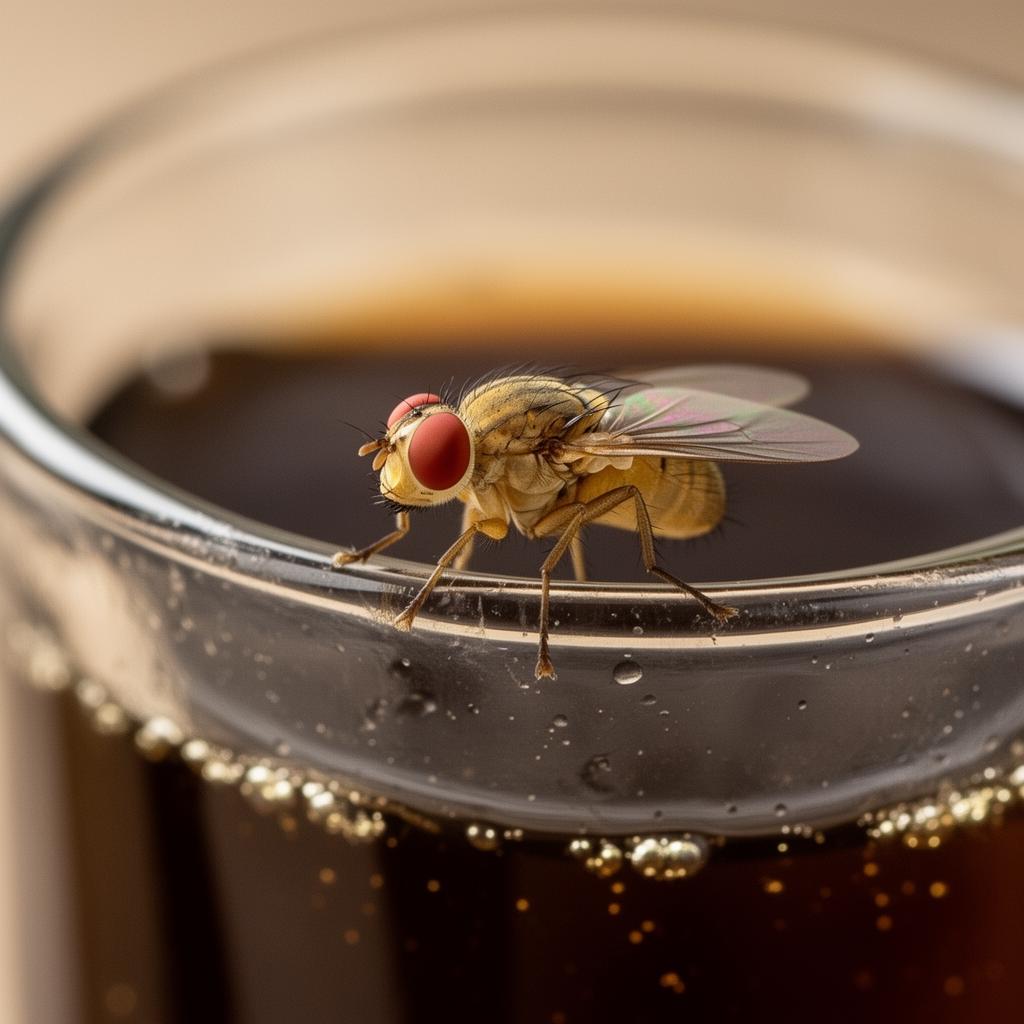
Fly
Vinegar Fly
Drosophila melanogaster
Biology
Drosophila melanogaster, commonly known as the vinegar fly or fruit fly, belongs to the family Drosophilidae. These are minute flies, typically 2-4 mm in length, with distinctive bright red eyes and a yellowish-brown body. Their short lifecycle, rapid reproduction rate, and ease of culture have made them a prominent model organism in genetic research. The complete lifecycle, from egg to adult, can be as short as 8-10 days under optimal conditions (25-28°C). Females lay approximately 400 eggs over several days on fermenting fruit or other sugary, moist substrates. Larvae hatch within 24 hours and develop through three instars over 4-5 days, feeding on yeast and bacteria in the substrate. Pupation occurs on drier surfaces near the food source.
Behaviour
Vinegar flies are highly attracted to the odors of fermenting fruits and vegetables, as well as spills of sugary liquids like soda, alcohol, and vinegar. Their foraging behavior is driven by the need for oviposition sites and adult nutrition. They exhibit a characteristic darting flight pattern within close proximity to food sources. Adults are commonly observed congregating around ripe, decaying, or damaged produce. Dispersal is often facilitated by human transport of infested food items or through open doors and windows when outdoor populations are high.
Habits
Drosophila melanogaster are commensal with humans, thriving in environments where fermenting organic matter is present. Harborage sites include kitchens, pantries, bars, and food processing facilities. Any area with exposed ripe or rotting fruits/vegetables, soda spills, or unemptied recycling bins can serve as a breeding ground. Larval development requires moist, fermenting substrates. Conducive conditions include poor sanitation, unsealed food containers, neglecting to clean up spills, and accumulation of overripe produce. Maintaining cleanliness is paramount for control.
Control methods
- 1Eliminate fermenting food sources.
- 2Clean up spills immediately.
- 3Store produce in sealed containers.
- 4Empty and clean recycling bins regularly.
- 5Use fruit fly traps.
- 6Seal cracks and openings.
Tailored to Vinegar Fly
IPM Procedure Checklist
Inspection
- Locate breeding sites: drains, decaying matter, moist organics
- Use tape-over-drain tests and UV/light traps to confirm
- Map dumpster, grease and floor-drain hot-spots
Identification
- Confirm Vinegar Fly (Drosophila melanogaster) — not a look-alike
- Note life stage and risk level: Low
- Capture clear photos and samples for the record
Action Thresholds
- Tolerate low-level activity outside sensitive zones
- Act if activity moves indoors or near food
- Review threshold seasonally with the client
Prevention
- Clean drains with enzymatic foam to remove biofilm
- Manage trash, recycling and grease daily
- Screen windows, doors and air curtains at entries
Control Methods
- Eliminate fermenting food sources.
- Clean up spills immediately.
- Store produce in sealed containers.
- Empty and clean recycling bins regularly.
Monitoring & Evaluation
- Service monitors on schedule and trend captures
- Re-inspect for Vinegar Fly activity at follow-up
- Adjust tactics based on data; report findings to client