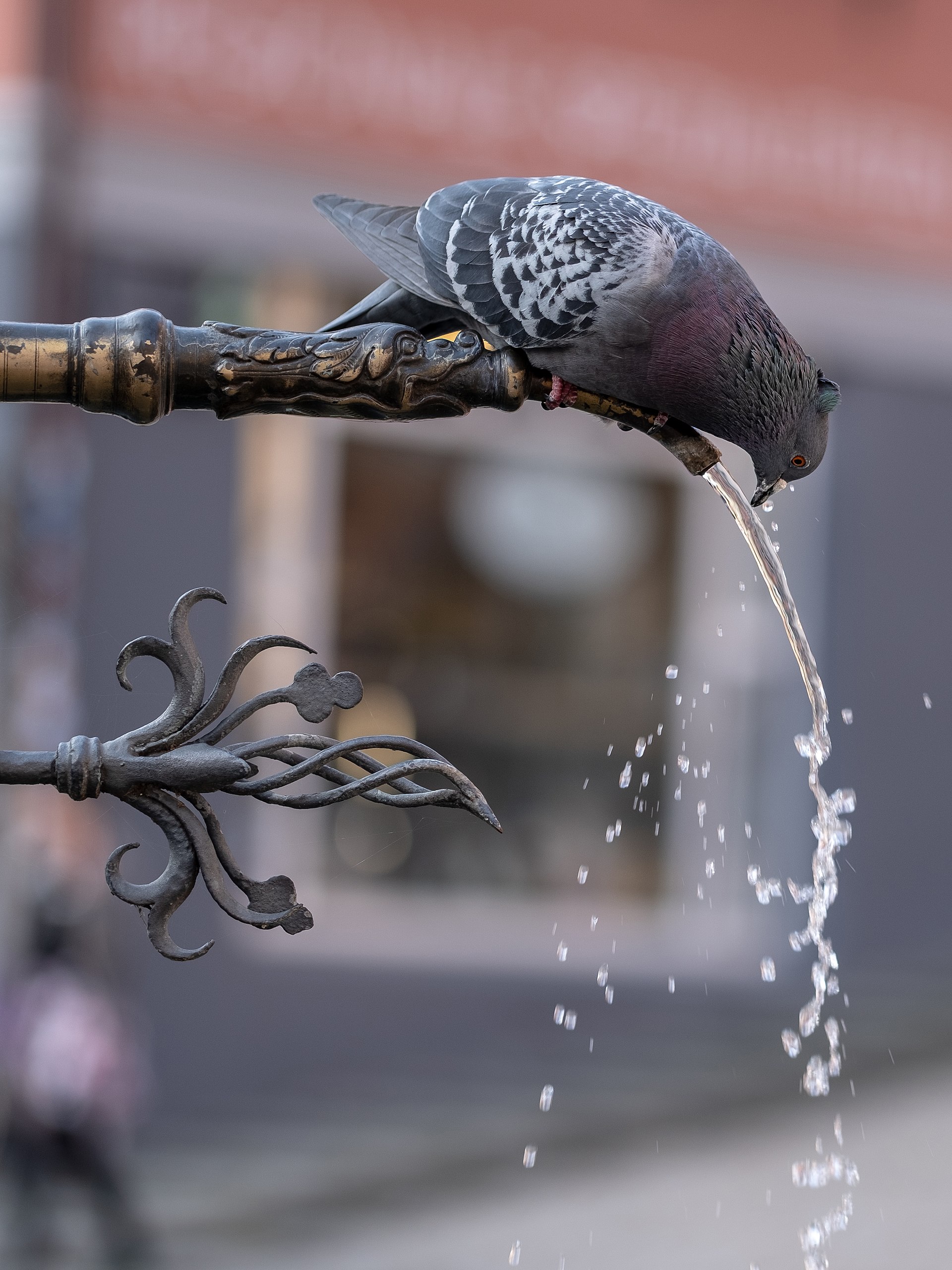
Bird
Rock Dove
Columba livia
Biology
The rock dove, Columba livia (Order Columbiformes, Family Columbidae), commonly known as the common pigeon, is a robust, medium-sized bird, typically 29-37 cm in length with a wingspan of 50-67 cm, weighing 238-380 grams. Wild-type plumage is gray with iridescent green and purple on the neck and two black wing bars, though feral populations exhibit a wide range of color variations. Rock doves are highly prolific, breeding year-round in suitable climates, often producing 4-6 broods annually. Each clutch typically contains two white eggs, incubated for 18 days. Young (squabs) fledge at approximately 28-35 days and are fed 'crop milk' by both parents.
Behaviour
Rock doves are highly social, typically found in flocks ranging from a few individuals to hundreds. They are diurnal and primarily ground foragers. Their flight is strong and direct. Communication involves cooing sounds for courtship and territorial defense, as well as distinct head bobbing during walking. Pigeons are famous for their homing ability, navigating over long distances. They frequently use open elevated areas for perching and roosting and are reliant on consistent access to food and water.
Habits
C. livia is an omnivorous scavenger, with a diet consisting of seeds, grains, fruits, bread, and human-discarded food waste. They are highly dependent on anthropogenic food sources in urban environments. Foraging occurs primarily on the ground in open areas like plazas, parks, and city streets. Harbors include ledges, eaves, attics, bridges, and other sheltered elevated structures, where they build crude nests of twigs. Conducive conditions include urban and suburban landscapes with abundant food sources, numerous nesting/roosting sites on structures, and availability of fresh water.
Control methods
- 1Exclude pigeons from structures with netting.
- 2Install anti-perching spikes on ledges.
- 3Remove all spilled food and garbage.
- 4Eliminate sources of standing water.
- 5Apply bird repellent gels.
- 6Use auditory scaring devices.
Tailored to Rock Dove
IPM Procedure Checklist
Inspection
- Identify roosting, loafing and nesting sites
- Document droppings, feathers and damage to structure
- Note food and water sources attracting birds
Identification
- Confirm Rock Dove (Columba livia) — not a look-alike
- Note life stage and risk level: Moderate
- Capture clear photos and samples for the record
Action Thresholds
- Trigger action when monitor counts trend up
- Re-evaluate weekly during active season
- Document trigger criteria in the IPM plan
Prevention
- Install spikes, netting or shock track on ledges
- Remove standing water and accessible food
- Close openings to attics, vents and signage voids
Control Methods
- Exclude pigeons from structures with netting.
- Install anti-perching spikes on ledges.
- Remove all spilled food and garbage.
- Eliminate sources of standing water.
Monitoring & Evaluation
- Service monitors on schedule and trend captures
- Re-inspect for Rock Dove activity at follow-up
- Adjust tactics based on data; report findings to client