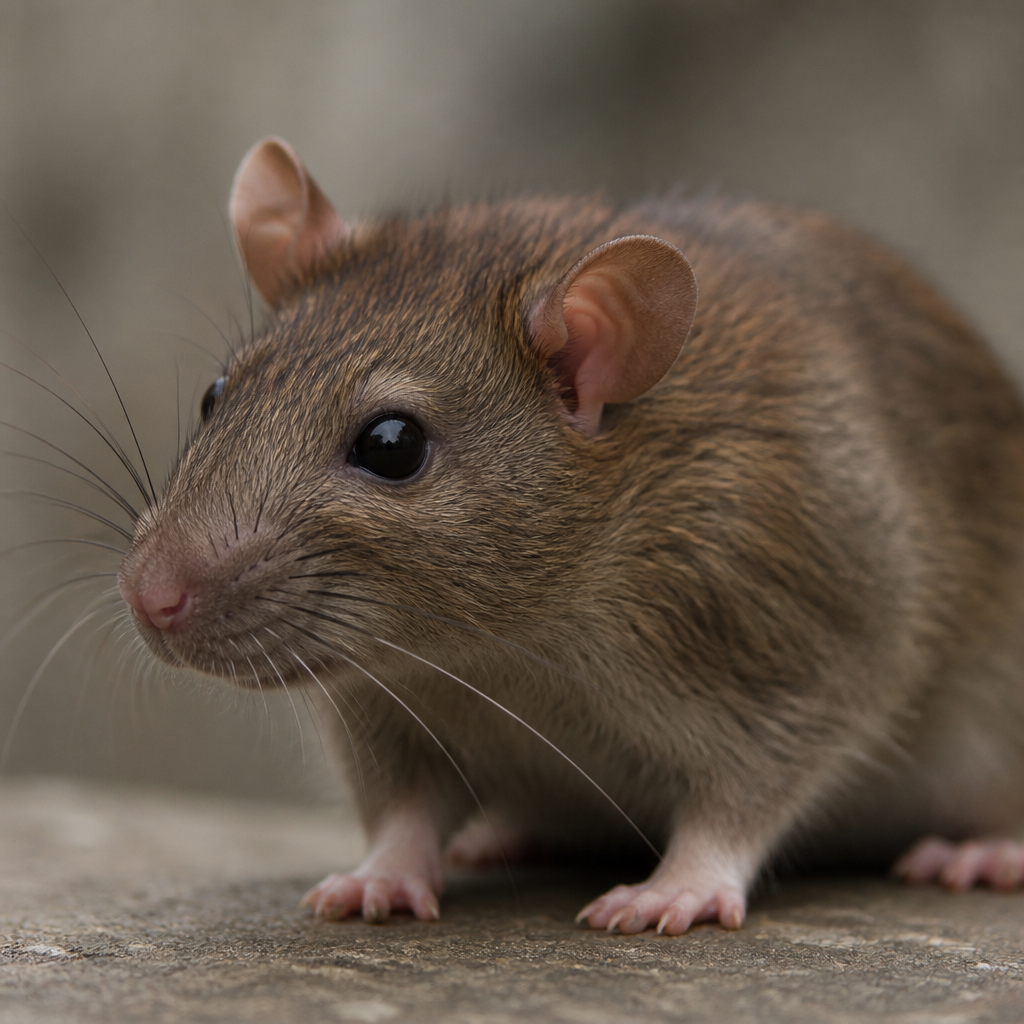
Rodent
Norway Rat
Rattus norvegicus
Biology
The Norway rat, Rattus norvegicus, belongs to the family Muridae. Adults typically measure 25–40 cm in total length, including a tail shorter than the body, and weigh 200–500 grams, though exceptional specimens can exceed 600 grams. Their fur is coarse, brownish-grey dorsally and grey-white ventrally, with distinguishing small ears, a blunt snout, and a scaly, sparsely haired tail. Gestation lasts approximately 21–23 days, with females producing 5–7 litters annually, each comprising 6–12 pups that are altricial at birth. Sexual maturity is reached rapidly, often within 8–12 weeks under optimal conditions, and their maximum lifespan in the wild is 1–2 years, though usually less due to predation and control efforts. They thrive in temperate climates, preferring temperatures between 15–25°C and high humidity.
Behaviour
Norway rats are primarily nocturnal, exhibiting crepuscular activity spikes at dusk and dawn. They are highly social, living in colonies with complex hierarchies, and communicate using a variety of vocalizations, tactile signals, and olfactory cues, including pheromones for reproductive and territorial marking. Dispersal typically occurs over short distances, with young males traveling further from the natal nest. Their diet is omnivorous and opportunistic, consuming grains, meats, fruits, and refuse, often caching food. When threatened, they can be aggressive, biting and scratching, particularly females defending litters. Their incessant gnawing behavior poses significant structural risks, damaging electrical wiring—a leading cause of electrical fires—and undermining foundations, alongside their role as vectors for numerous pathogens including Leptospira, Salmonella, Hantavirus, and Yersinia pestis (indirectly, via fleas).
Habits
Norway rats are master burrowers, constructing extensive and intricate tunnel systems along building foundations, riverbanks, sewers, and refuse piles, which serve as harborage and protection. Their foraging patterns involve using established runways, identifiable by grease marks and droppings, often patrolling ranges of 30–60 meters from their burrows. These rats exhibit pronounced neophobia, displaying caution towards novel objects or changes in their environment, which impacts trap and bait acceptance. Conducive conditions include readily available food sources (e.g., poorly stored waste, pet food), harborage (dense vegetation, clutter), and easy access to water. Infestation signs for technicians include fresh droppings (capsule-shaped, 12–18 mm long), gnaw marks on wood or wiring, active burrows, runaways, and characteristic musky odors, especially in confined spaces.
Control methods
- 1Tamper-resistant bait stations on rodent runways
- 2Snap traps with peanut butter, pre-baited 2–3 days
- 3Exclusion: seal openings >1/2 inch with steel wool/mesh
- 4Remove harborage: clutter, woodpiles, dense vegetation
- 5Secure waste in lidded bins, fix leaks
- 6Burrow tracking with non-toxic monitoring blocks
Tailored to Norway Rat
IPM Procedure Checklist
Inspection
- Locate runways, droppings, rub marks and gnaw damage
- Identify entry points (gaps ≥6 mm) and harborage
- Place tracking patches or non-toxic monitors
Identification
- Confirm Norway Rat (Rattus norvegicus) — not a look-alike
- Note life stage and risk level: Severe
- Capture clear photos and samples for the record
Action Thresholds
- Zero-tolerance: act on first confirmed sighting
- Notify client and document the trigger event
- Prioritize health and regulatory risk in the plan
Prevention
- Exclude with steel wool, hardware cloth and door sweeps
- Trim vegetation 0.5 m from structure; clear debris
- Secure trash, pet food and stored grain
Control Methods
- Tamper-resistant bait stations on rodent runways
- Snap traps with peanut butter, pre-baited 2–3 days
- Exclusion: seal openings >1/2 inch with steel wool/mesh
- Remove harborage: clutter, woodpiles, dense vegetation
Monitoring & Evaluation
- Service monitors on schedule and trend captures
- Re-inspect for Norway Rat activity at follow-up
- Adjust tactics based on data; report findings to client