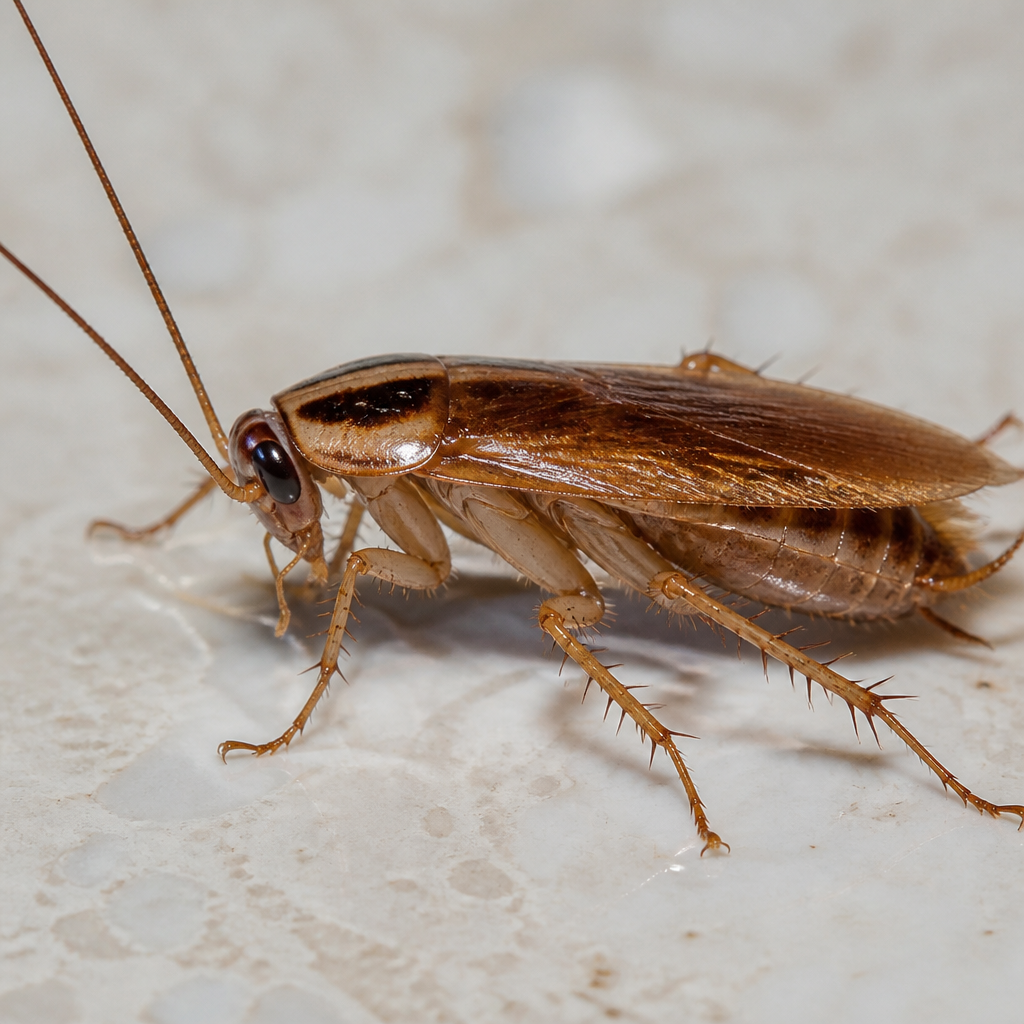
Cockroach
German Cockroach
Blattella germanica
Life cycle
Stages of development
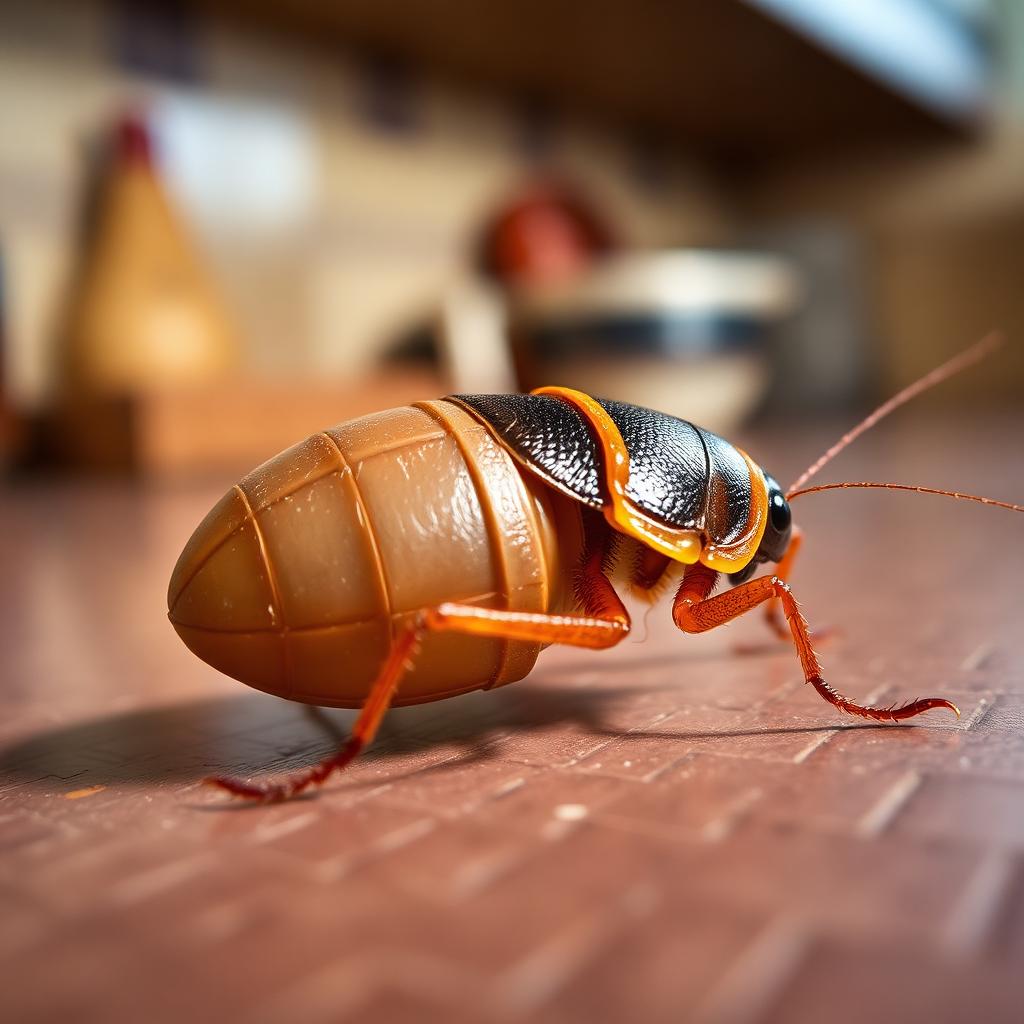
Stage 1 of 4
Egg case (ootheca)
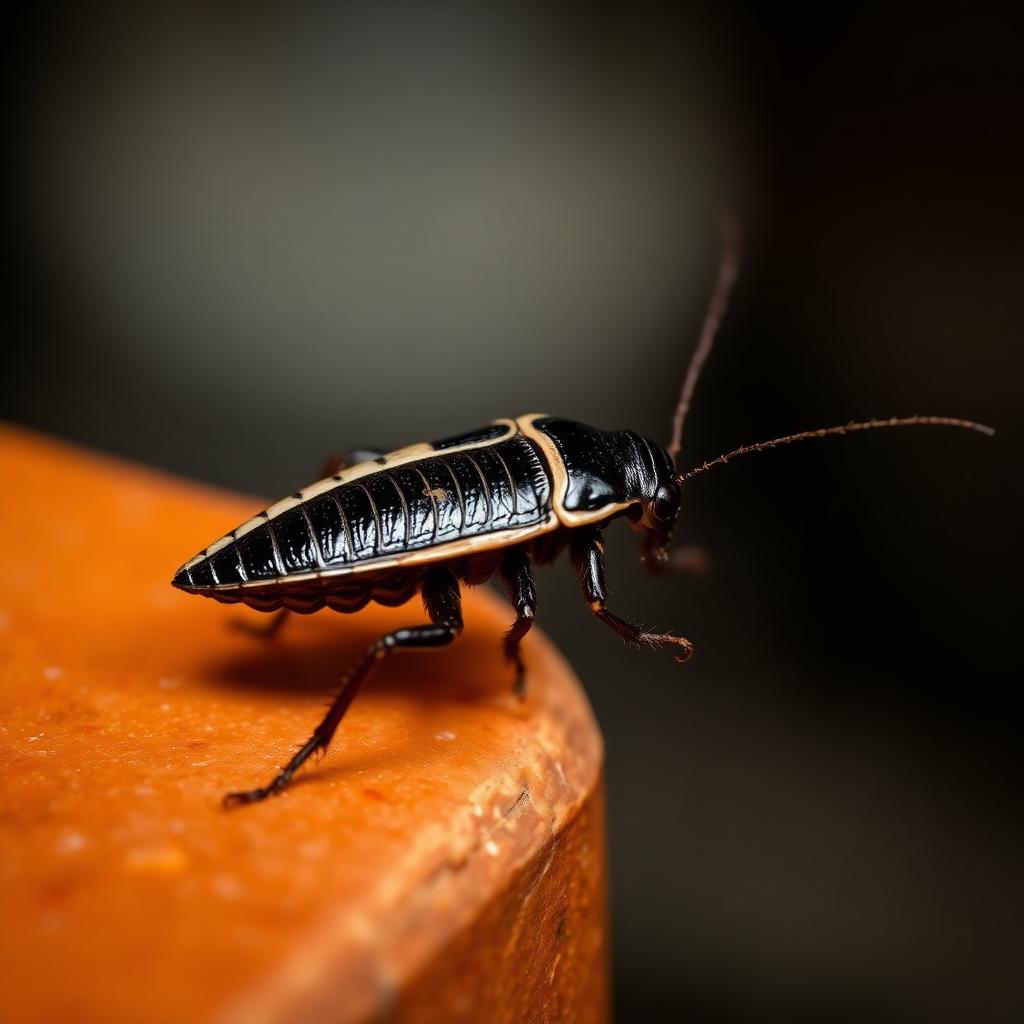
Stage 2 of 4
Early nymph
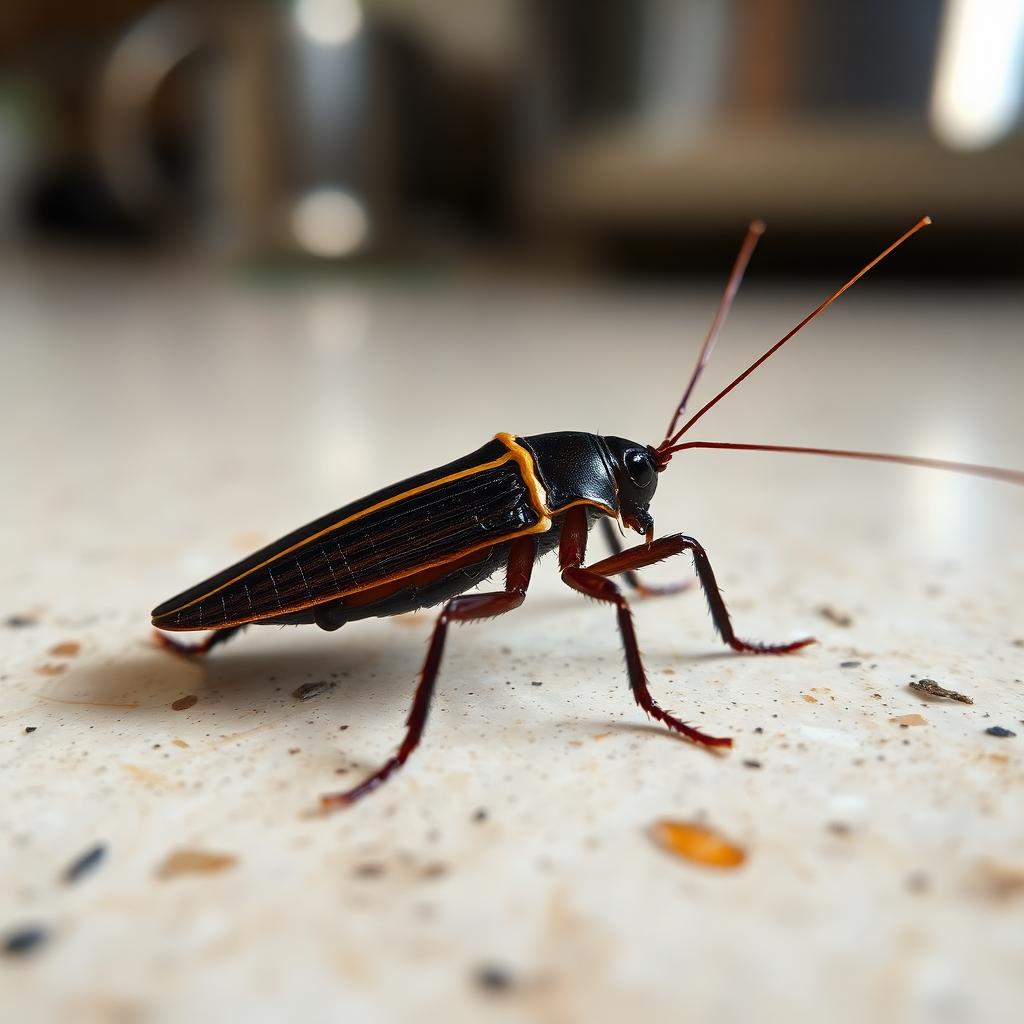
Stage 3 of 4
Late nymph
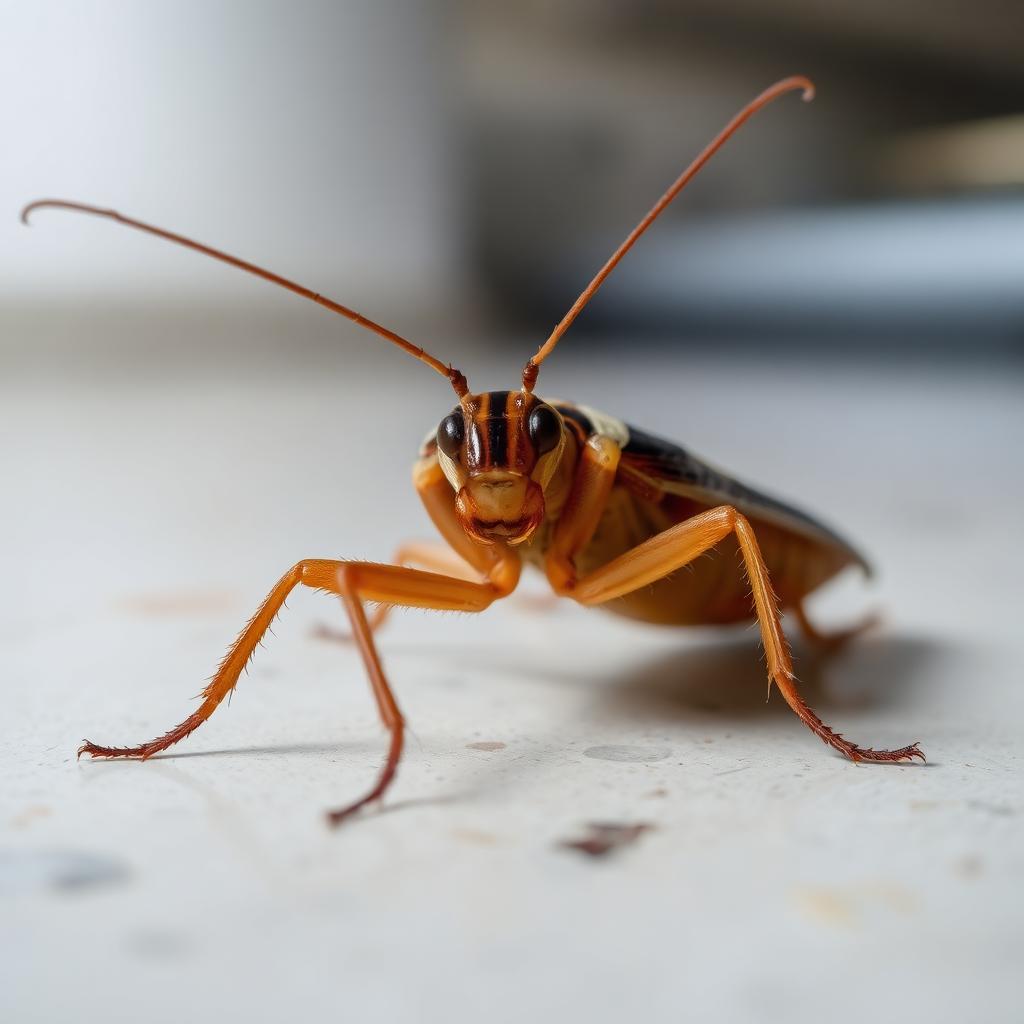
Stage 4 of 4
Adult
Biology
The German Cockroach, Blattella germanica (Dictyoptera: Ectobiidae), measures 10-15 mm as an adult, characterized by a light-brown to tan coloration and two distinctive, longitudinal dark stripes on its pronotal shield. Its lifecycle, under optimal conditions (25-30°C, 80-90% RH), completes in approximately 100 days, encompassing egg, 6-7 nymphal instars, and adult stages. Females produce 4-8 oothecae in their lifetime, each containing 30-48 eggs, which she carries for 2-4 weeks until hatching. This high reproductive rate and short generation time contribute significantly to rapid population growth; adults live typically for 4-6 months, with females sustaining higher survival rates.
Behaviour
Primarily nocturnal, German cockroaches exhibit thigmotactic behavior, preferring tight crevices, and are gregarious, communicating through aggregation pheromones present in their feces and cuticular hydrocarbons. Their feeding ecology is highly omnivorous, consuming virtually any organic matter, including foodstuffs, grease, starches, glues, and even their own cast skins or frass (coprophagy), which aids in pheromone dissemination. While not outwardly aggressive, their presence induces public health risks by mechanically vectoring over 40 species of pathogenic bacteria, viruses, fungi, and protozoa through contamination of food and surfaces via regurgitation and fecal deposition, and their shed exoskeletons and frass are potent allergens and asthma triggers.
Habits
These cockroaches harbor optimally in warm, humid (25-30°C, >60% RH), secluded environments, typically in close proximity (within 1.5-3 meters) to food and water sources – kitchens, bathrooms, and utility areas being prime locations. Preferred harborages include cracks and crevices in walls, behind appliances, under sinks, within electrical equipment, and inside cabinet voids. Foraging occurs primarily at night, often along predictable routes, but daytime activity signals severe infestation or environmental stress. Conducive conditions include poor sanitation, accumulation of food debris, excessive moisture from leaks, and clutter, which all provide harborage and sustenance, contributing to widespread dispersal throughout a structure, sometimes via passive transport in bags or boxes.
Control methods
- 1Apply gel baits at harborage edges (hinges, voids)
- 2Use insect growth regulators (IGRs) to break the cycle
- 3Seal cracks, plumbing penetrations and wall voids
- 4Eliminate moisture and standing water
- 5Sanitation: store food sealed, remove grease
- 6Sticky monitors to track populations
Tailored to German Cockroach
IPM Procedure Checklist
Inspection
- Survey interior and exterior for evidence and conducive conditions
- Document findings with photos and a site map
- Place monitors to confirm activity
Identification
- Confirm German Cockroach (Blattella germanica) — not a look-alike
- Note life stage and risk level: High
- Capture clear photos and samples for the record
Action Thresholds
- Zero-tolerance: act on first confirmed sighting
- Notify client and document the trigger event
- Prioritize health and regulatory risk in the plan
Prevention
- Exclude entry points and harborage
- Improve sanitation and moisture control
- Modify habitat around the structure
Control Methods
- Apply gel baits at harborage edges (hinges, voids)
- Use insect growth regulators (IGRs) to break the cycle
- Seal cracks, plumbing penetrations and wall voids
- Eliminate moisture and standing water
Monitoring & Evaluation
- Service monitors on schedule and trend captures
- Re-inspect for German Cockroach activity at follow-up
- Adjust tactics based on data; report findings to client