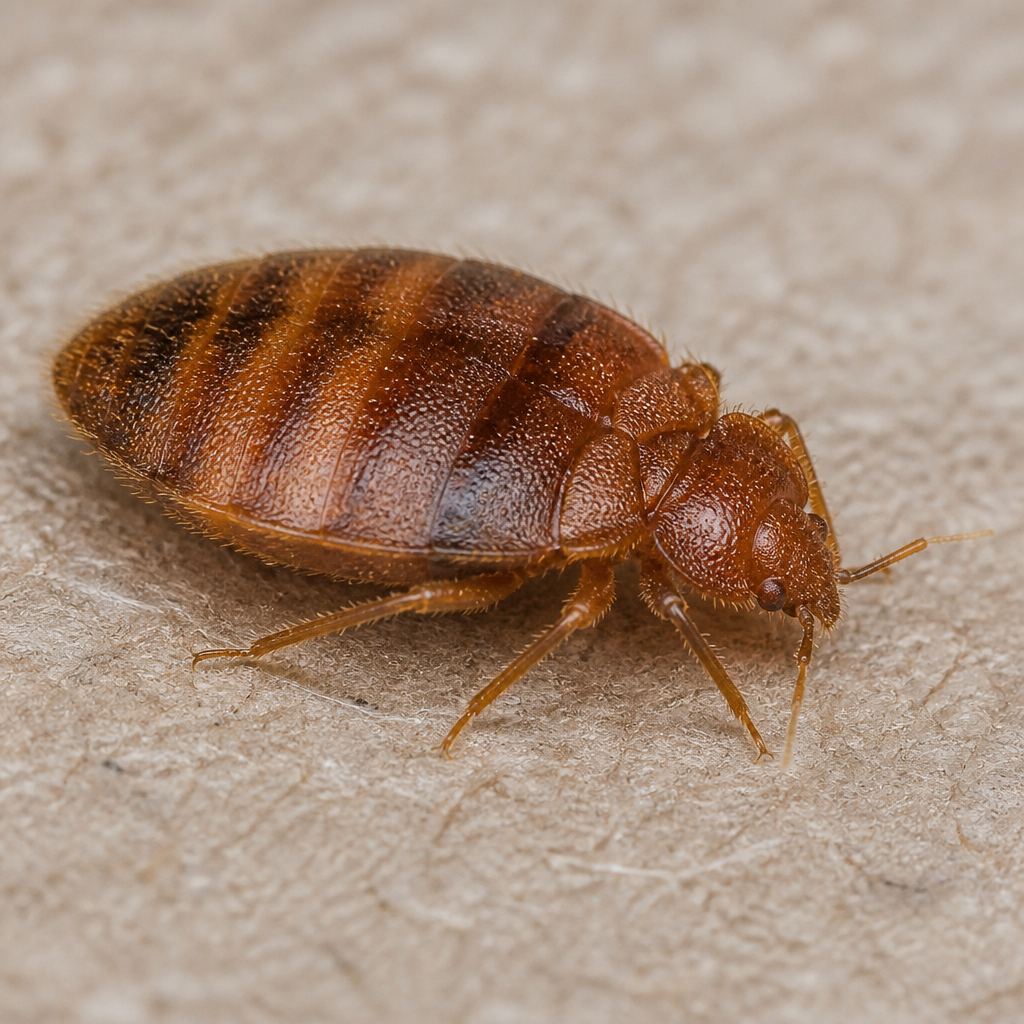
Blood Feeder
Bed Bug
Cimex lectularius
Life cycle
Stages of development

Stage 1 of 4
Egg
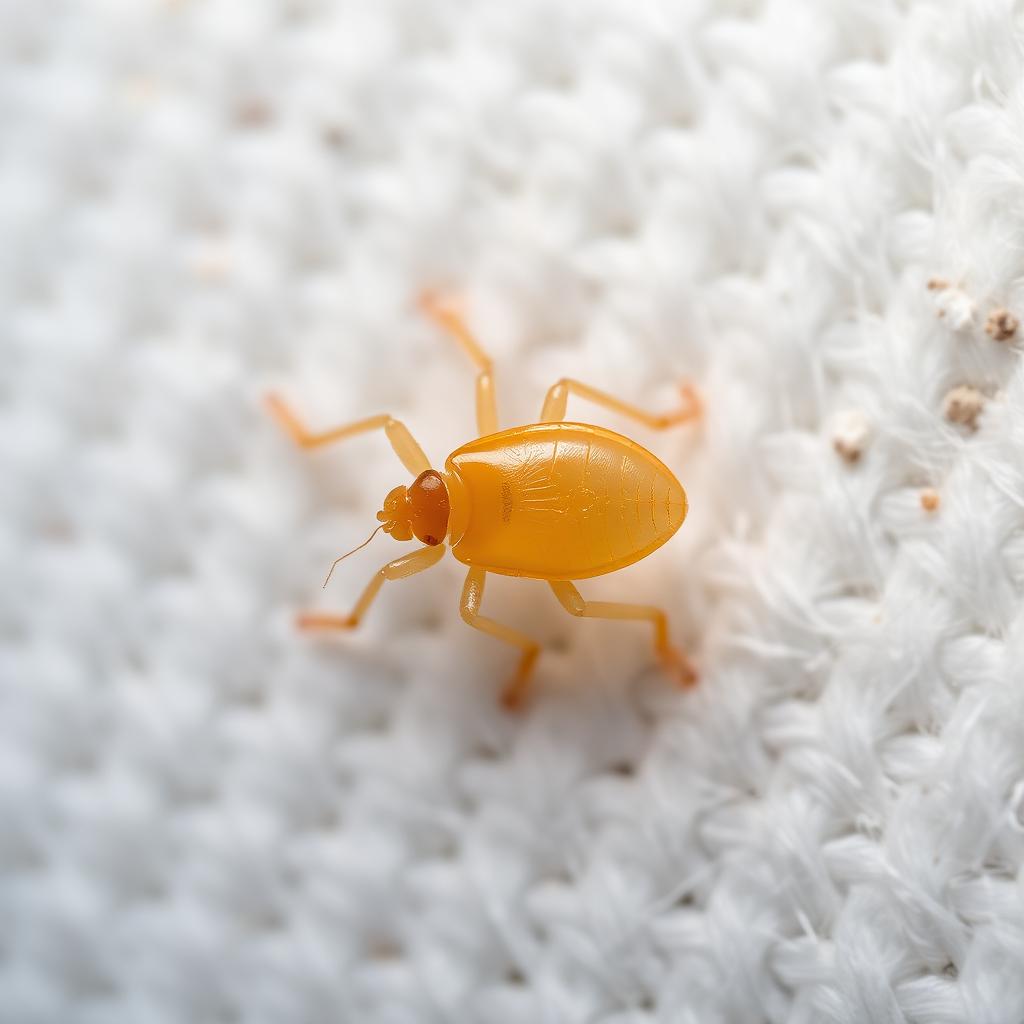
Stage 2 of 4
Early nymph
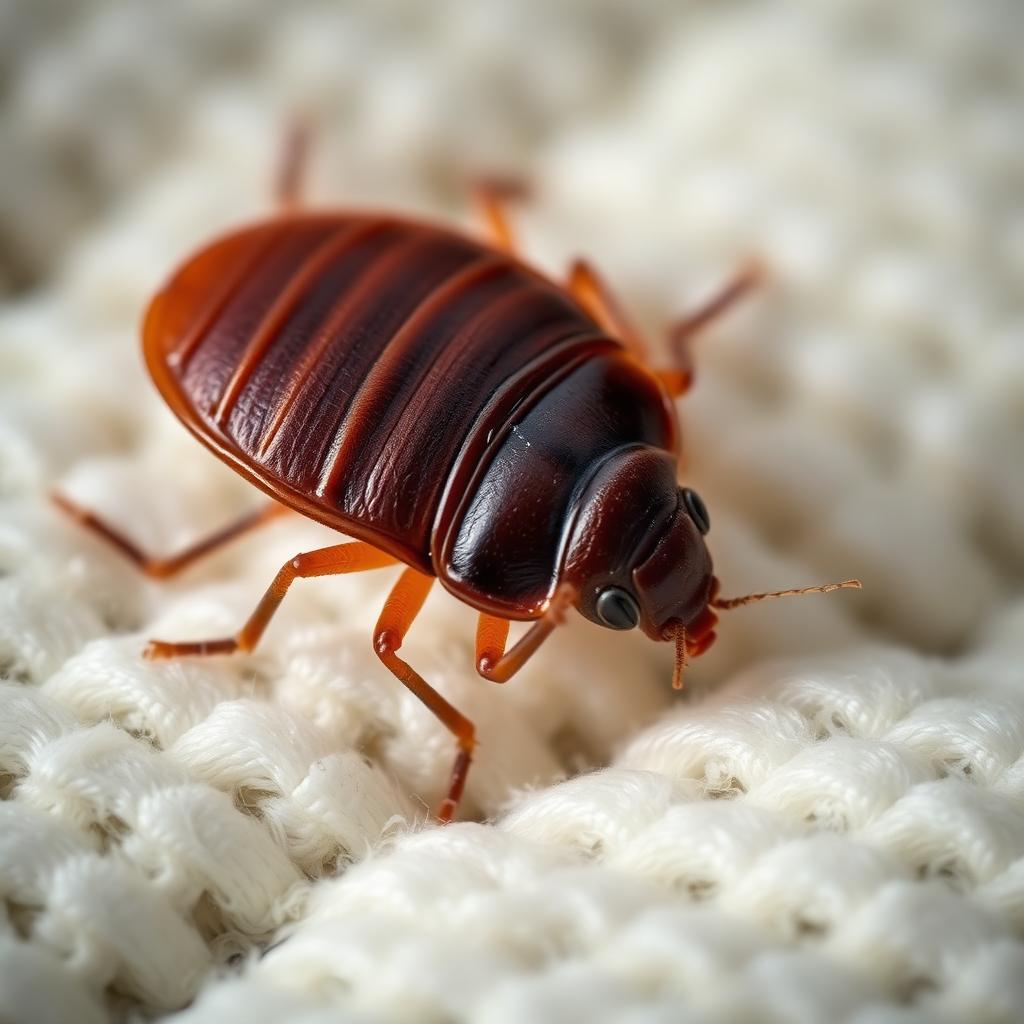
Stage 3 of 4
Fed nymph
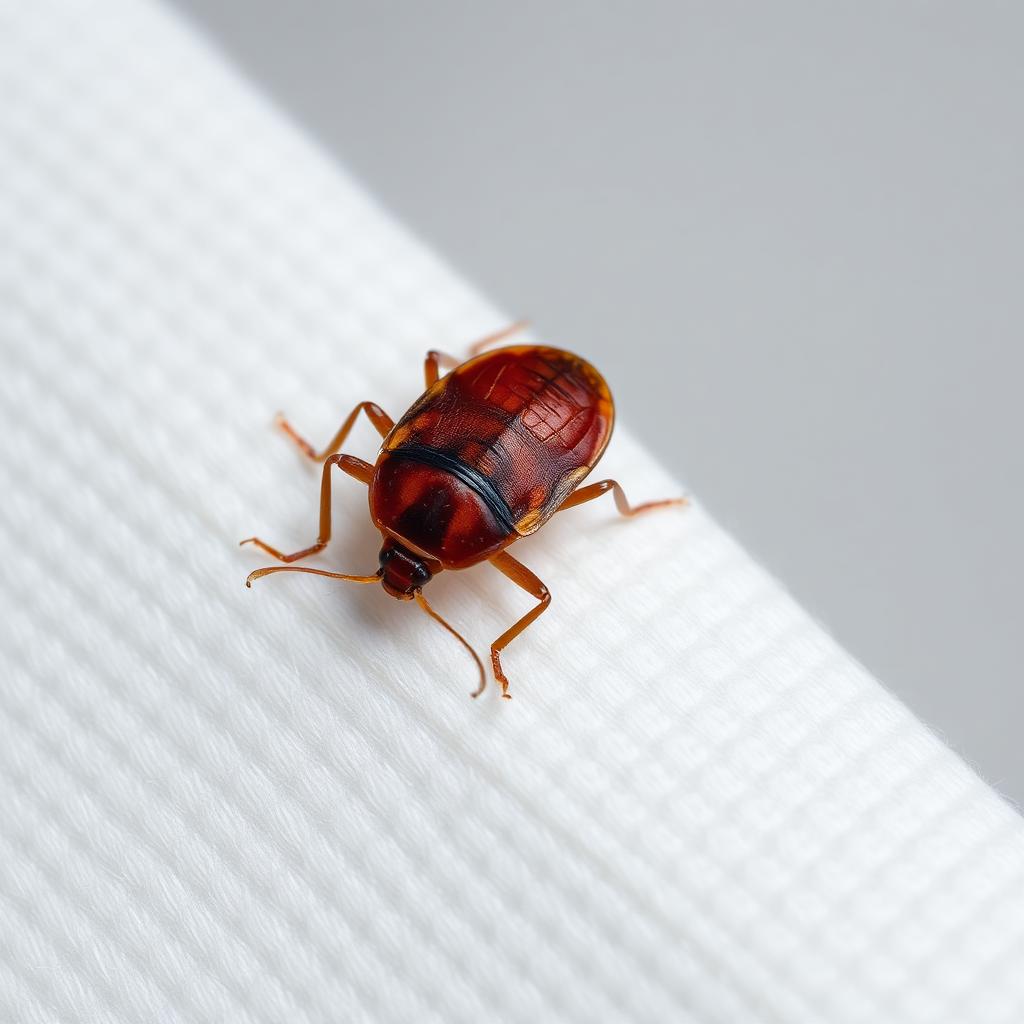
Stage 4 of 4
Adult
Biology
The common bed bug, *Cimex lectularius*, belongs to the family Cimicidae within the order Hemiptera. Adults are approximately 4-5 mm in length, ovate, and dorsoventrally flattened, changing from a dark reddish-brown to a more distended, purplish hue after a blood meal. Its lifecycle comprises six stages: egg, five nymphal instars, and adult, with each nymphal instar requiring a full blood meal to molt. Under optimal conditions (25-30°C and 70-80% RH), eggs hatch in 6-10 days, nymphs complete development in 14-30 days, and adults can live for 6-12 months, producing 1-5 eggs per day after feeding. These insects are notably resilient, capable of surviving for several months without a blood meal, especially at lower temperatures.
Behaviour
Bed bugs are primarily nocturnal, displaying peak activity in the hours before dawn, coinciding with periods of deep human sleep, although opportunistic feeding can occur at any time if hosts are sedentary. They locate hosts primarily through thermoreception (body heat) and chemoreception, detecting exhaled carbon dioxide and other host kairomones like lactic acid. While not social in a true sense, bed bugs exhibit aggregative behaviors, mediated by arrestment pheromones contained within their fecal matter, leading to the formation of 'harborages.' Their feeding involves a salivary anesthetic and anticoagulant, resulting in painless bites that often manifest as clustered lesions or linear arrangements, commonly referred to as 'breakfast, lunch, and dinner.' Bites themselves rarely transmit pathogens, but reactions to saliva can cause significant dermatitis and secondary infections from scratching.
Habits
Bed bugs exhibit a strong thigmotactic response, preferring to harbor in narrow crevices and concealed spaces within 1-2 meters of a sleeping host. Primary harborages include mattress seams, box springs, bed frames, headboards, and upholstered furniture. As infestations grow, they may disperse to wall voids, electrical outlets, behind loose wallpaper, and even furniture in adjacent rooms, using their flattened bodies to squeeze into gaps as thin as a credit card. Foraging typically occurs at night, with individuals embarking on directed movements towards quiescent hosts, then returning to their established harborage after feeding, leaving characteristic fecal spotting (digested blood) as a key diagnostic sign. Conducive conditions include frequent host presence, undisturbed dark environments, and an absence of proactive inspection or control measures.
Control methods
- 1Whole-room heat treatment (>50°C / 120°F)
- 2Encase mattresses and box springs
- 3Targeted residual insecticides (pyrethroid + neonic rotation)
- 4Steam treat seams and crevices
- 5Launder bedding hot, dry on high heat
- 6Active monitors and visual inspections every 2 weeks
Tailored to Bed Bug
IPM Procedure Checklist
Inspection
- Survey interior and exterior for evidence and conducive conditions
- Document findings with photos and a site map
- Place monitors to confirm activity
Identification
- Confirm Bed Bug (Cimex lectularius) — not a look-alike
- Note life stage and risk level: High
- Capture clear photos and samples for the record
Action Thresholds
- Zero-tolerance: act on first confirmed sighting
- Notify client and document the trigger event
- Prioritize health and regulatory risk in the plan
Prevention
- Exclude entry points and harborage
- Improve sanitation and moisture control
- Modify habitat around the structure
Control Methods
- Whole-room heat treatment (>50°C / 120°F)
- Encase mattresses and box springs
- Targeted residual insecticides (pyrethroid + neonic rotation)
- Steam treat seams and crevices
Monitoring & Evaluation
- Service monitors on schedule and trend captures
- Re-inspect for Bed Bug activity at follow-up
- Adjust tactics based on data; report findings to client